FiiO Warmer R2R DAC Tube Buffer Review – But Is It Actually Warm Sounding
FiiO Warmer R2R is a $349 USD Tube Buffer and DAC for Desktop Systems, with a Fully Differential True 24 Bit r2r resistor array DAC and Four JJ Electronic E88CC Tubes at the core. Today we will review the FiiO Warmer and also compare it with other similarly priced DACs including FiiO K13 R2r (319 USD), Topping DX5 II (299 USD) and Shanling EH2 (369 USD)
Introduction
FiiO is producing more and more audio fun with a vintage charm, so after they designed vinyl players, it was time for them to produce tube based DAC AMPS. FiiO Warmer R2R is not a tube AMP but a DAC and buffer, basically a preamplifier with tubes, and it is the perfect example of FiiO’s current position in the market. They are slowly expanding in every audiophile sector, creating better, cheaper and more fun than the opposition, with no hidden costs or hidden downsides. FiiO products are now widely available for purchase through HiFi channels, they are easily found on Amazon and even some general electronic shops. FiiO is one of the best choices for both beginners and experienced audiophiles and even made products that I use on a daily basis.
As an Amazon Influencer, I earn from qualifying purchases, and using the purchase links in my reviews helps me maintain this website and Youtube Channel. Audiophile-Heaven has no Ads and our Youtube Channel has no midroll ads, and our work is supported by Affiliate Links and Donations. Huge thanks to FiiO for providing the sample for this review, in exchange for my honest opinion.
Product Link
Amazon – https://amzn.to/3OhQYAM
Aliexpress – https://s.click.aliexpress.com/e/_c4TdGVsV
Build Quality – Design
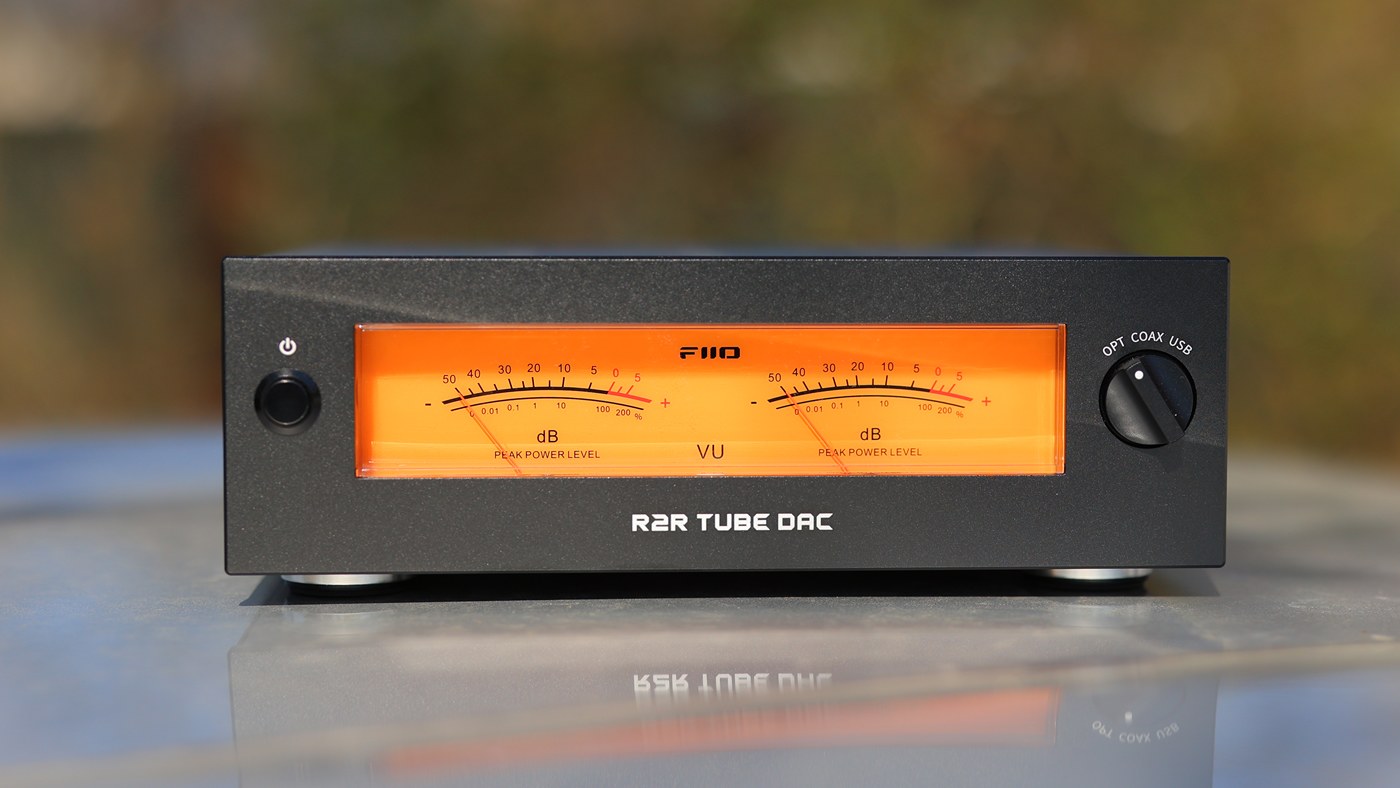
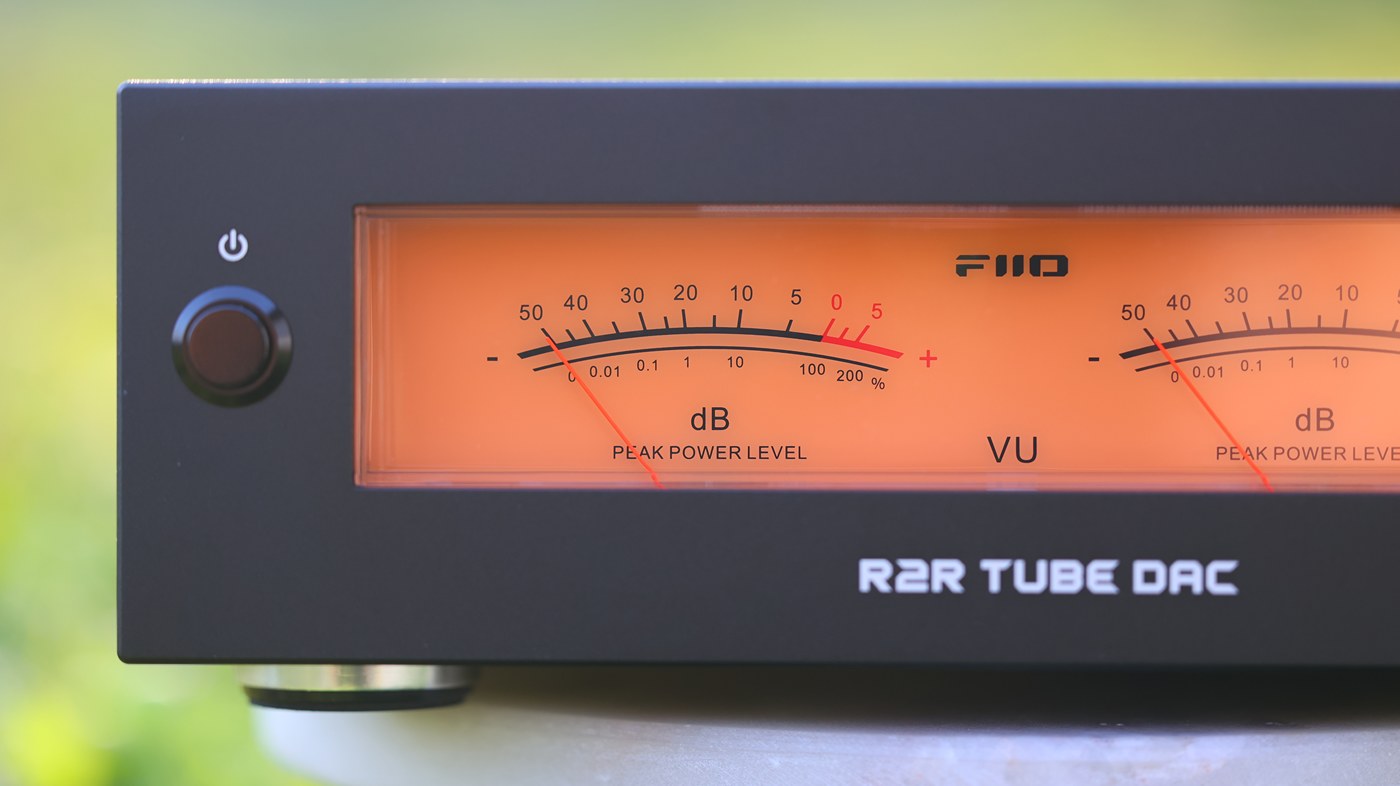
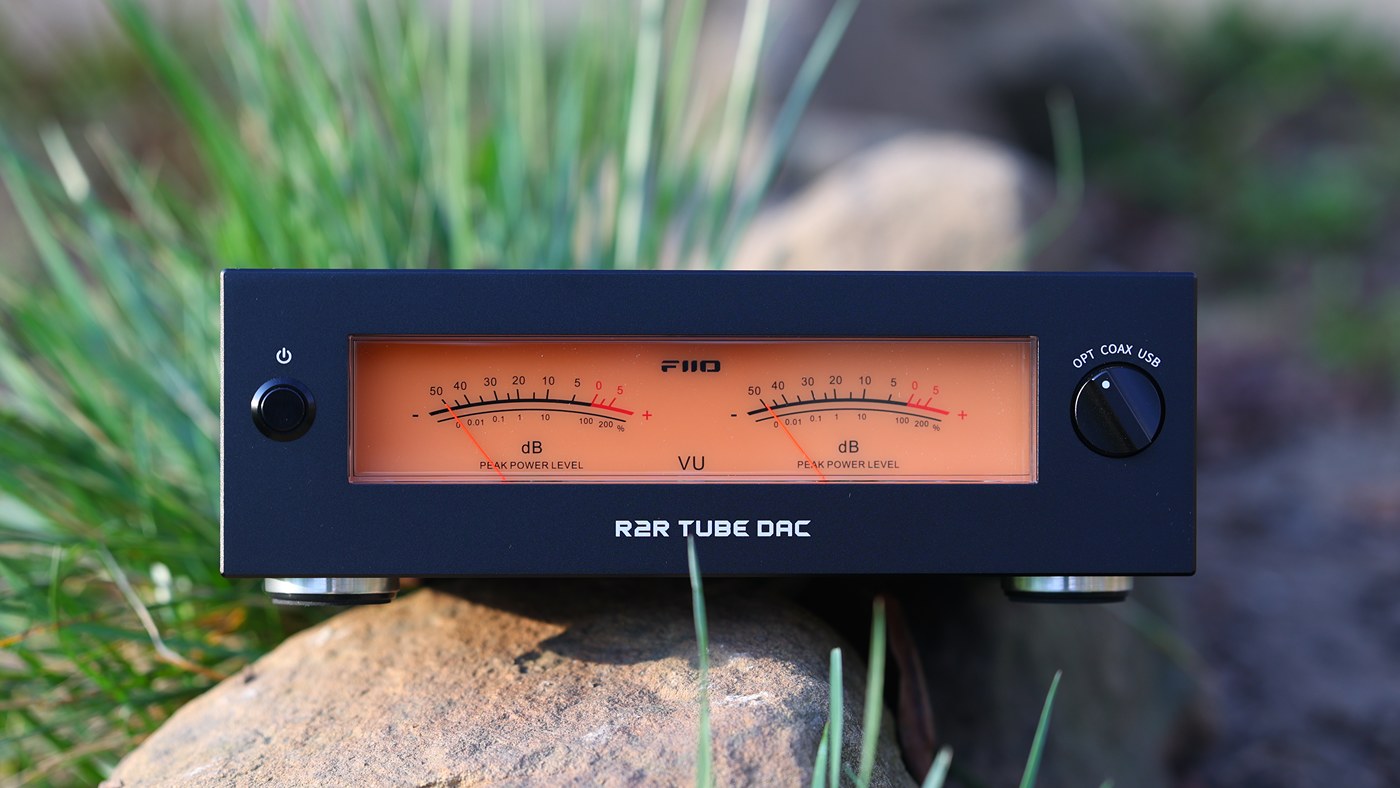
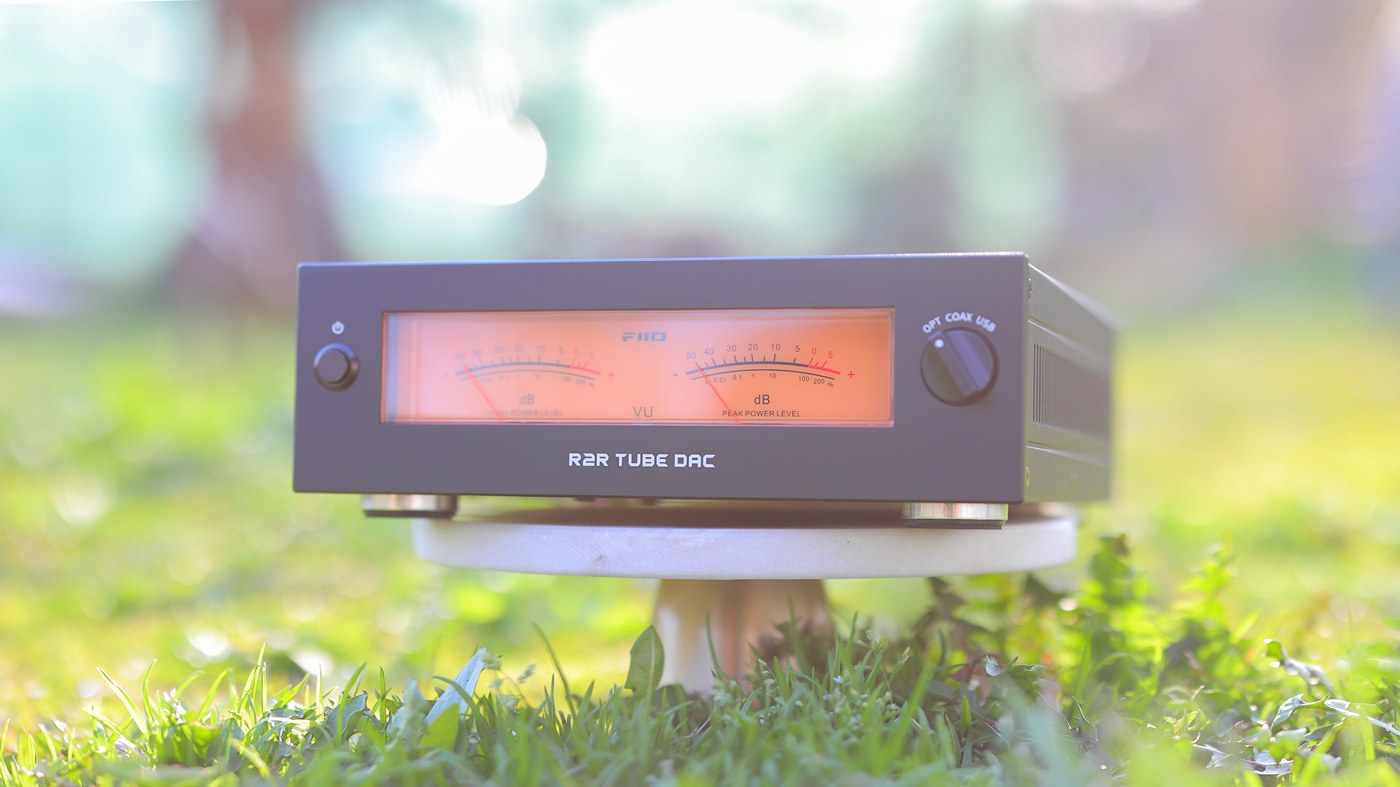
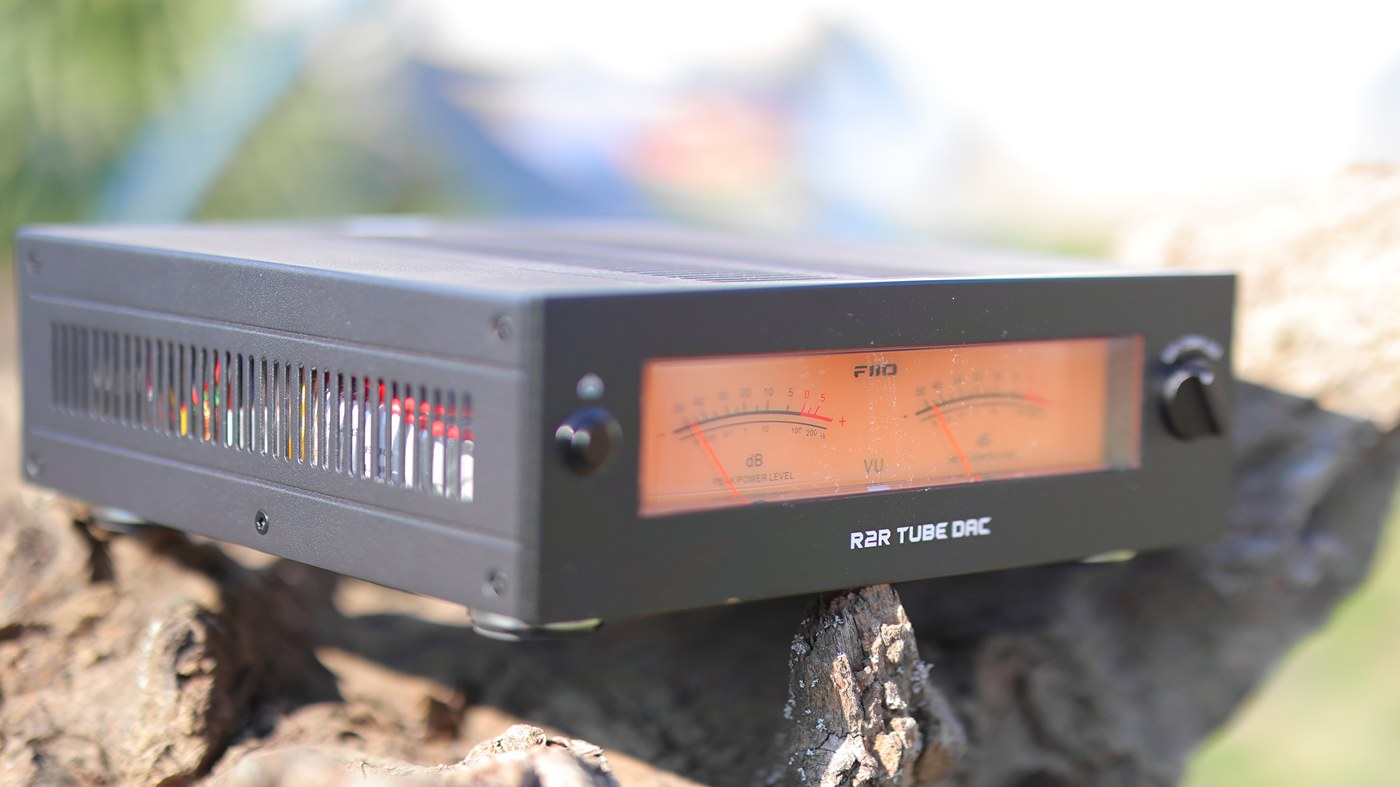
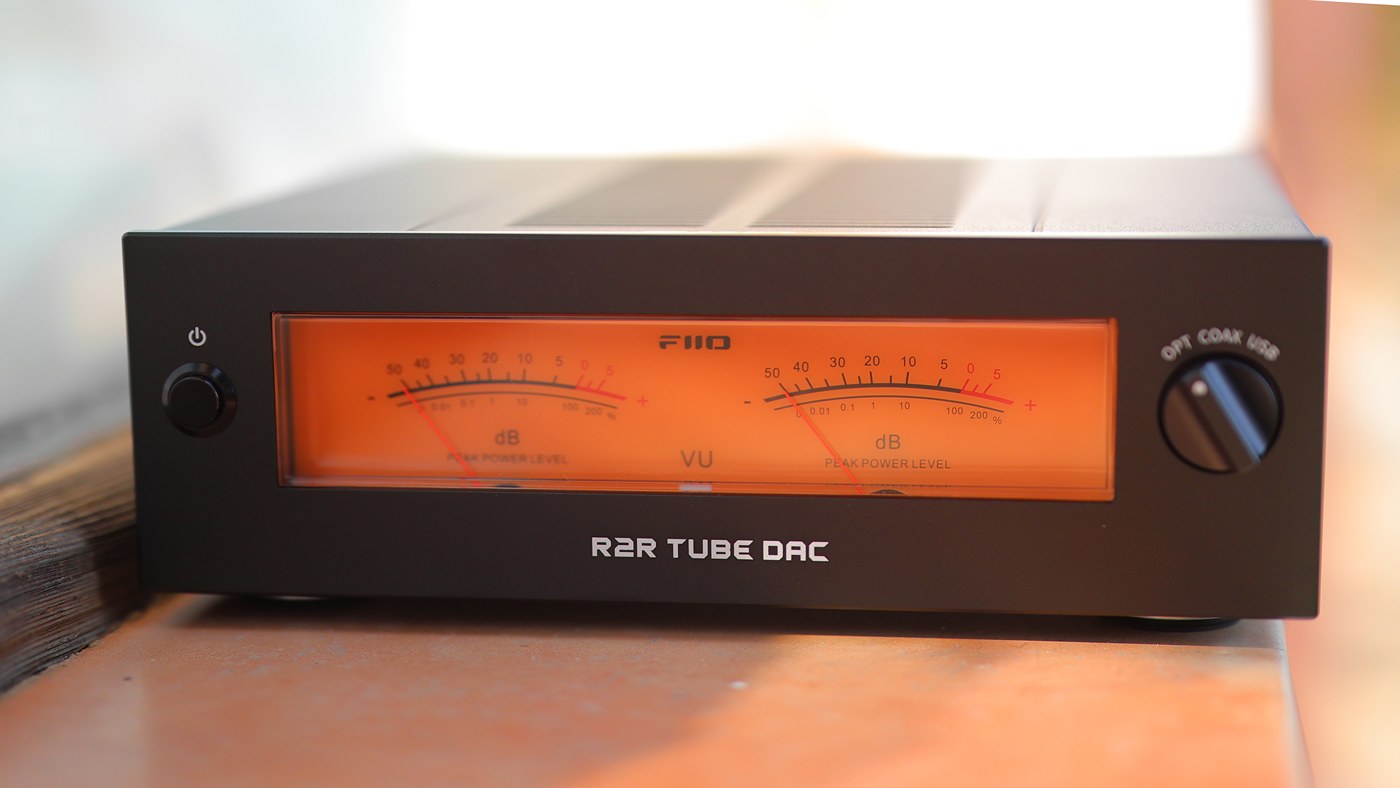
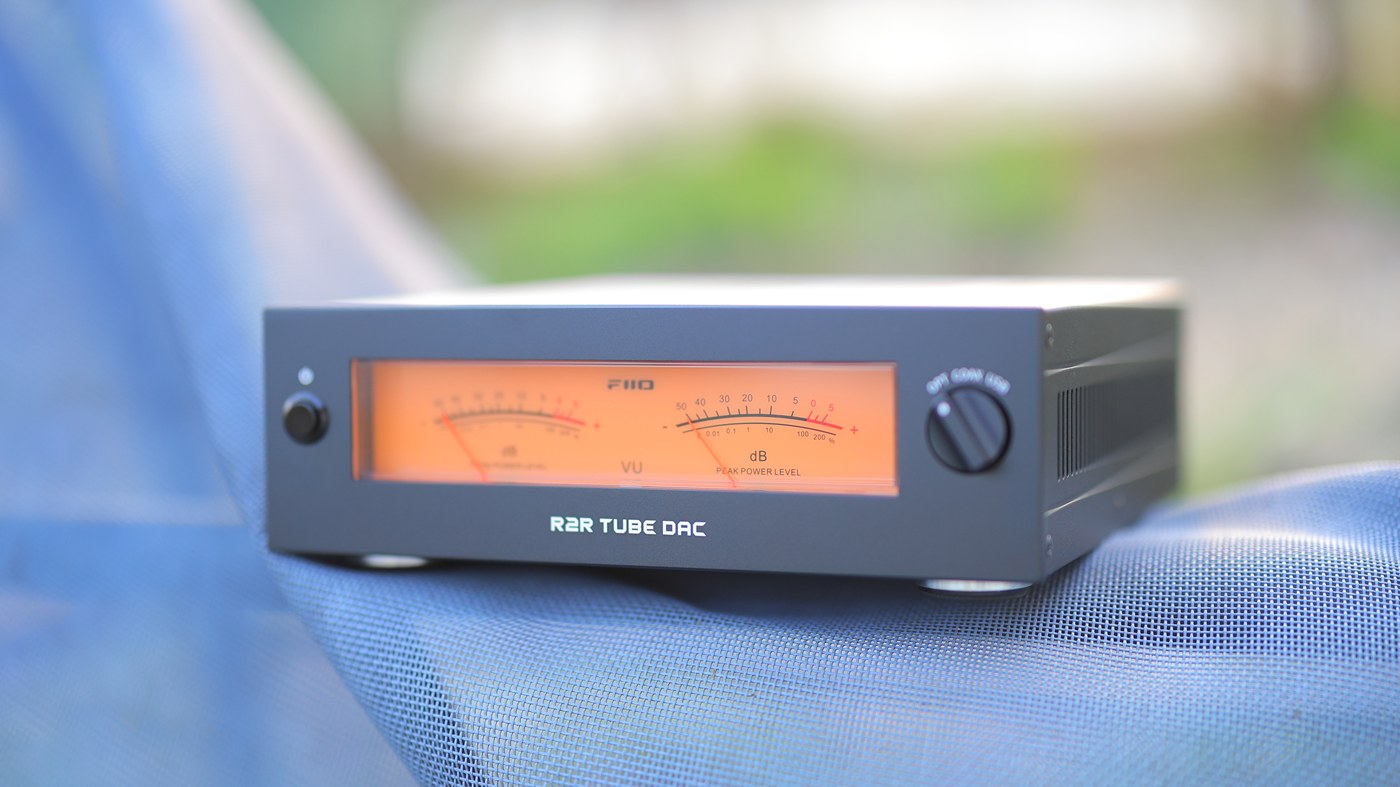
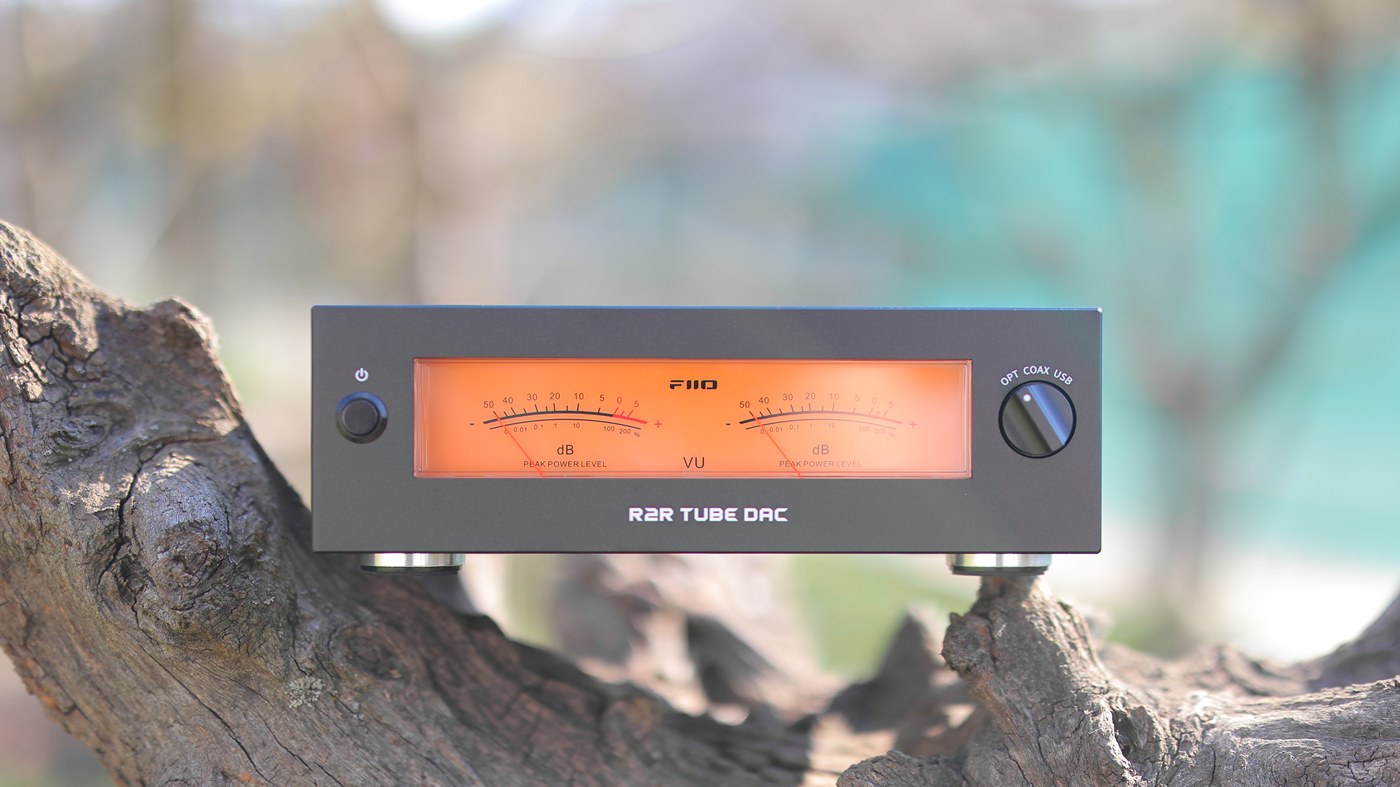
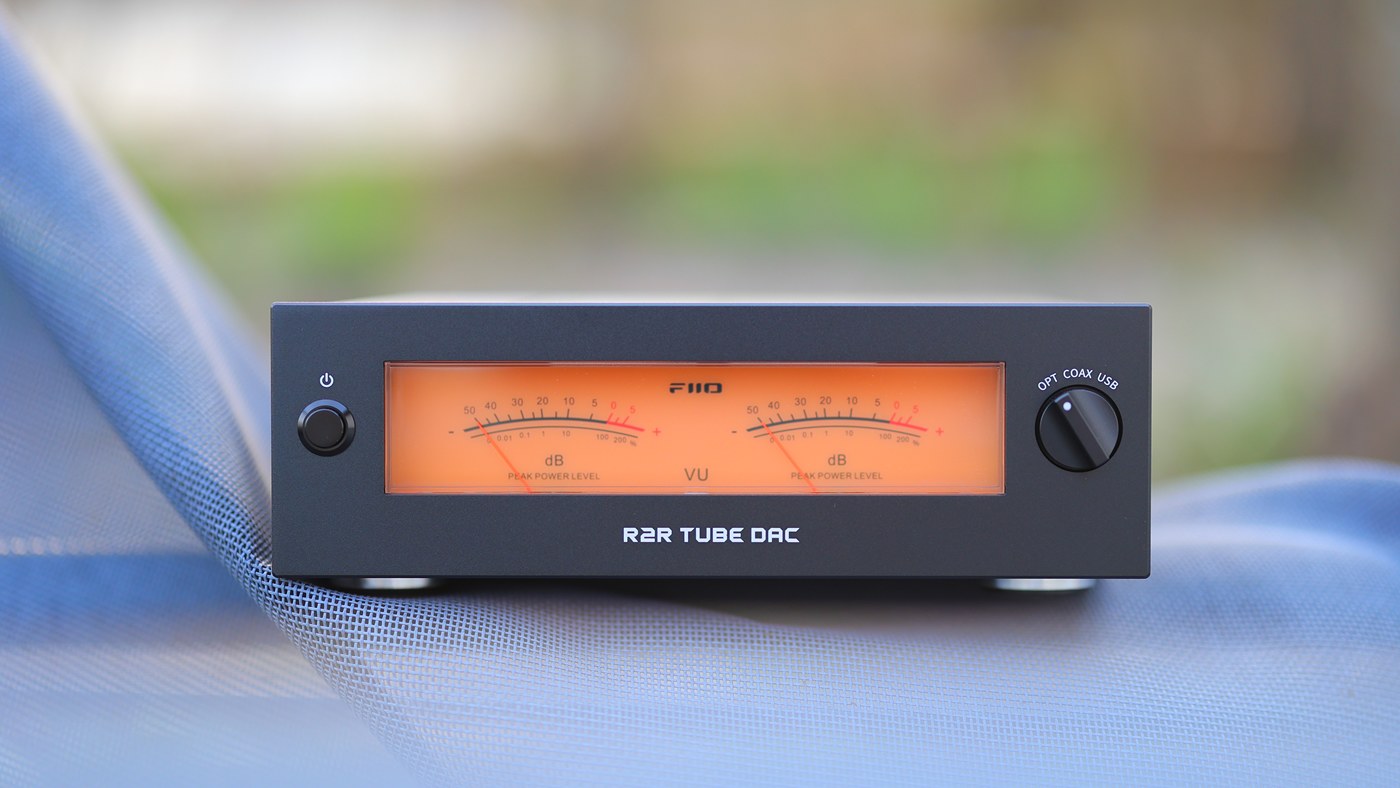
FiiO Warmer R2R is basically a desktop DAC with a Tube Buffer, so it will be a top choice if you already have an amplifier, be it a headphone or speaker amplifier. The whole highlight of the Warmer R2R is a focus on a warm sound, and it is inspired by the Hong Kong brand Wynners. FiiO made sure to match the tube setup inside with other really good vintage charms, including two warm-hued VU Meters.
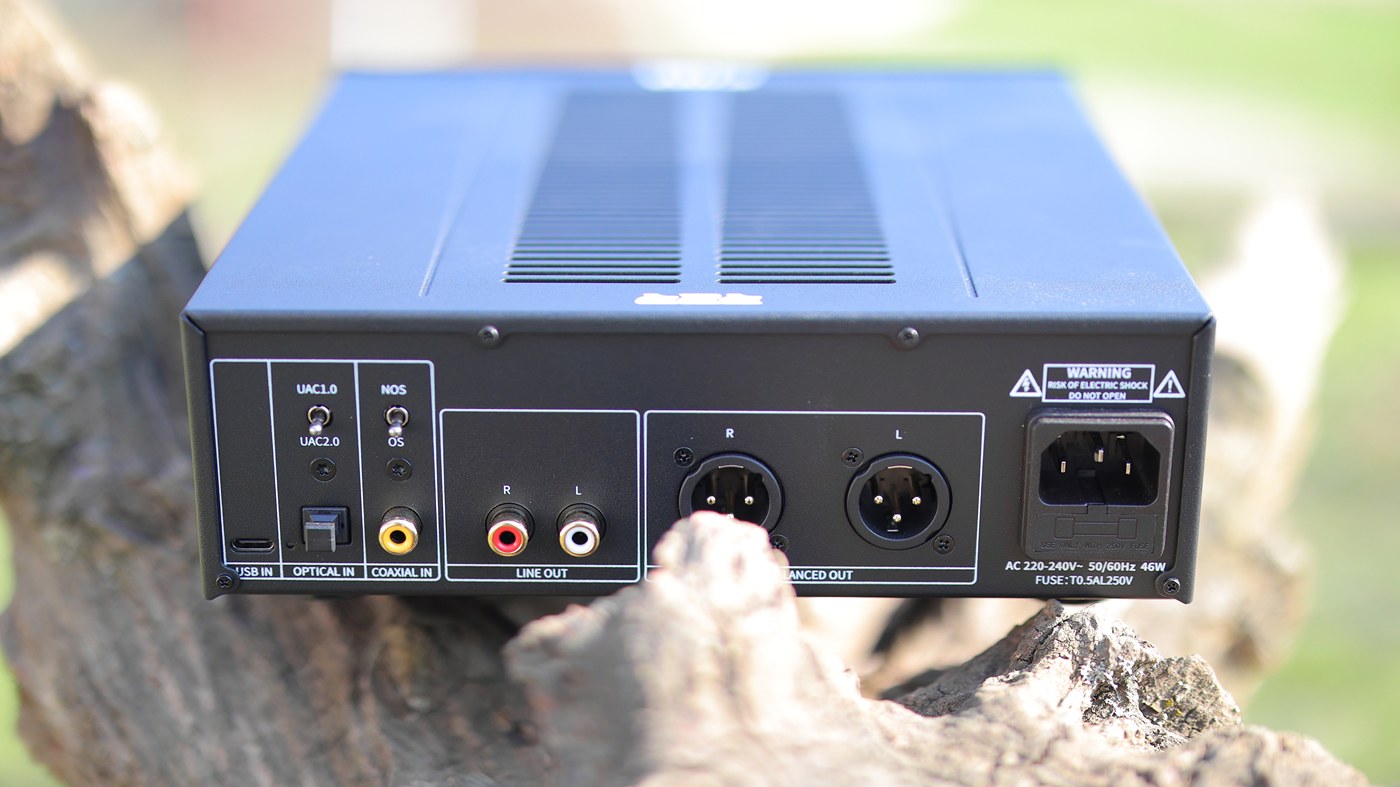
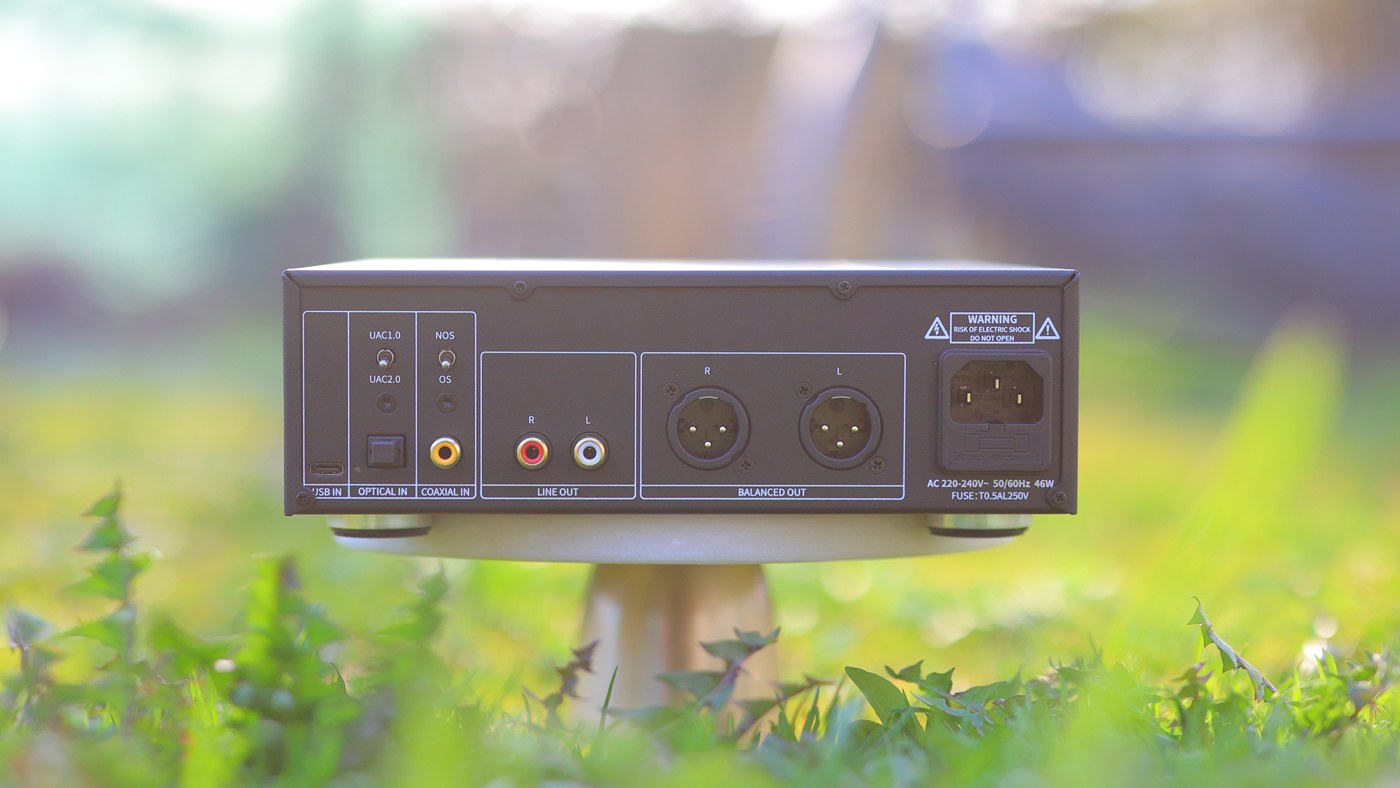
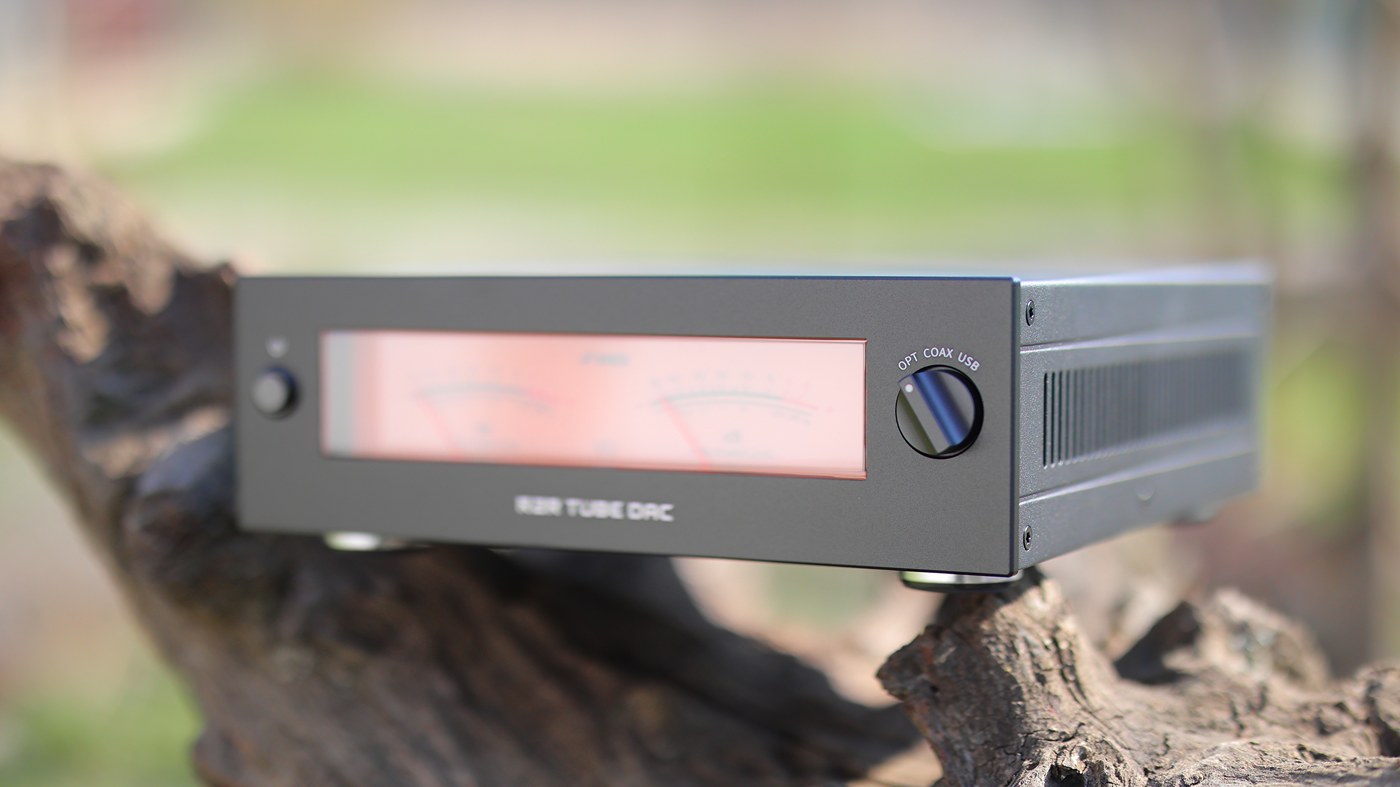
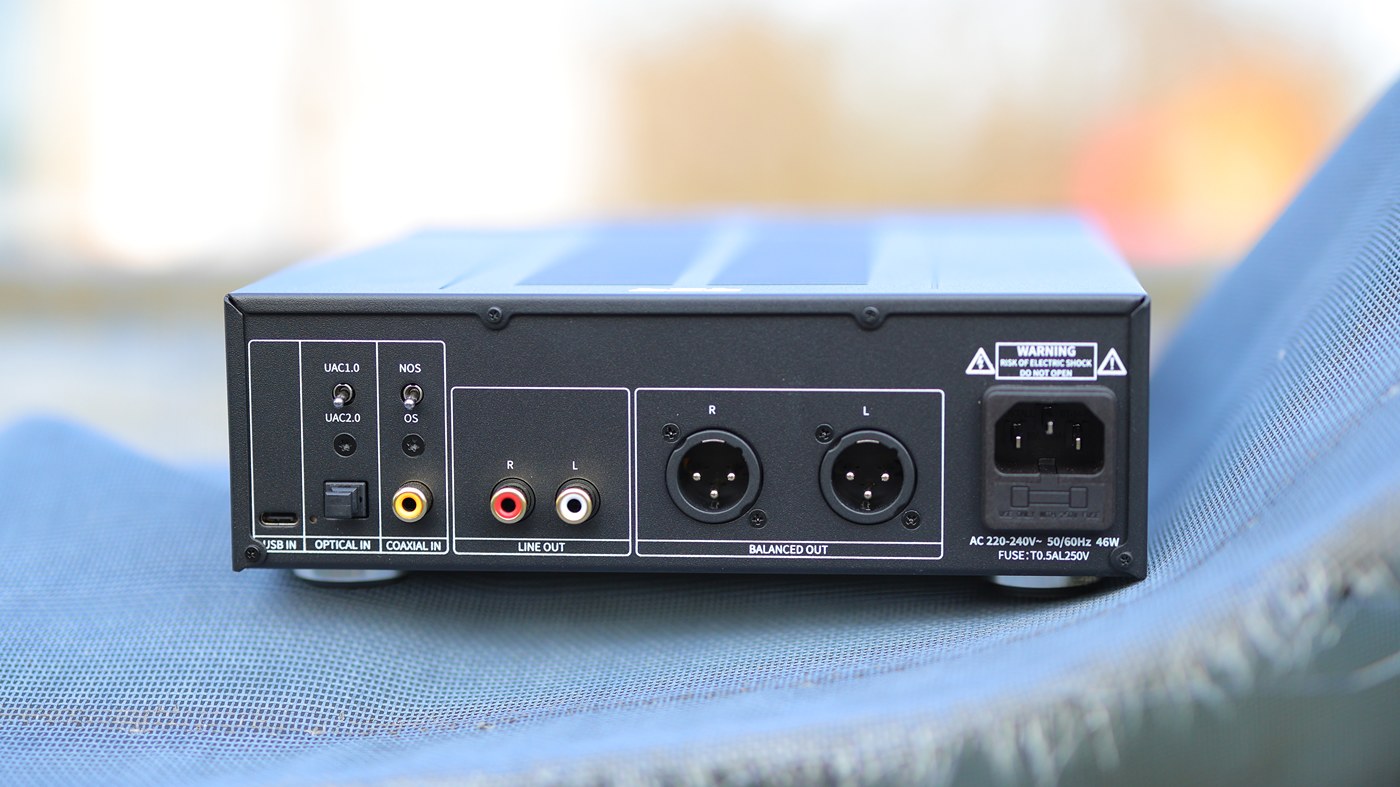
The main ways to use the FiiO Warmer R2R DAC is to have an input, which can connect to it through a list of inputs including Optical, Coaxial and USB Input, and have the output which is either RCA Line or XLR, to a power amplifier, to a DAC AMP or directly to self powers speakers that have either RCA or XLR line input. Inside the package you do not have cables for the line output, but you will find a Type-A to Type-C daca cable, a power cable and the manual / warranty card.
As R2R tech is quite special, you will be delighted to hear that FiiO’s unique approach is proprietary, so they built this DAC, it is a 4-Way DAC, fully differential and 24 Bit in resolution. There are a total of 192 high-precision thin-film resistors, so 48 per channel, boasting a 0.1% accuracy and an ultra low drift of 30ppm. Regardless whether you have a PCM input or DSd input, Warmer R2r has a NOS / OS filter, which feeds the data to a FPGA then to serial to parallel data conversion then to the DACs.
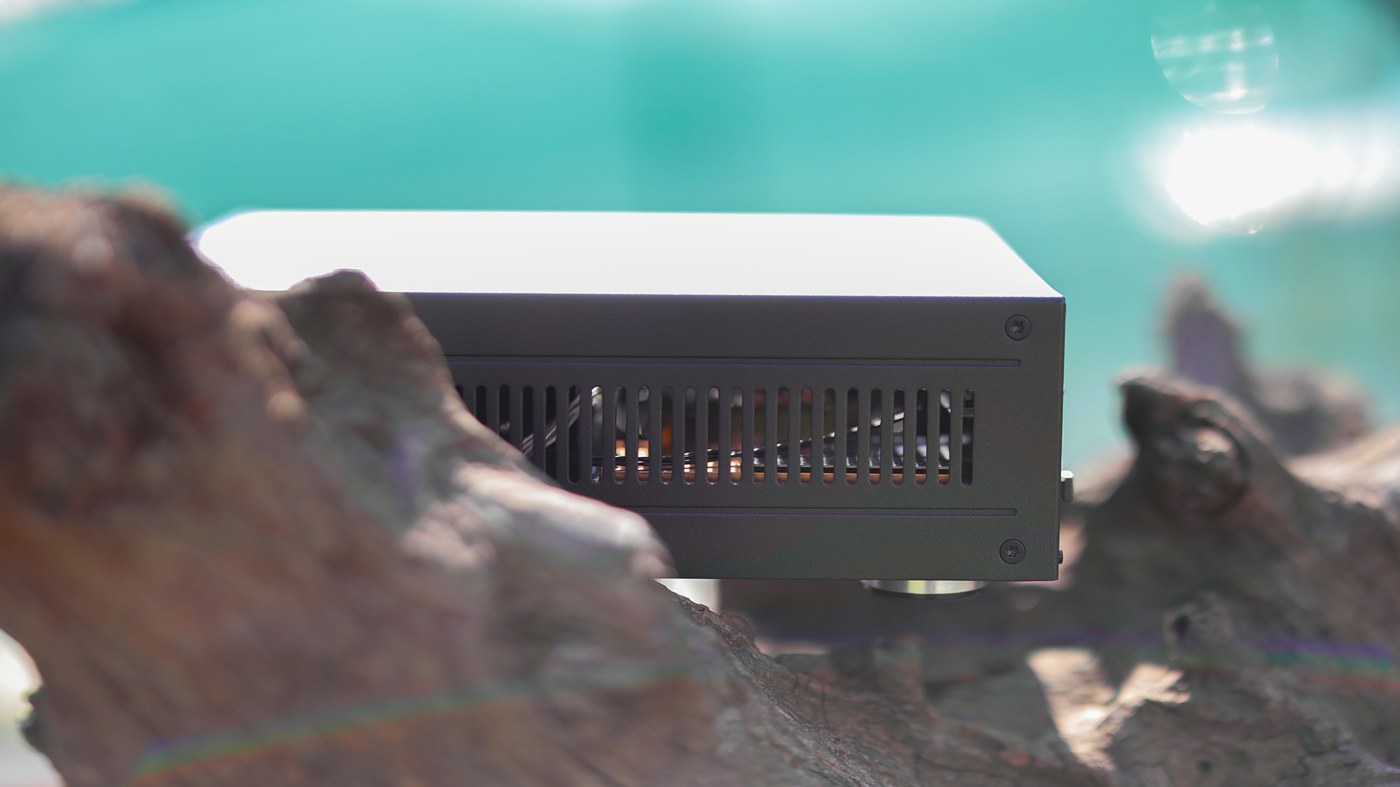
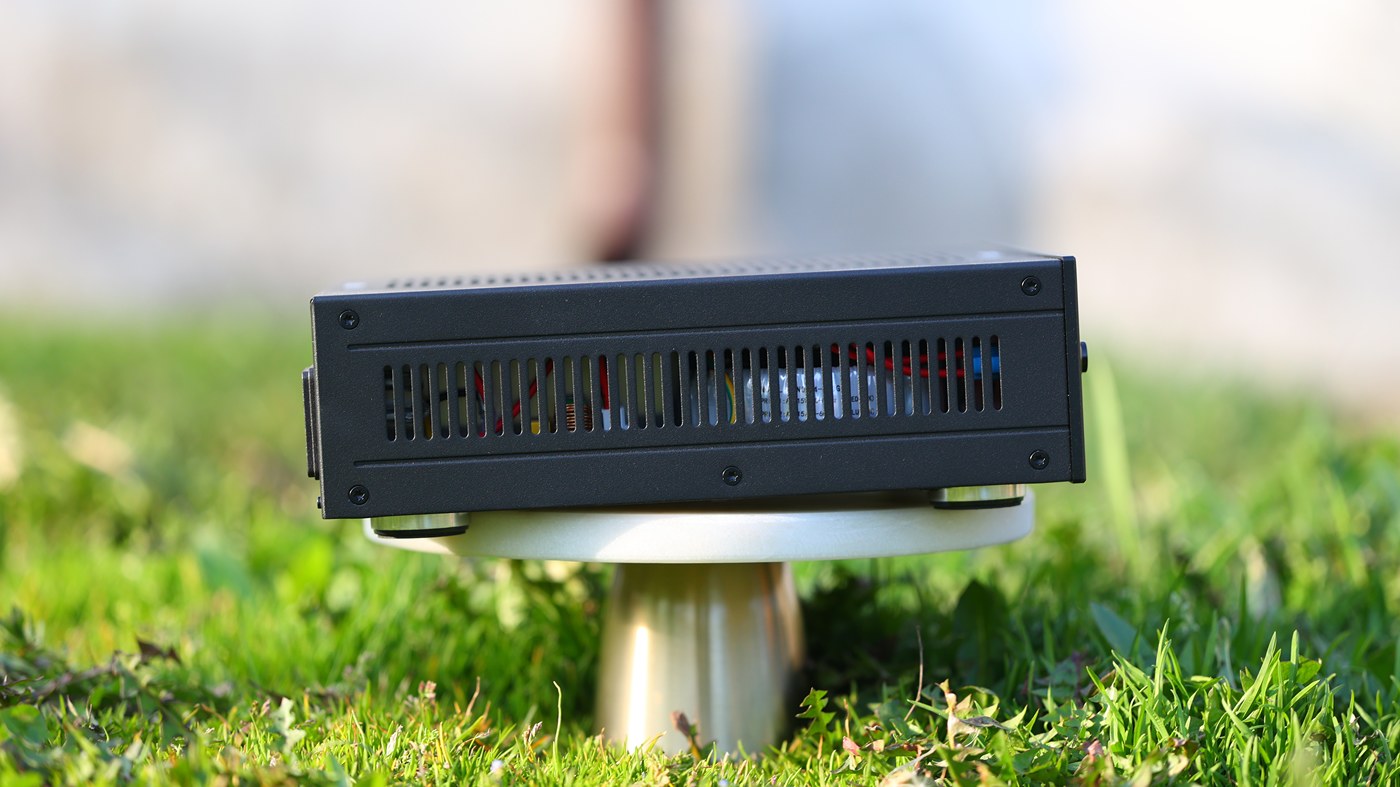
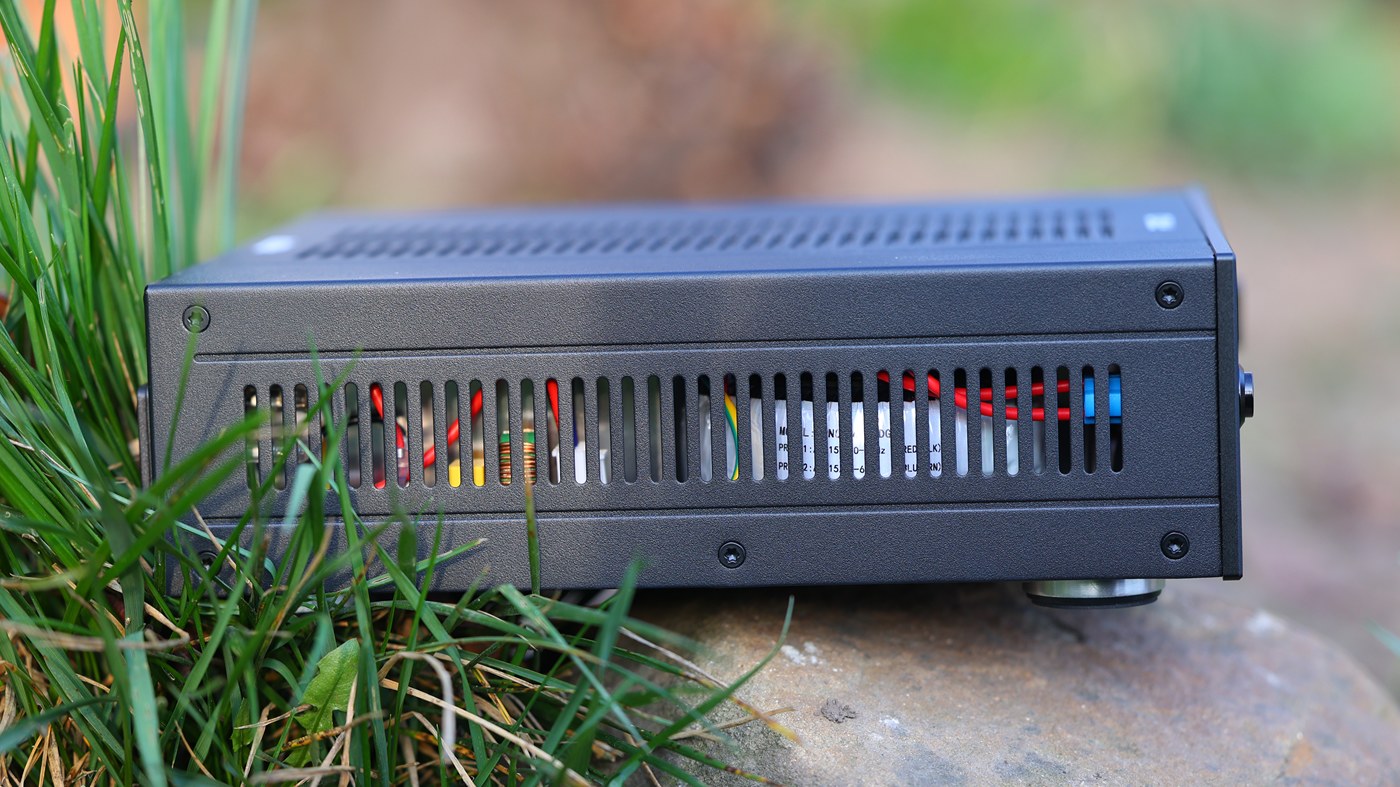
On the AMP part, we have a tube buffer, with four brand-new JJ Electronic E88CC valves imported from Slovakia. Those tubes have a + – 28V power supply and feature a long life of 10.000 hours. You can admire the retro warm hued VU Meters powered by a dedicated IC. Inside the Warmer R2R, FiiO also built a 46W low-noise power supply which is an LPS, or linear power supply, with a toroidal core and low eddy current loss.
Design wise, Warmer R2R can easily blend together with the K Line of DAPs, which you can actually use as AMPs now with Warmer R2R, as most of them have a line input. You can use either the NOS which is the pure data that is fed to the DAC or OS, which oversamples all input signals to 384 kHz. Warmer R2R is compatible with both UAC 1 and UAC 2 modes, it is compatible with PC, Phones, DAPs, Switch and PS5.
Technically, FiiO Warmer R2R can decode signals up to 384 kHz / 32 Bit or DSD256 for the USB input, PCM 192 / 24 for the Coaxial input and 96 kHz / 24 Bit for the Optical input. RCA output has a max power of 1.8V while XLR has a max output of 3.8 V. This indicates that Warmer R2R will never run into overdrive issues and it will have a slightly lower voltage than the max expected by most AMPs. Noise floor is lower than 7 uV and it has a THD of 0.053%, with a frequency response of 20 Hz – 45 kHz with an attenuation of 2.4 dB.
USB DAC – Subjective Usage
FiiO Warmer R2r works as expected, you have to use one of the inputs and then use either the XLR or RCA output. I noticed that it has a lower overall noise floor for the XLR output compared to the RCA output, but both have some tube noise audible, and depending on how sensitive the system / AMP is, you may notice that. There is no volume control, but the VU Meters it has are stunning, it looks like a vintage DAC but made new, it has a crisp font, everything looks and feels top end. It is possible to lower the tube noise by using a different set of tubes, and that can be used to fine tune the sound of the Warmer R2R also, as each set of tubes comes with its own sonic characteristics, and they are interchangeable. As this is a DAC, having no volume control means that it is always running at 100%, which means that you always hear a lot of tube character as well as the tube’s characteristic noise floor (different for each tube).
Using the USB input, there is no USB DAC delay, it is perfect for real time media playback, gaming, watching movies and basically any activity that you do with a computer. It works basically perfectly, there is nothing it does wrong. Tubes are properly isolated from the case and tapping on the case results in no tube ping noise, and basically everything is top notch with it. Using aftermarket cables can change the character for both USB and power cables, but I feel like you’re buying Warmer R2R for the sound it produces precisely.
Most AMPs will have no aliasing or overdrive distortion with Warmer R2R as it produces a voltage that is ever so slightly below the max expected by the AMP, avoiding clipping also. Overall, it is a very nice usb dac but I full-on expect a lot of music lovers to purchase it for a more complex system and use the Coax or Optical inputs. Those have a different sound, like they do with all systems, but it is connected to how each system handles optical and coaxial, as the D/A conversion has a different processor for all systems when using coax and optical, same for cables. It does get mildly warm towards hot during usage.
Sound Quality
Pairings – I have paired FiiO Warmer R2R with multiple AMPs to drive both headphones and IEMs, but also speakers. The full AMP list includes FiiO K17, Singxer SA2, Fosi Audio GR70 and Aune N7. The full list of IEMs and Headphones includes Lily Audio Genesis One, Raptgo LEAF D01, Palma DHS-1, KBEar Cepheus, Crosszone CZ-10 Enhanced, Erzetich Thalia, TinHIFI T7, NFAudio NE4, Sivga Peng, Crosszone CZ-8a Enhanced, Tangzu TianPeng, Soundz Flame, YanYin Canon PRO, Dunu Vulkan 2, Letshuoer Mystic 8, Moritz Aura, HarmonicDyne Romantic, Hiby Digital Yume, HIFIAN HE600, HIFIMAN Audivina LE, HIFIMAN Ananda Unveiled, Westne Mach 80, BQEYZ Winter II, Fosi Audio IM4, Aune AC55, Oriveti Bleqk PureCaster and Noble Knight.
I have also matched FiiO Warmer R2R DAC with a couple of speakers, mostly active speakers, including FiiO SP5, FiiO SA1, SVS Prime Wireless Pro, and Rub Young Master R830. You can count FiiO to have made a truly impressive DAC in the Warmer R2R, it pairs well with all setups, although if you want the best performance you should pair it with an AMP or pair of speakers that have XLR inputs. For active speakers, this will be easier to do for studio monitors than for casual listening speakers.
Another system that I like a lot with Warmer R2R is the HIFIMAN Shangri La Mini, as it adds a lot of weight and substance to this system, which usually has a slightly too neutral sound. Seems that adding FiiO Warmer R2R creates a much deeper, punchier sound for Shangri La Mini, increasing the depth, and bass weight, as well as taming the treble which is a bit too open and bright at times for Shangri La mini.
Overall Signature – Warmer R2R sounds just like the name implies, warm, smooth and full, with a smoother treble, and using OS or NOs does not change the sound significantly, as Warmer R2R has a much warmer sound on both than most DAC AMPs. It is uniquely bassy and smoother in the treble, but you can likely fine tune this tone using a different set of tubes. Soundstage is very wide and holographic, while resolution is top, with very little audible tube overdrive or distortion. This being said, there is a bit of tube background noise that is audible with most music. I like Warmer R2R a lot with most systems as most will sound better with a bit extra bass and a smoother, more musical treble, but the tuning extends a bit beyond.
Bass – At the bottom end, Warmer R2R is smooth, warm, and big, it creates a bit, slightly slow bass, with a good weight, impact and depth to it. This being said, it is not exaggerated and Warmer R2r does not add any kind of overdrive or clipping, it just adds warmth, weight and presence to the bass. Works really well for rock, metal but also EDM and Pop. Even classical feels a bit fuller, deeper and more present. Because the tonality is a bit L-Shaped, it has the bass as the emphasis, with midrange and treble trailing behind in presence and forwardness.
Midrange – Vocally, Warmer R2R is pleasing, full and warm, with a smoother, chocolatey kinda tuning that makes all music enjoyable, taking away the sharp edge even from ultra aggressive music styles. FiiO Warmer R2R is thus an incredible performer for both male and female voices, but it is great for guitars, roc and basically it makes all music styles enjoyable. It feels much less tubey than most tube preamps, it gives music life without adding too much overhead or tube characteristic distortion / harmonic distortion. It feels like Warmer R2R is tuned especially for sounding engaging and vivid without sounding like there’s the usual tube lack of precision found in tube amps around this price point.
Treble – Top end trails behind the midrange and is smooth, relaxed, and laid-back with good extension up to 20 kHz, but not with a strong presence. This makes it great if you already had headphones or speakers that were too bright, or had too much treble emphasis. I find Warmer R2R great for enjoying casual styles, although it takes away some impact and brilliance and aggressiveness from rock and metal.
Dynamics And Textures – FiiO tuned the Warmer R2R to sound extremely dynamic, and also to have a rich texture. It is great for both electronic and synthetic music styles as well as analogic styles and classical music. Technically, it is a middle of the road DAC, it blends a mild technical style with a musical edge.
OS vs NOS Tuning – You will hear a very small difference between the OS and NOS modes of the Warmer R2R, as it has a strongly evident character inherited from the tube step. This means that the OS vs NOS difference is glossed over and you can use either. NOS mode will have a slightly brighter treble and more technical sound, while the OS will be a bit smoother and less dynamic, but both are very similar.
Soundstage – Although Warmer R2R is not marketed for it, tubes are not marketed for it and neither is a dark tuning, it does have a rather large and dynamic soundstage. I find it impressive in how holographic and wide it sounds, it has a superb instrument separation, and especially lateral imaging. It is great for pop, it pushes the bounds of what is typically possible with each system I implemented it in.
Comparisons
FiiO Warmer R2r vs Shanling EH2 (349 USD vs 369 USD) – Both of those DACs have super interesting features, with EH2 having EQ and filters, while Warmer R2R has an R2R DAC, VU Meters but no AMP, while EH2 has a headphone AMP. From a construction perspective, I would chose Shanling EH2 for fine tuning and playing with EQ, and Warmer R2R for its VU Meters and DAC Tube performance. If you want to power speakers and don’t have a speaker AMP or if you want to power headphones, EH2 does have a headphone AMP, although for speakers it does not have a speaker AMP. Line out is better on Warmer R2R as it includes the balanced XLR option, so EH2 will have a noisier RCA only Line Out. Sonically, Warner R2R is far warmer, has a bloomy sound with much more bass, more depth, a wider soundstage and better resolution. It is spot on as described by the name, warm, bloomy, a bit dark, but wide and revealing. EH2 is more natural, not colored, you can use the EQ on EH2, but Warmer R2r has a higher resolution and generally a fuller, smoother sound.
FiiO Warmer R2r vs Topping DX5II (349 USD vs 299 USD) – Topping DX5II does have a headphone amplifier, but also XLR line outs and about the same selection of inputs as Warmer R2R. From a feature set perspective, DX5II has a more complex menu, offers fine tuning and EQ options, while Warmer R2R offers a tube sound, VU Meters and an R2R DAC. Both have similar low noise for the line out, and similar high performance for the DAC, but if you need headphones, DX5II has an amp while Warmer R2R needs one. Sonically, although you can use a lot of EQ with DX5II, Warmer R2R sounds much more full, smoother, bigger and more musical. While both are top quality for all music styles, I prefer Warmer R2R for most music, it gives most headphones more backbone, more depth and a deeper sound.
FiiO Warmer R2r vs FiiO K13 R2R (349 USD vs 319 USD) – FiiO K13 R2R is about the same price as Warmer R2R, and a very similar set of features, although K13 has a glass through which you can see the R2R DAC arrays inside, and has a headphone AMP, but Warmer R2R has neither. K13 seems like a better purchase, it even has an R2R DAC and it feels more refined as an experience, but overall Warmer R2R has a more charming design with the vintage VU Meters. Sonically, K13 is more neutral, has no tuning coloration, although OS vs NOS makes a higher difference for K13 which really shows a different character. Compared to it, Warmer R2R is colored, warm, smooth, full sounding, wider and more holographic, but also has much less emphasis on OS vs NOS from the R2R DAC as the tube character takes over and defines most of your listening experience with either OS or NOS.
Value and Conclusion
You can count on FiiO to produce a DAC and in general electronics with top value, but Warmer R2R took the world by surprise. This is one of the best sounding DACs with a tube buffer, it looks awesome, and for less than 400 USD, it looks better than some of the vintage luxury products you can purchase, and also sounds better than those. Overall, with XLR outputs and a tube buffer, it has a much higher value than expected and Warmer R2R is a really solid choice for anyone who’s looking for a fun DAC
FiiO Warmer R2R is a top choice for warm music lovers, and it feels like one of the extremely rare properly targeted products. Most stuff I know simply has a definition and when listening, it sounds completely different, but if anything, FiiO was most precise with what you can expect from their R2R DAC. It is a top choice also if you need a desktop DAC with a bit of a magic tube, if you want it all in a vintage, luxurious package and if you’re looking for a bit of lush, bloomy sound.
PROs
- Luxurious build quality with a vintage charm
- VU Meters are a killer deal for an audiophile setup
- XLR balanced outputs with a very clean sound
- Top of the line LPS Linear Power Supply
- Excellent DAC performance despite the R2R array design
- Long-Life tubes that don’t need replacement soon but can be replaced
- Really high price performance ratio
- Warm, thick and lush sound
- Wide and revealing tuning
Cons
- Audible tube background noise with sensitive amplifiers or speakers
- OS and NOS make little differences as tube character takes over easily for both
Product Link
Amazon – https://amzn.to/3OhQYAM
Aliexpress – https://s.click.aliexpress.com/e/_c4TdGVsV
--- Please remember to stay safe, and always have fun while listening to music!---
- If you have a dime to spare, please donate, and help us! It would make the day brighter for me and my wife-
Full Playlist used for this review
We listened to more songs than those named in this playlist, but those are excellent for identifying a sonic signature. I recommend trying most of the songs from this playlist, especially if you’re searching for new music! The playlists are different for Spotify, Tidal and Youtube, and based on the songs I enjoy and are available on each!
https://www.youtube.com/playlist?list=PL_cjBXGmwSHSdGcwuc_bKbBDGHL4QvYBu
https://open.spotify.com/playlist/5J3oloz8Riy9LxEGenOjQ0?si=979ba4f082414be7
https://tidal.com/browse/playlist/330fd544-8e5b-4839-bd35-676b2edbb3d5
--- Contact Us ---