FiiO SP5 Active HIFI Desktop Bookshelf Speakers Review – Leading Lines Of Musica Majestica
FiiO SP5 is a $749 USD pair of active self-powered HIFI Bookshelf desktop speakers which can also be used as nearfield monitors, and they have a huge 120W power, 5.25″ Woofer driver, and 1″ Silk dome tweeter pair. As this is one of the most complete speaker systems in the whole world, including Hi-Res Bluetooth Codecs, a DAC AMP, TEN Band PEQ, and two high-quality Furukawa oxygen-free copper AC power cables, along with various inputs, today we will review the new FiiO SP5 and also compare them with other speakers including FiiO SP3 BT (349 USD), SVS Prime Wireless PRO (899 USD) and Audioengine A5+ Wireless (500 USD).
Introduction
FiiO is not a new name, and in fact it may have been on the lips of audio lovers more than any other name in the audio industry, yet not quite that often for speakers and Desktop HIFI enthusiasts, as FiiO has always been centered on producing high-end portables and DAPs and headphones but today we review their first big boy bookshelf pair of speakers.
As an Amazon Influencer, I earn from qualifying purchases, and using the purchase links in my reviews helps me maintain this website and Youtube Channel. Audiophile-Heaven has no Ads and our Youtube Channel has no midroll ads, and our work is supported by Affiliate Links and Donations. Huge thanks to Pylon Audio audio for providing the sample for this review, in exchange for my honest opinion.
Product Link
Amazon – https://amzn.to/4pP4OI5
Aliexpress – https://s.click.aliexpress.com/e/_c4kn1aU5
Build Quality – Design
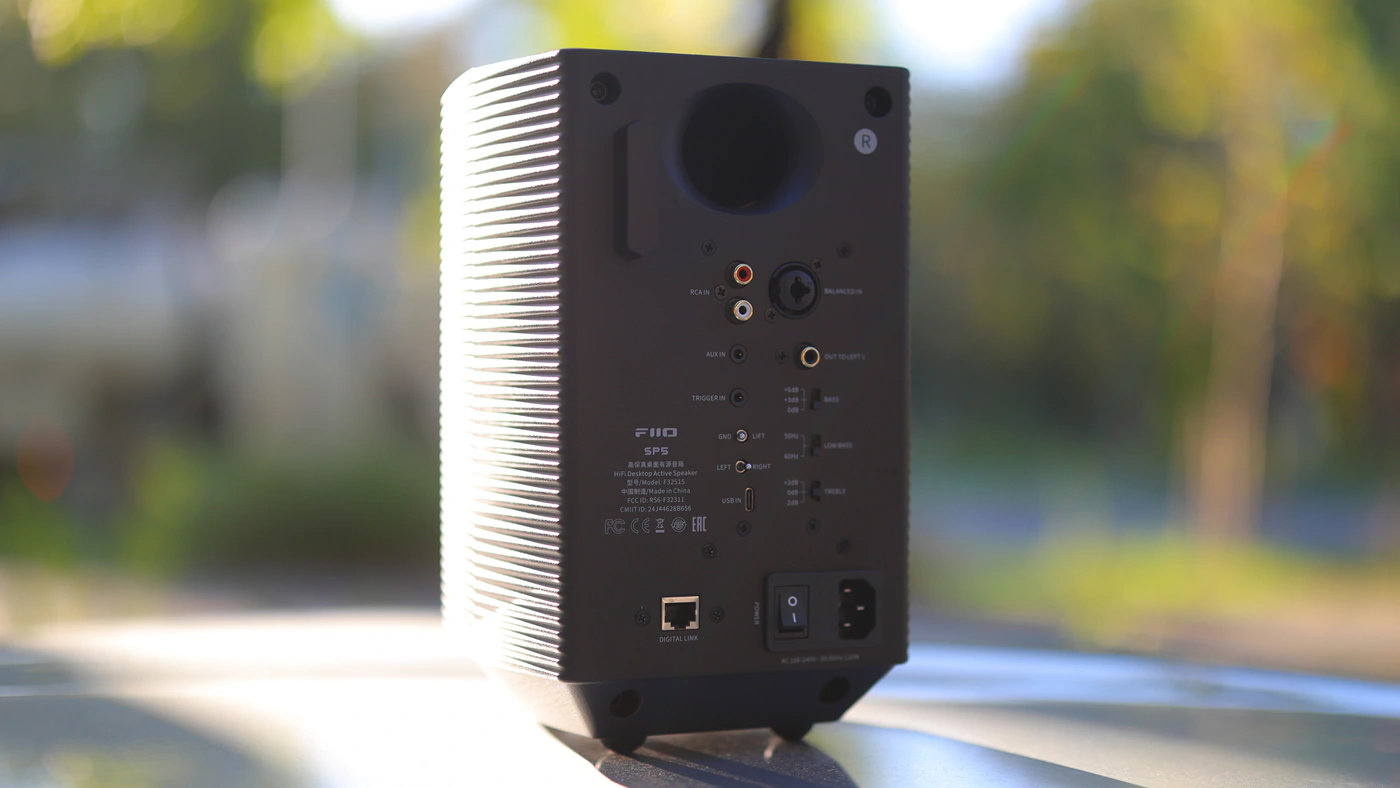
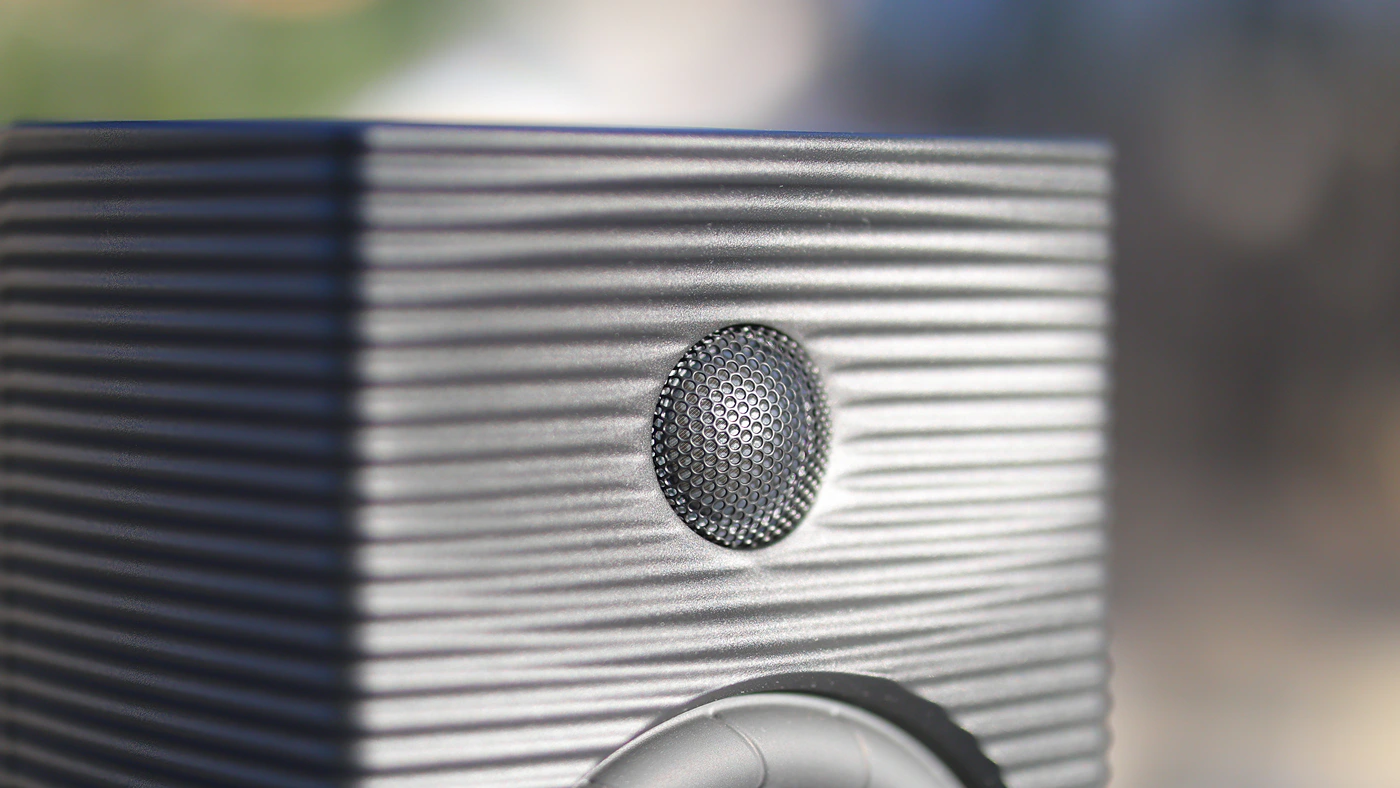
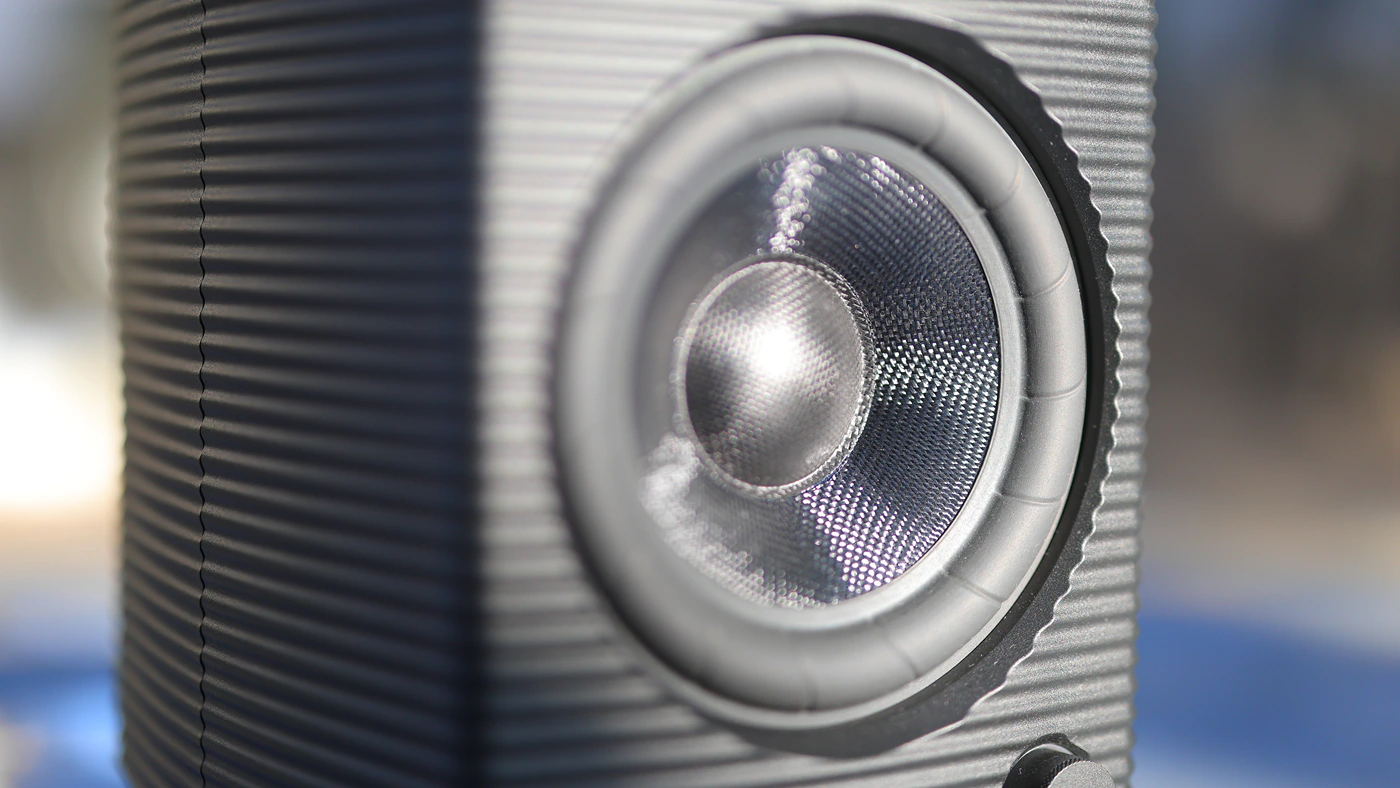
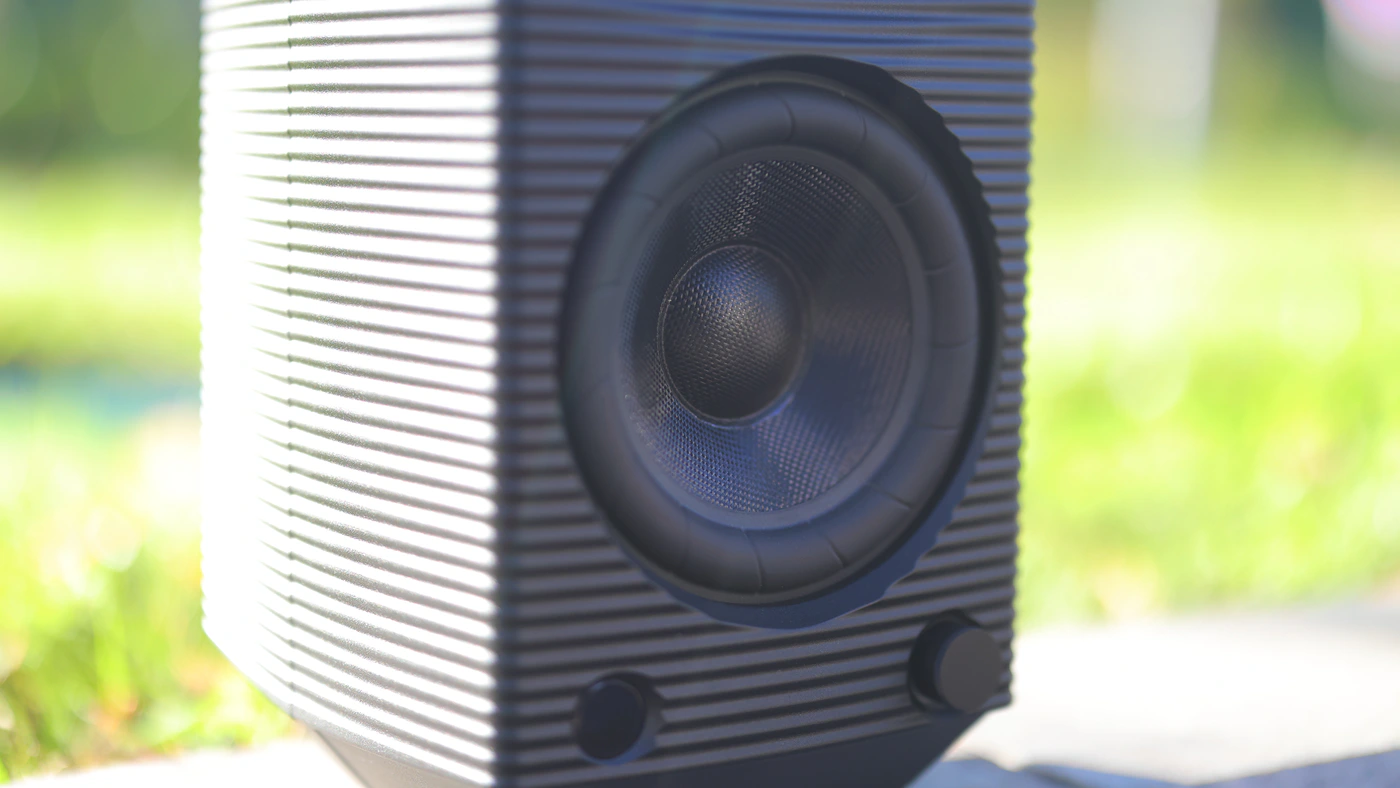
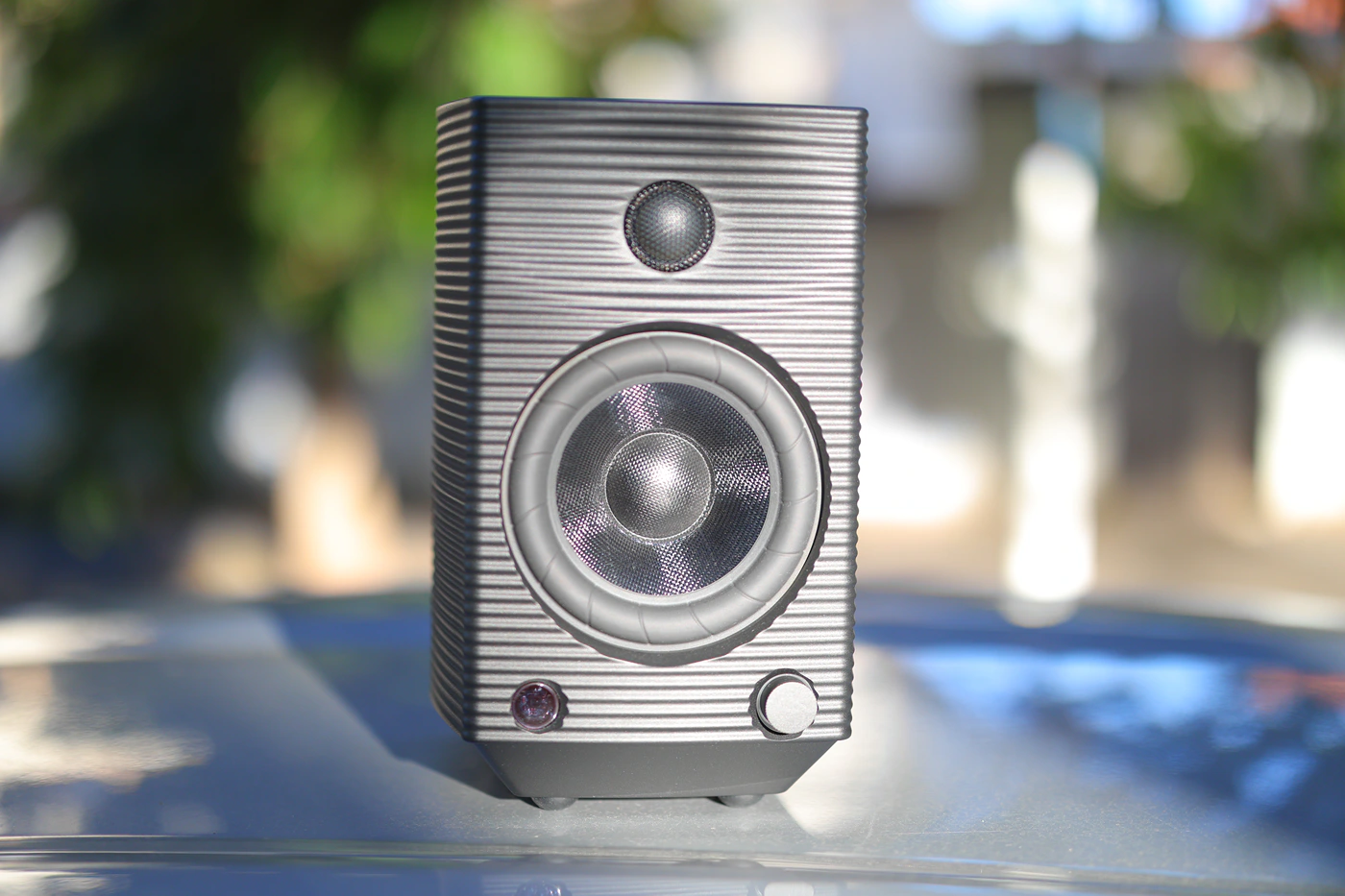
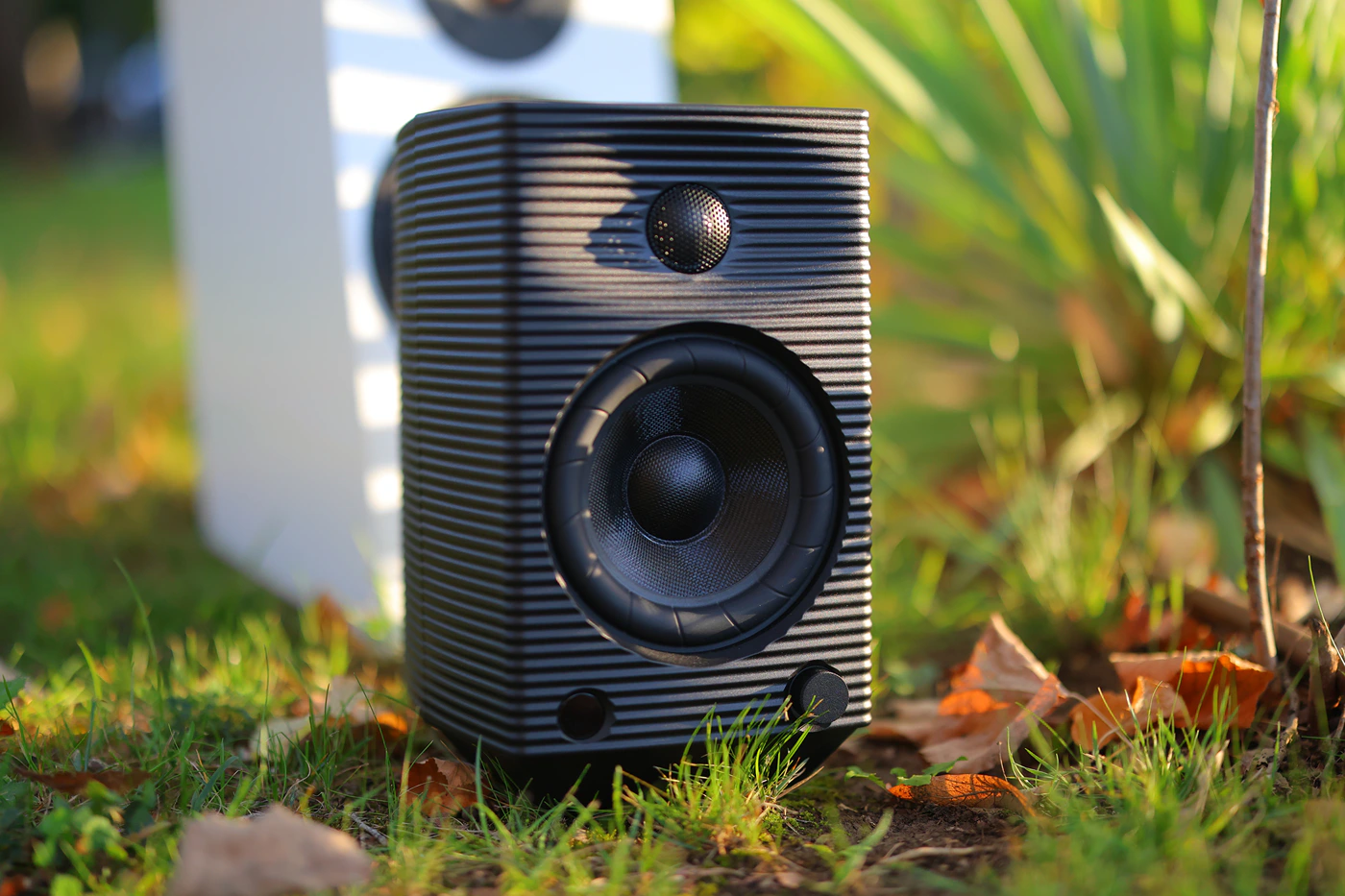
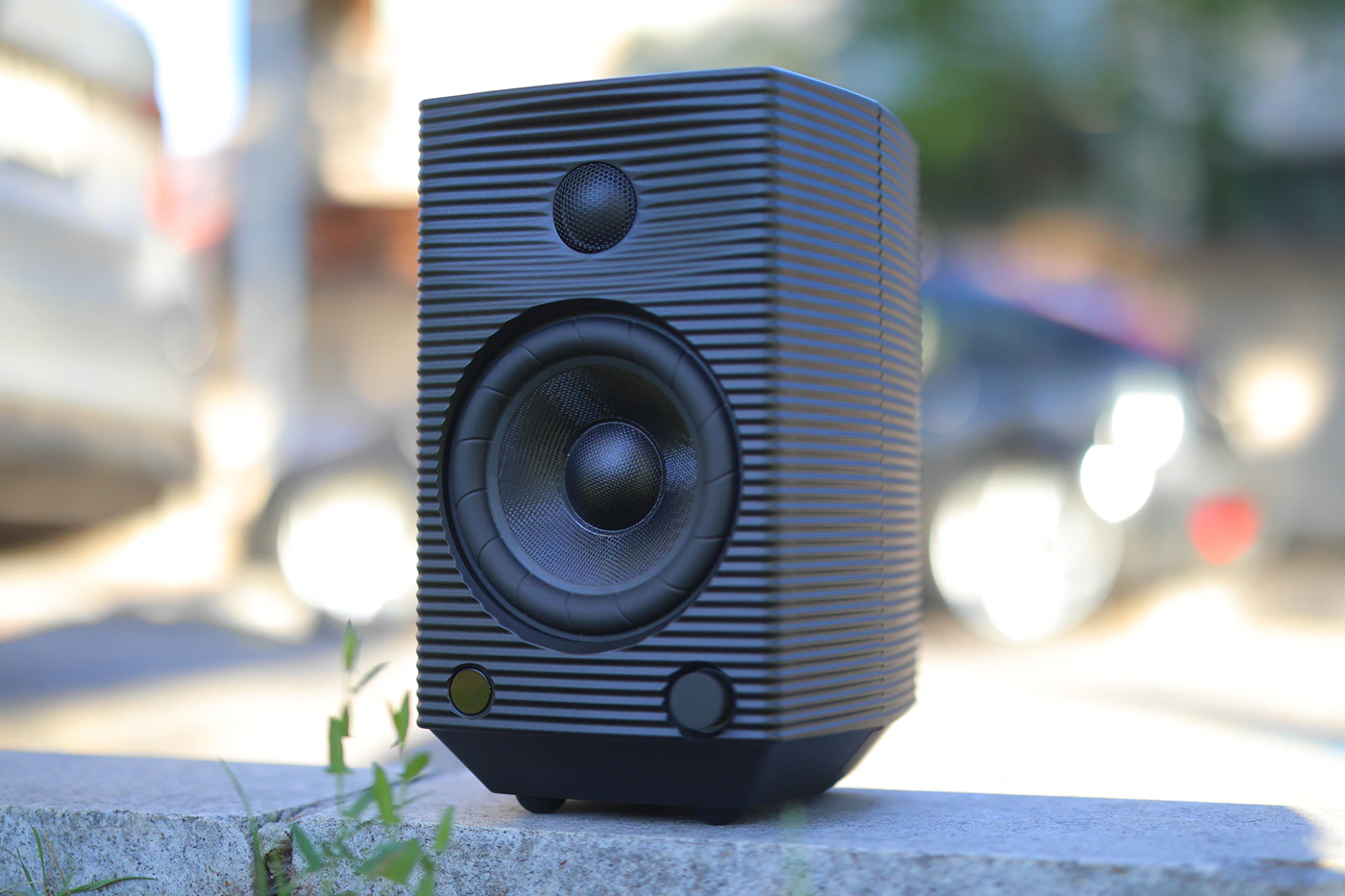
FiiO SP5 is a pair of speakers built on the success of the FiiO SP3, and they’re made to be an all-in-one listening solution, which can seamlessly integrate with your HIFI system, mastering and mixing system, gaming system and basically everything you’d use a pair of speakers for. At the low-end, FiiO SP5 uses a 5.25″ woofer with a cone made of a composite material similar to what B&W 700 uses. With a strong magnetic field, higher than 1.2 Tesla and a large 30mm long-stroke voice coil, FiiO SP5 has a driver with high flexibility and fatigue resistance. At the top-end, SP5 is powered by a 1″ composite silk soft dome tweeter with a special cooling technology using a magnetic fluid and damping system, and with a waveguide (the leading lines on the speakers) for better directionality and improved near-field listening experience.
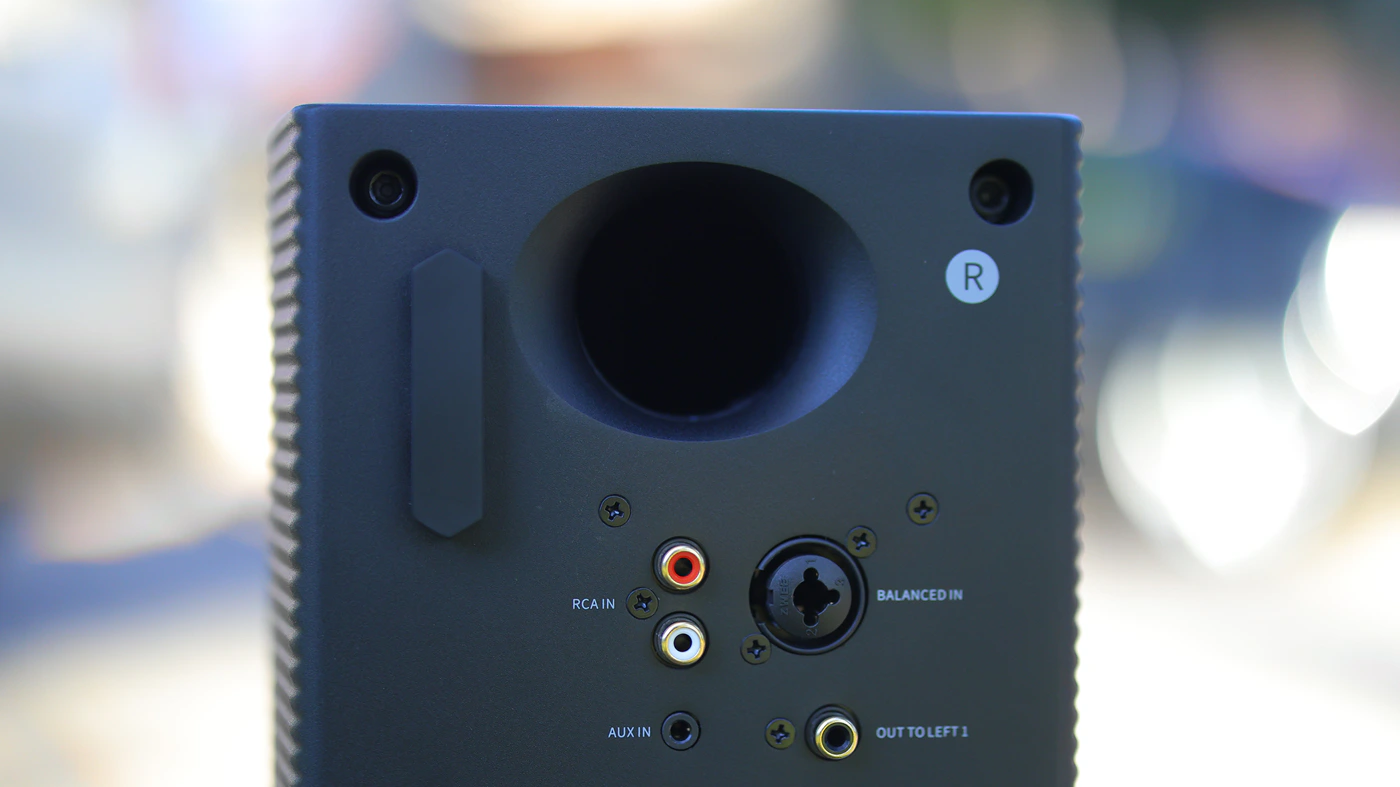
Each speaker has its own independent power supply, 120W in power. This is ample power to help SP5 deliver a highly dynamic sound and enough headroom for any dynamic passage. FiiO implemented a multi-stage rectification and filtering architecture to independently power the output stage, significantly reducing interference. A revolutionary transformer resonance system is used to convert a single power source into a dual symmetrical power supply, eliminating DC-DC noise pollution at the source. SP5 also has extremely low standby power consumption but it can be disabled if you desire.
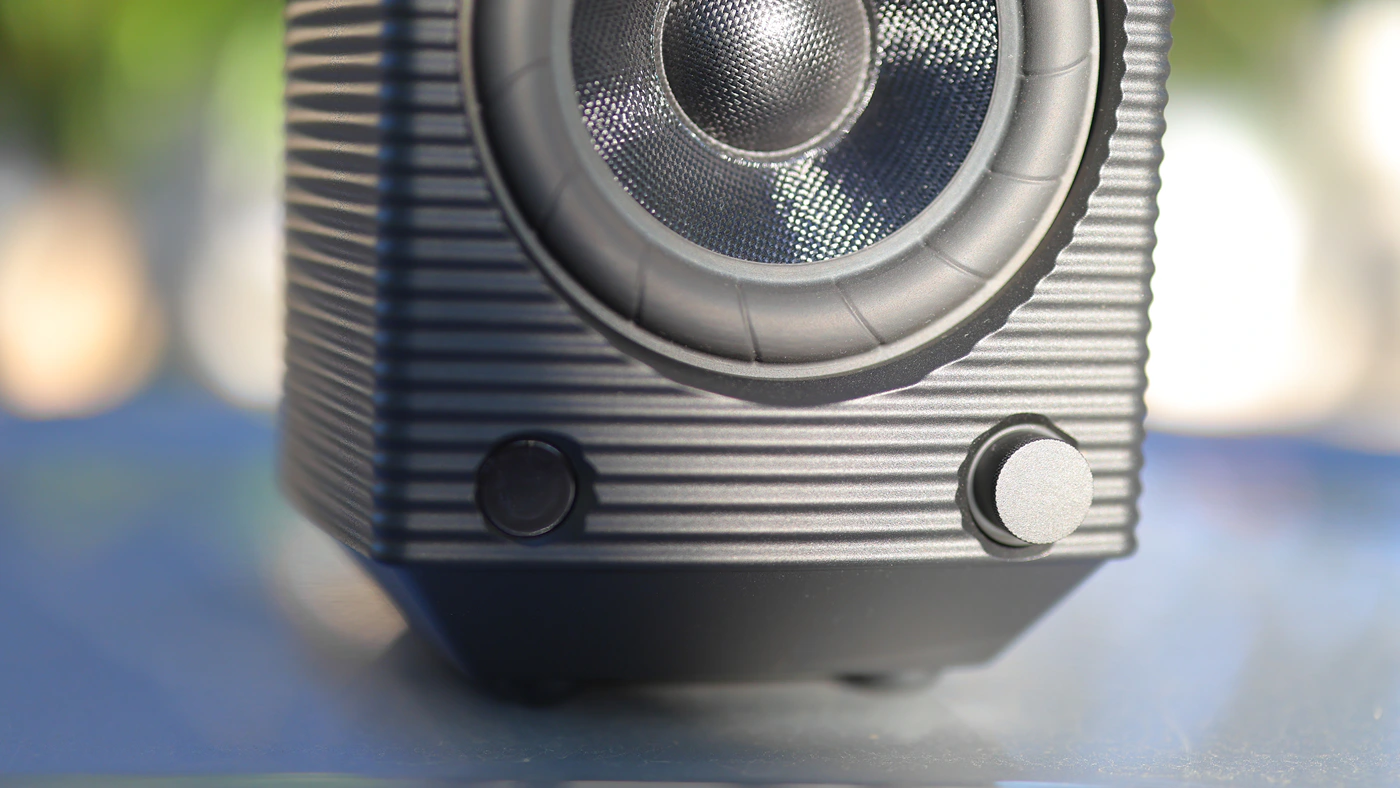
Each speaker also contains a Texas Instruments TI TPA3116D2 Class D stereo Amplifier, independently driving each channel. This allows for separate powers for woofers and tweeters, with woofers being fed 60W x2 and tweeters being fed 20W x2. Input includes XLR balanced, each speaker can receive its own XLR cable. For volume control, SP5 relies on a low-noise NJW1195A electronic volume control, each speaker having its own volume control, with a wide volume range and control, between -95 dB to +31.5dB.
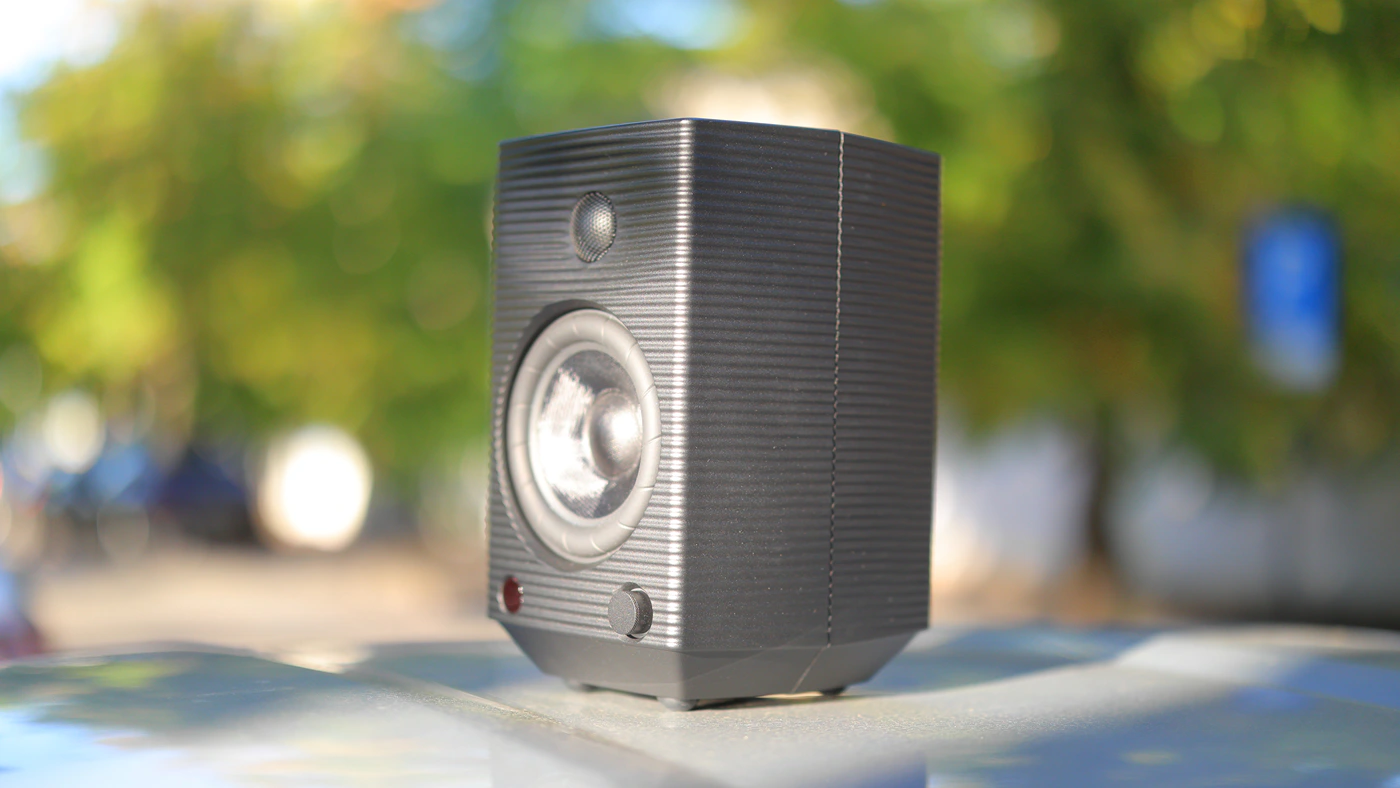
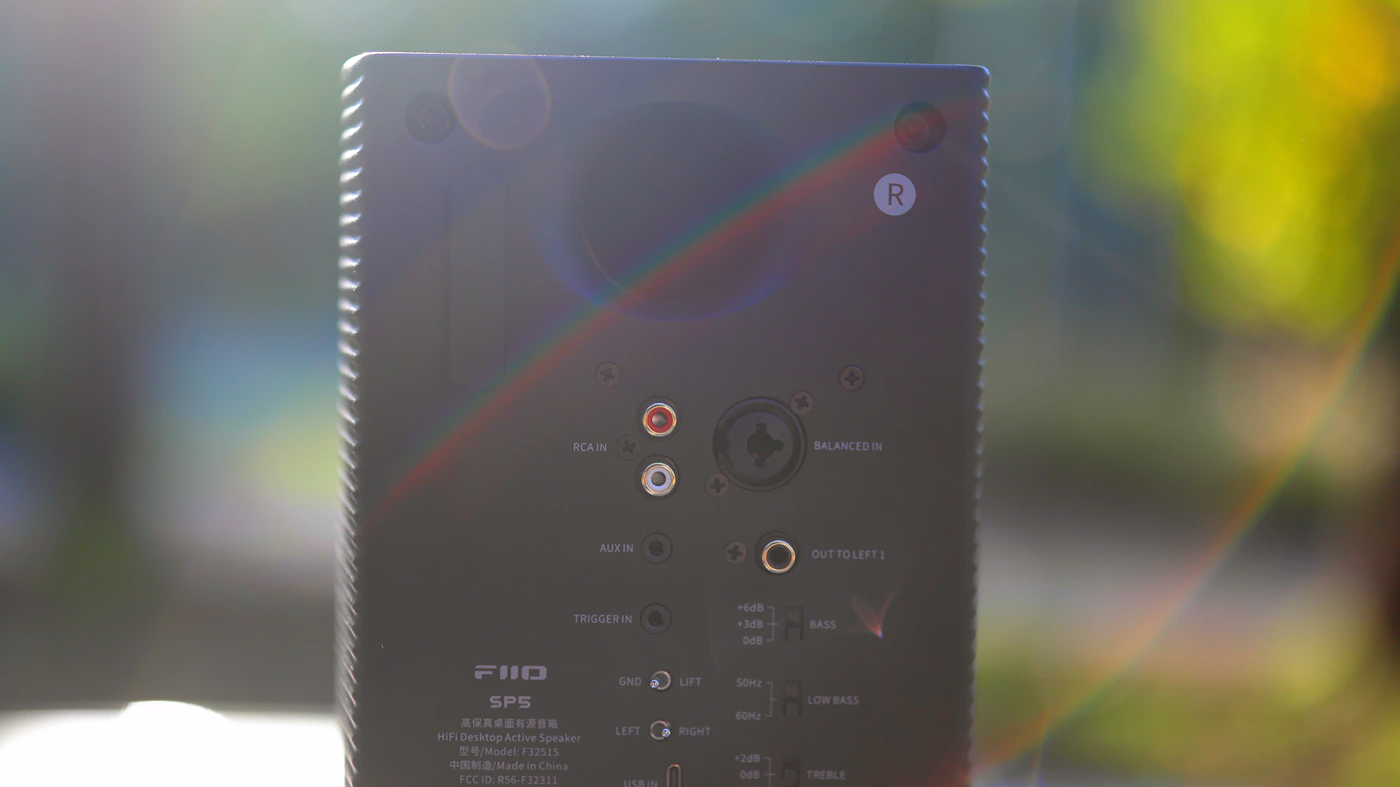
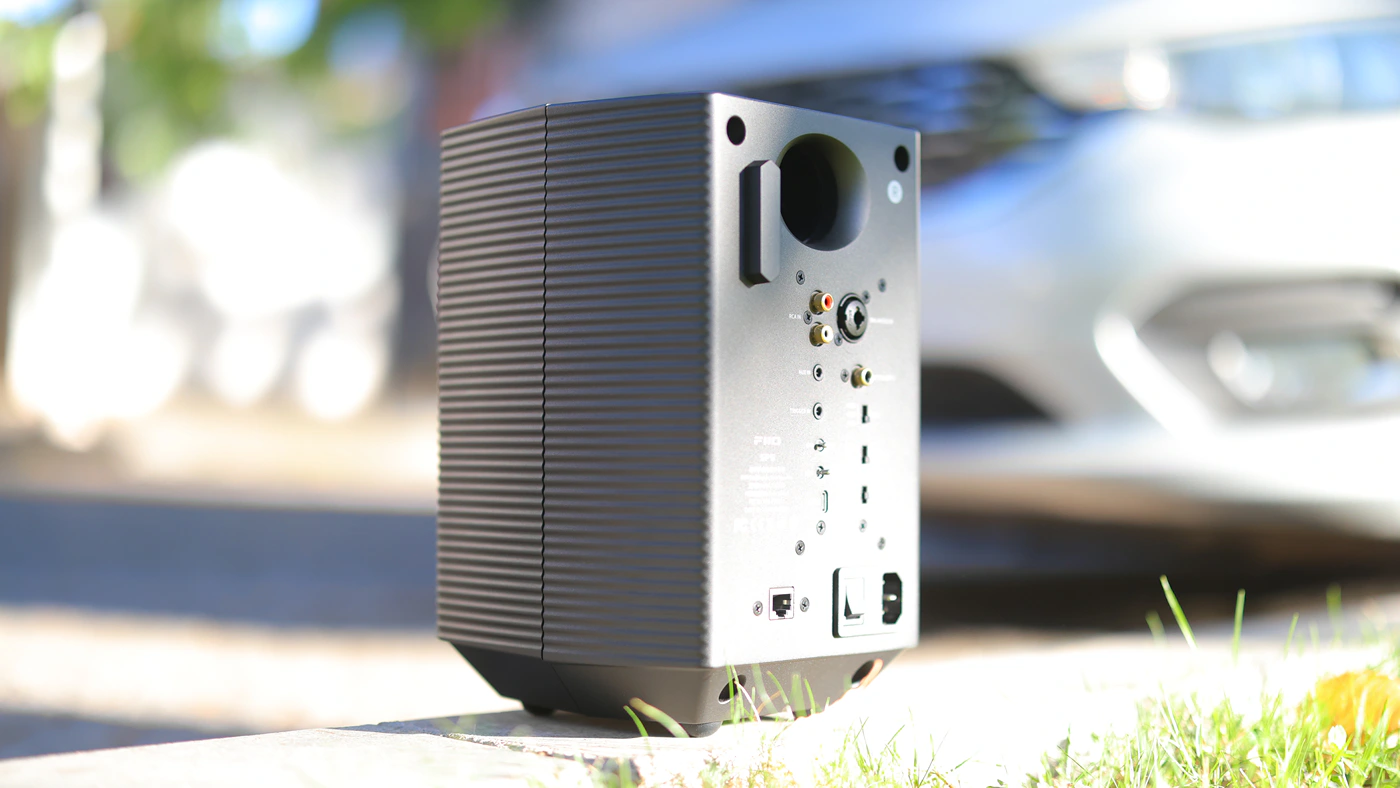
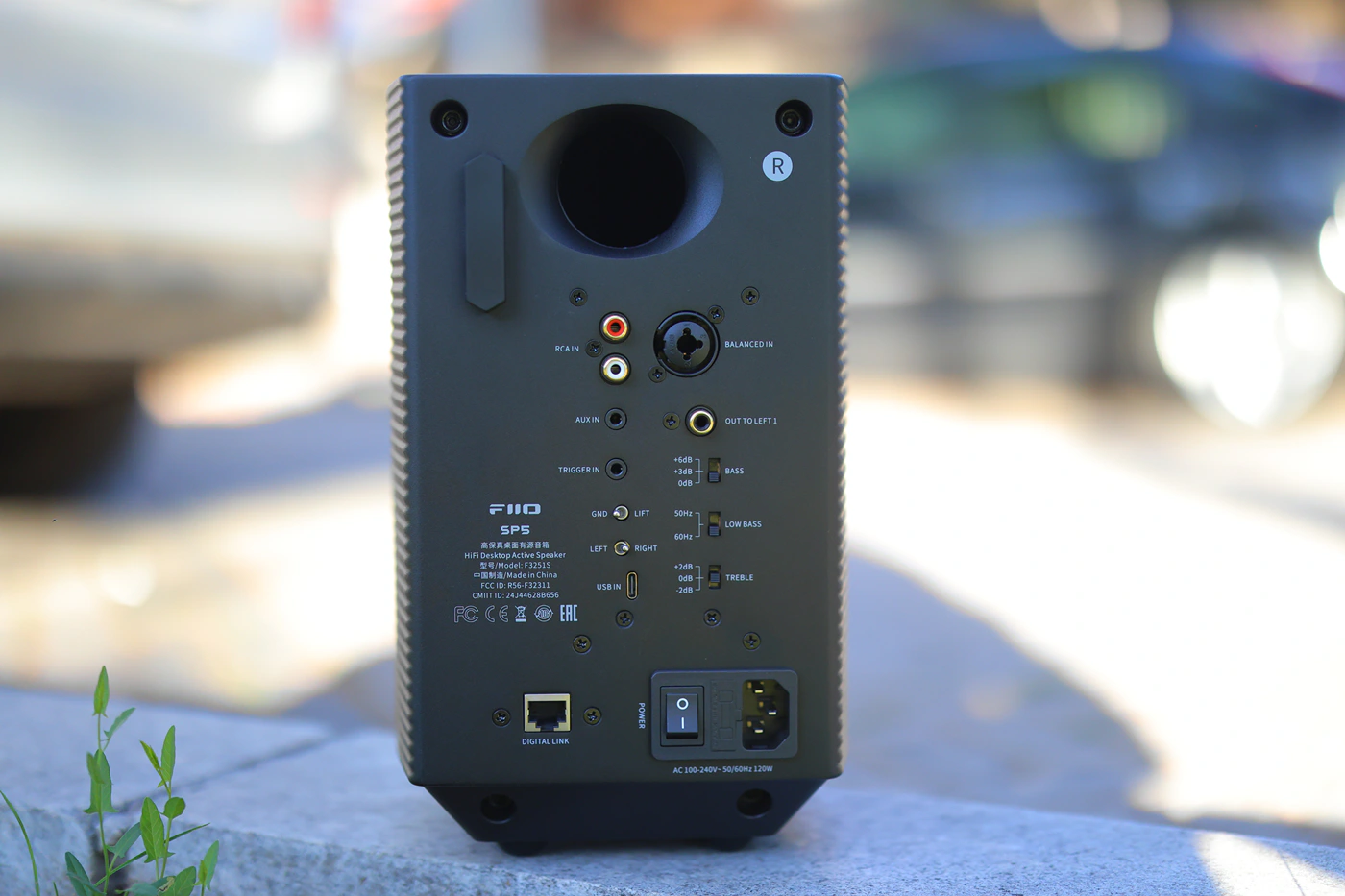
FiiO SP5 is powered by a Qualcomm QCC5125 Bluetooth chip which supports 24-Bit audio processing, and an advanced DSP. You can use SBC, AAC, aptX, aptX LL, aptX HD and LDAC, and even aptX Adaptive for powering SP5. For fine tuning the sound, FiiO SP5 has both support for parametric EQ via the FiiO APP, but you can also find three switches at the back for fine tuning the speakers, with one a bass boost, one offering treble enhancements and one that activates a low Bass setting that enhances the extension of the driver down to 50 Hz, which is beyond the usual ability of the 5.25 driver known to produce bass down to about 55 Hz.
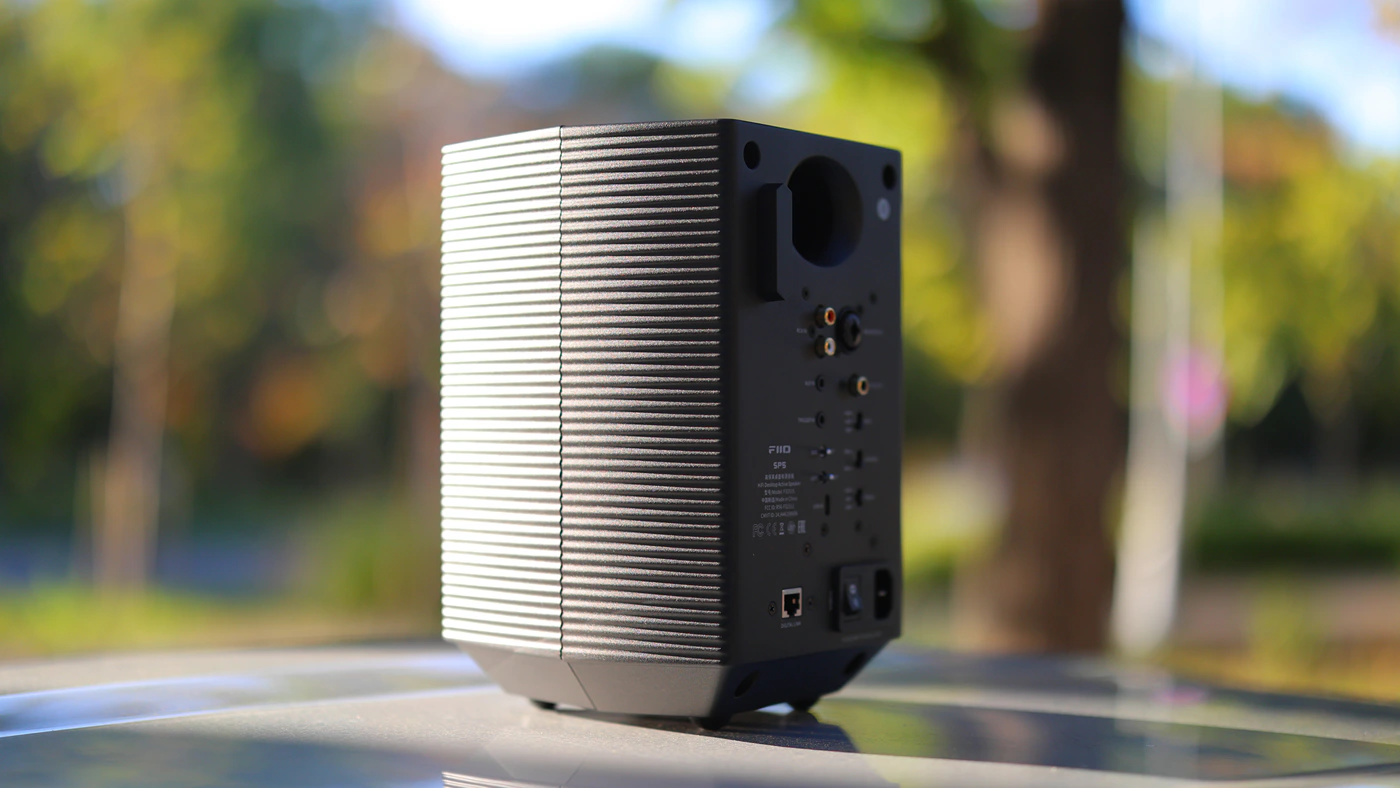
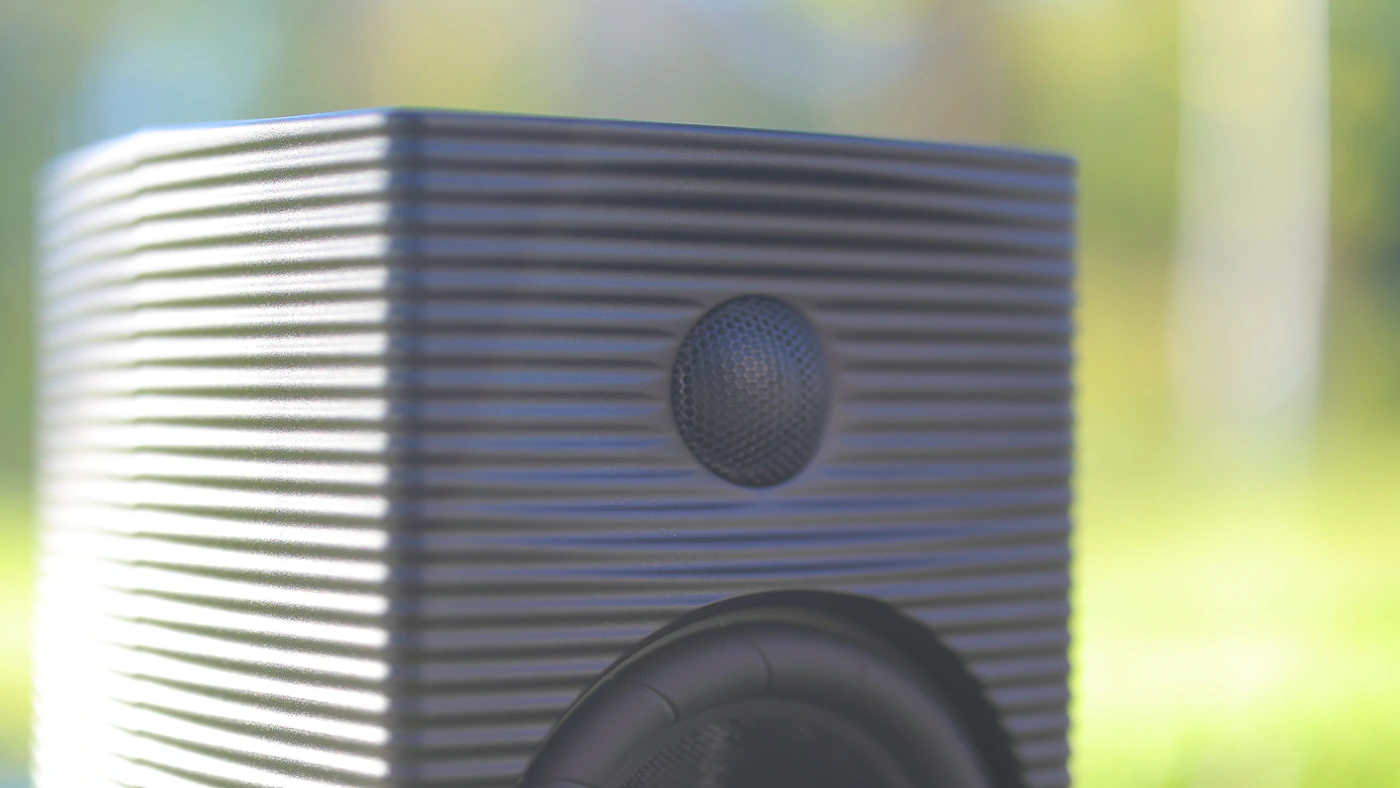
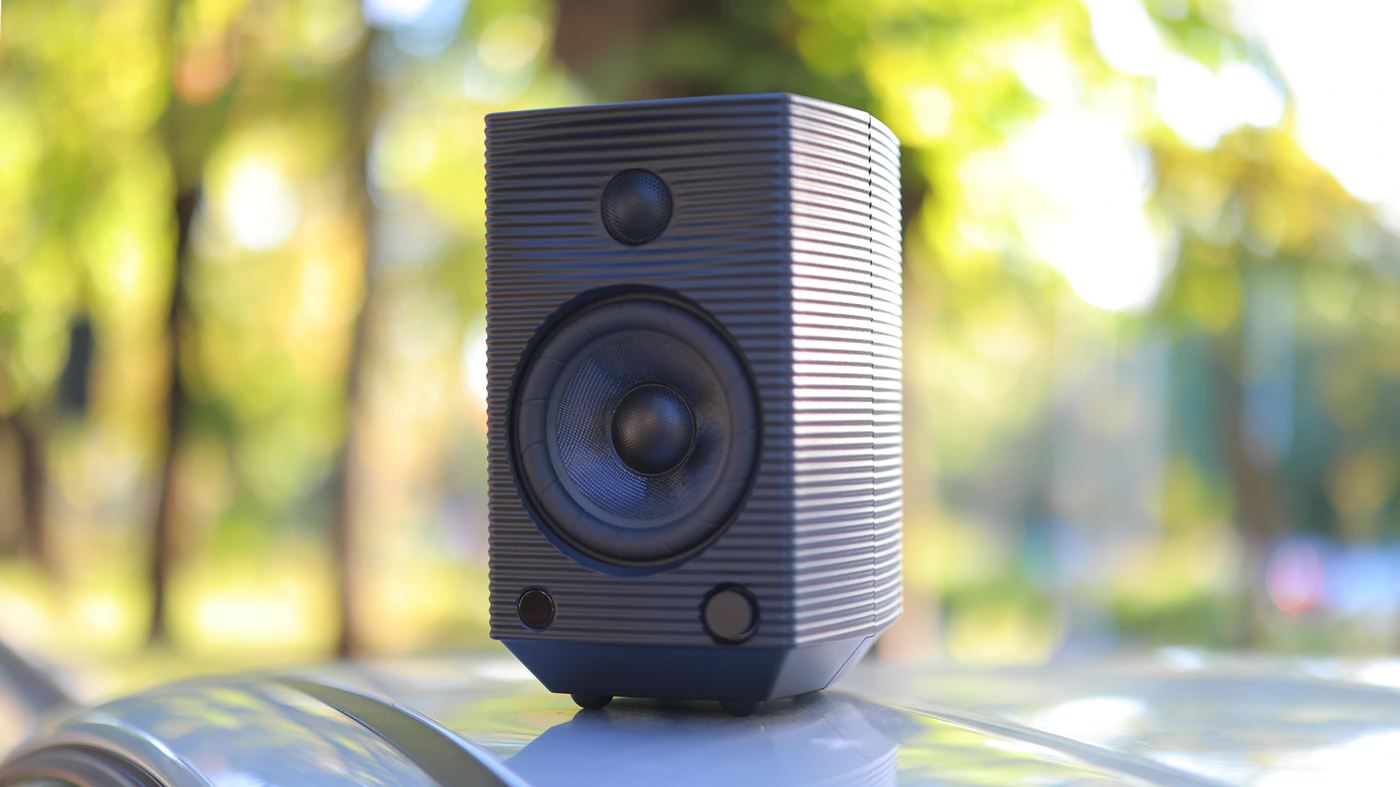
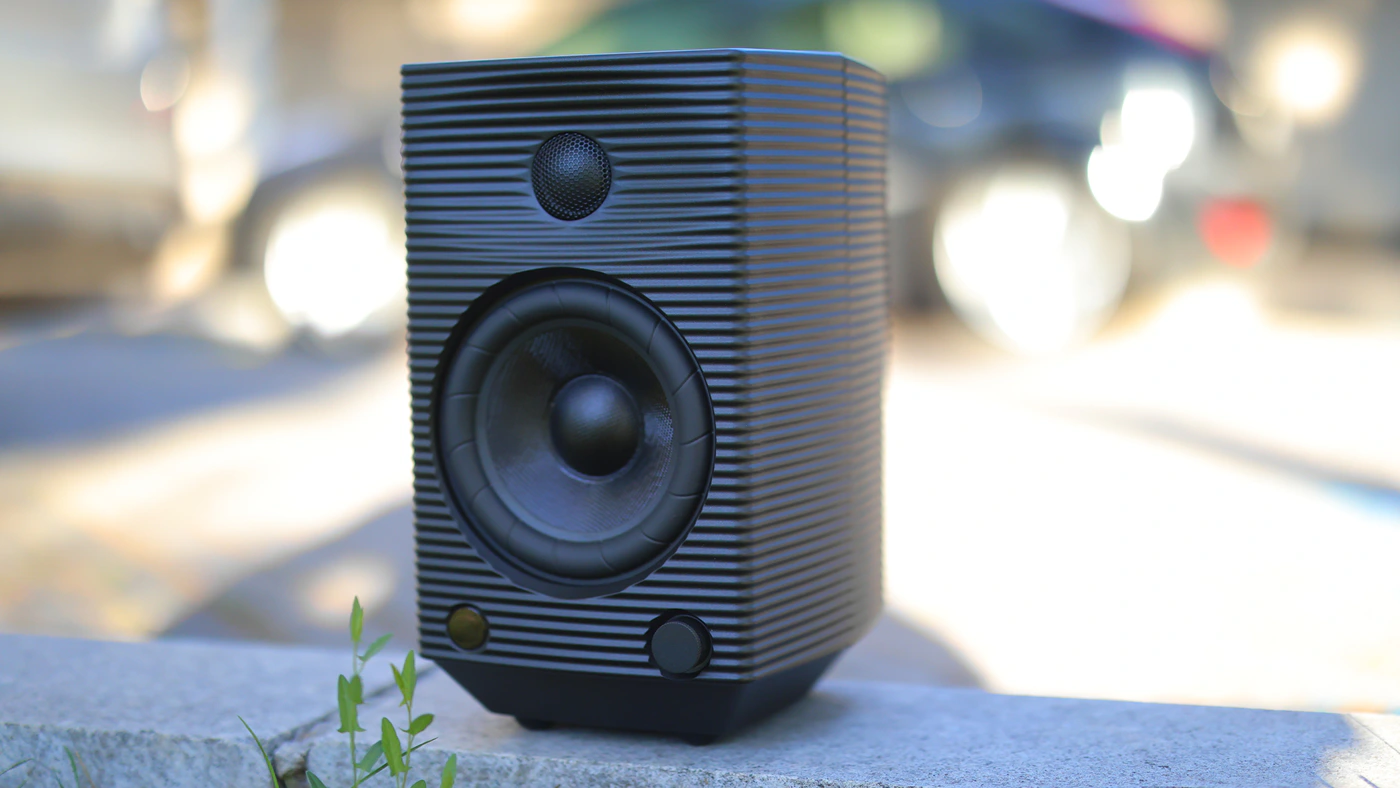
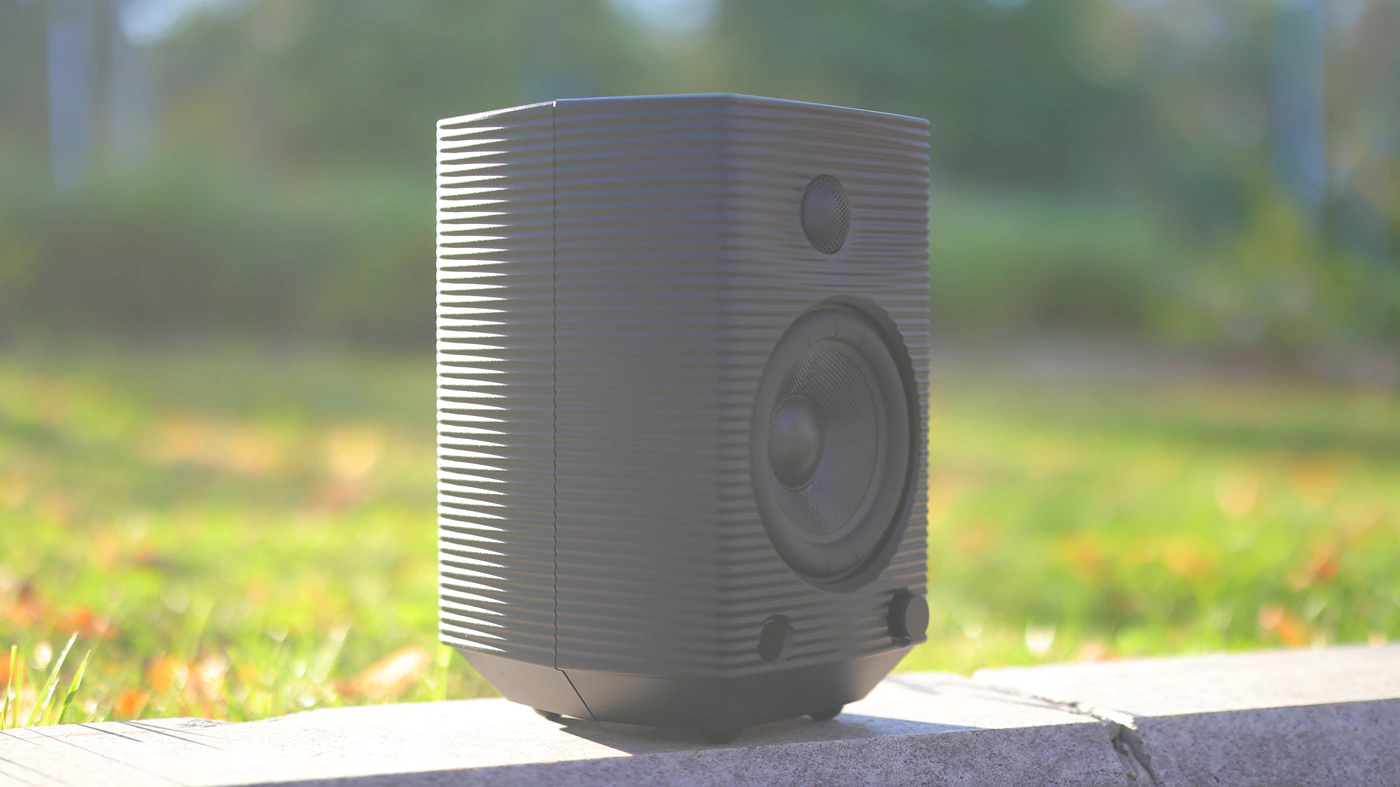
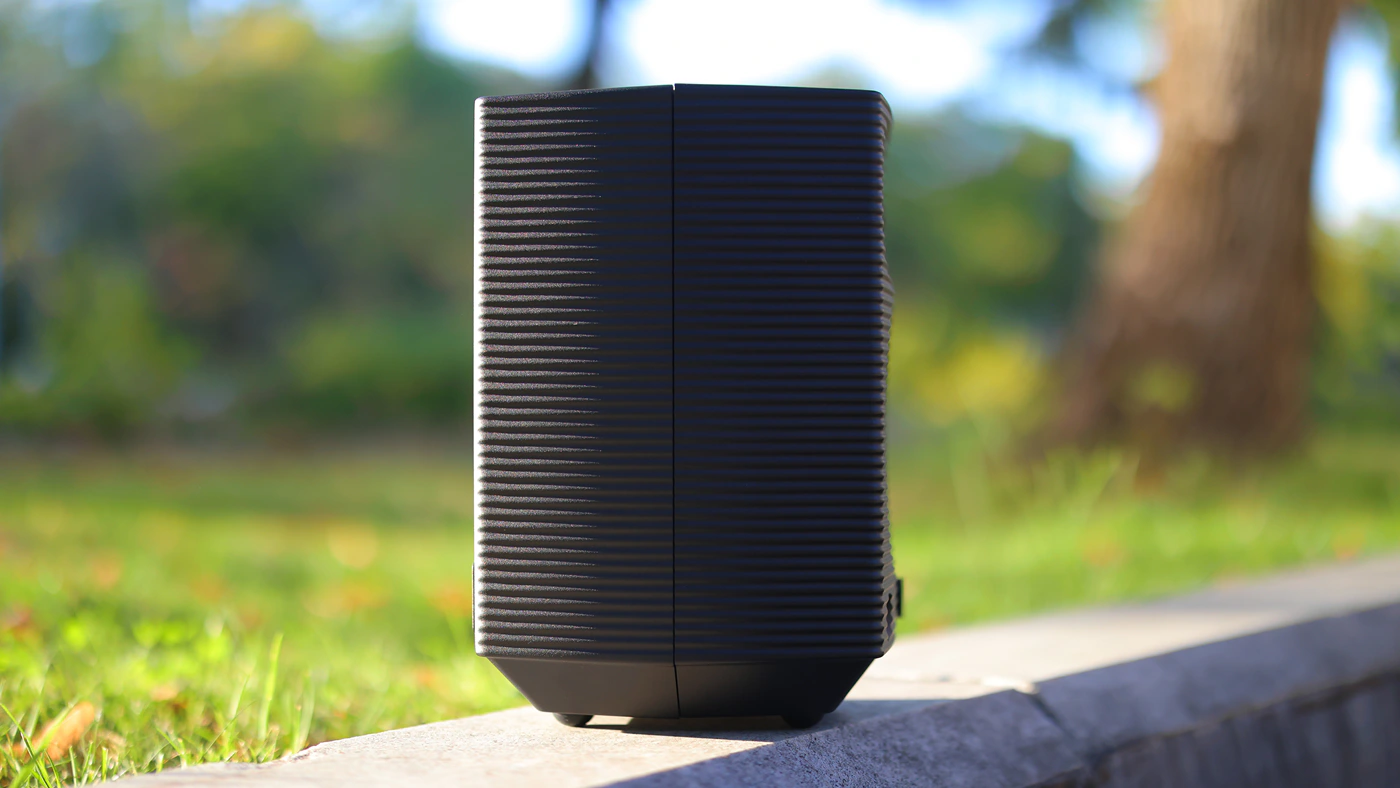
We couldn’t miss mentioning the cabinets, as FiiO SP5 uses high-density aluminum, 300% more rigid than MDF wood cabinets, and combined with a uniform internal wall structure, it will suppress unwanted resonance. The cabinet weight is reduced from 10 kG to 7 kG for enabling a larger cavity internally and boosting the low-end extension and bass delivery. A metallic cabinet is also an excellent heat management mechanism and offers electromagnetic shielding for the internal circuits of the speakers. This cabinet has horizontal stripes for increased lateral dispersion and also anti- standing waves properties to remove unwanted vibrations. Smooth, rounded edges remove diffraction and each wave is placed purposefully for structural reinforcement of the FiiO SP5 speakers.
While power cables can be debated upon endlessly, FiiO made sure that you have the best and FiiO SP5 comes with Furukawa OFC or OxyGen-Free Copper AC power cables, boasting a 3×1.5mm2 conduction cross-section, with 24K gold plated plug and flexible PVC cable sheathing. The package also includes an RJ45 data cable for ethernet, a remote control, RCA to 3.5mm audio line input cable, for using SP5 with a DAP or portable source, and an RCA audio cable for connecting the two speakers to each other, if using the USB type-c input. The input list includes XLR, RCA, Aux, USB and Bluetooth, and SP5 can decode up to 96 kHz 24 Bit data internally, with a horn-shaped rear-firing bass reflex port, and a max SPL of 104dB.
Subjective Usage And Placement
FiiO SP5 is really cool for their large size, full metallic build and exceptional drivers. They feel reliable and solid, and have a really wide dispersion, allowing you to place them quite far off the center of your view, and can be used both in traditional HIFI and nearfield arrangements. I feel like they sound the better the closer they are to you as a listener. SP5 does not care a lot about your acoustic room treatment, as they create a forward sound and most of the effects, including soundstage, are propagated directly to your ears.
There is a lot of EQ, DSP and signal processing at play, as they have a Bluetooth receiver, this includes DAC, ADC, AMP components. Having a power cable for each is a bit problematic and a great feature too. A bit problematic it is because one speaker can have a bit of extra noise compared to the other one, depending on what outlet you use to plug each speaker. And it is brilliant because it allows you to connect each to the closest wall outlet. Quite interesting, but SP5 has the best sound via XLR input, RCA input, Bluetooth and at the bottom end its own digital inputs. This is likely because the internal DAC struggles a bit, and applying DSP is easier when it is working together with the BT receiver chip.
Maximum power is insane, as they can go way above 110dB in an enclosed room, but at the same time, I kept them with +6 DB on bass and -2dB on treble at almost all times, to make up for the smaller driver size and lack of bass extension below 50 Hz. A woofer of 5.25 Inch requires quite a bit of power to work well, and it also does not produce a lot of sub-low rumble. Happily, you can correct this with a subwoofer, and my gut feeling tells me it is only a matter of time before FiiO develops and sells an active subwoofer that will make SP5 as well as other systems reach truly low-end subbas.
SP5 is quite connective with other devices, and allows me to enjoy music in multiple scenarios. Currently, there was no firmware update available for SP5 so I have not been able to apply one, the only downsides as far as I can see are that there’s a bit of extra noise in the left speaker, compared to the right one which is dead silent, and that the interconnecting cables are quite short. It also seems necessary for you to connect both the Ethernet cable in between the speakers as well as the RCA cable for them to work. Remote works well, phone control works well, and PC control works well too. You can watch movies with zero delay for the USB DAC, as well as using them via the XLR input, so regardless what DSP they might apply, it is done in real-time, with less than 10 ms of delay so you will not notice a single frame of delay even if watching content that has 144fps.
For bluetooth, it is good to keep in mind that LDAC is not enabled by default, and if you do not engage it manually, SP5 will run in AAC mode. This will downgrade the sound significantly, and you have to go into the settings of your phone and bluetooth and engage LDAC, at least for Samsung Smartphones. For USB, SP5 is a bit sensitive to the noise floor of your computer, so USB isolators as well as a higher end USB port on your computer can help with the USB noise. Despite a lot of internal filtering, it feels a bit like SP5 is quite sensitive to noise. The way you run your cables behind other electronic devices also seems to affect the sound and create quite a bit of extra noise in the left speaker, if there’s power outlets, and other EMI or RFI inducing devices in between. A bit part of this noise comes from the cable between the speakers being RCA instead of XLR or a balanced connector.
Sound Quality
Pairings – As FiiO SP5 is a pair of active speakers, they don’t need an amplifier, but a DAC. In fact, they don’t really need anything, they are a streaming pair of speakers that have wireless streaming, and could work with a digital source, so I’ve been using my PC computer as well as an external DAC, the list including FiiO K17 DAC, Keces S3+ DAC / Preamp, Luxsin X9 DAC. There is no power requirement, but the sound quality is great if you use an external DAC or the Bluetooth input. It seems like the USB input has a higher noise floor, especially in the left earspeaker, which I suspect can be corrected with a future firmware update.

Overall Signature – FiiO SP5 sounds quite detailed, punchy, vivid, but also mature and refined. They are able to stay rather transparent, and revealing, especially with rock, metal, EDM or pop music. You can hear that the amplifiers in each speaker are Class D as they have the specific D class sound, a bit V-Shaped, with a direct, revealing sound. I mention this because each speaker’s design and technology has a sound of its own. With a TPA3116D2 at the heart, SP5 sounds rather punchy and full if you engage LDAC and set the speakers correct for your room. I almost forgot to set them to 0 0 for treble and bass enhancements at the back before starting this review, but that is important, those settings at the back change the sound quite a bit, and not necessarily by adding bass or treble.

Bass – At the bottom end, you can expect the bass to start at about 50 Hz, which is quite a feat for the smaller 5.25″ driver. You can set the crossover to stop the bass at 60 Hz instead of 50 Hz if you want a tighter, more precise bass, and if you don’t mind the roll-off, or if you can provide SP5 with a subwoofer that will replace the missing bass. Regardless of that setting, bass is generally natural in speed, clean and a bit wooly, warm, fuzzy. Bass is impactful at higher volumes, and more neutral at lower volumes, a bit characteristic of the Class D AMP used inside of SP5.
Midrange – In the mids is the magic of SP5, as that’s where the driver combo excels. SP5 creates a warm, full, pleasing midrange, with outstanding saturation for both male and female voices. They can render a different tone for each song, each master and each mix, to the point where if you’re using them in a nearfield position, you can consider SP5 to be an excellent studio monitor. Not only are they precise, but also quite transparent, rendering the exact amount of instrument separation that each song has, with a similar presence and punch for both male and female voices. I find the sound to be quite perfect for all recent music, pop, EDM, Dubstep, Rock, Metal, they simply shine with electronic music. But playing some classical also sounds excellent, mids are rich and a bit fuzzy, like having a bit of tube magic applied, either via DSP, or via the resonance point of the enclosure and the drivers.
Treble – You can hear the treble of the SP5 extending up to 16 kHz, but you can bump the presence and clarity of the said treble much higher if using the switch at the back. That treble switch promises just 2 dB of extra treble, but it actually changes the entire upper midrange and treble, and has more like 6 dB of impact, it opens up the upper midrange, gives music more brilliance and shimmer, and especially combined with the bass switch set to max, you get a very different sound, more bombastic, precise, but without any midrange recession. The best combination of settings is with the bass slider at max, treble slider at max, and bass setting at 50 Hz, so the drivers push all they can without a low shelf filter.
Dynamics And Textures – FiiO SP5 creates a beautiful texture with a full sound, each texture is detailed, expressed nicely, the way Class D usually does, crisp and edgy. You can hear textures in synths, but SP5 has the lower midrange and bass driver creates a somewhat fuzzy, wooly sound that gives music extra air and musicality without taking away from the resolution of the speakers. Dynamic range is a bit compressy, exactly because SP5 uses quite a bit of internal processing and a Class D AMP, but this brings forward quiet details, gives music a more revealing presentation, and creates a very crisp upper midrange.
Loudness Saturation Gradient – Characteristic of both the AMP stage and the speaker design, SP5 sounds far more dynamic, more punchy, more V-Shaped and more brilliant at higher volumes, and gets quite neutral, bright and a bit digital sounding at lower volumes. The driver and AMP combo simply pushes a much better impact and colour, better resolution if you go higher in volume, with SP5 reaching their full potential starting with 80 dG, and they get better and better, the louder you go up to 135 dB, above which the speakers can struggle a bit, at least in a large open room. With most rooms, the level of volume and SPL will be plentiful.
Soundstage – FiiO SP5 creates a natural-wide soundstage, excellent for modern music. SP5 is great at separating instruments, creating a uniquely defined stage. This type of presentation gives music depth, width and layering. In rock and metal, you can hear and explore multiple, rich layers of guitars, voices and synths, while with EDM music, SP5 creates a superb holographic soundstage. They sound wider if you space them further apart, but there’s a limit to how far apart they can be placed, given that the ethernet cable as well as the RCA cable used to connect them is not extremely long, around 2 meters.
Comparisons
FiiO SP5 vs Audioengine A5+ Wireless – (749 USD vs 500 USD) – Audioengine A5+ is more of a nearfield monitor, so I placed them at about the same distance for testing. A5+ Wireless gets loud harder, it has trouble keeping up with extreme volumes, as they tend to introduce distortions, and they also have far less connectivity making SP5 feel really modern, progressive, but also powerful, and punchy. Sonically, A5+ is a neutral – linear speaker, the most linear – neutral pair of speakers I have ever heard. The sub-bass climbs down a bit more than with SP5, so with SP5, you really don’t have much sub-bass below 50Hz, but with A5+ wireless, you can still hear some sub-bass down to 40 Hz, but SP5 has a much better bass impact, warmer bass, more fuzzy bass, but also more musical, cohesive sound. A5+ wireless is quite dry, linear and doesn’t have a strong soundstage or instrument separation, so their sound is very flat and non-dynamic, great for studio, but quite unengaging, while SP5 sounds far more fun, engaging, with more treble sharpness and sparkle, much higher resolution, higher instrument separation and more natural textures. Overall, I would recommend SP5 far more, but it is pricier, yet with the extra functionality and extra sound quality, I believe it to be a better purchase than A5+ unless you work in a studio, where the linearity of A5+ wireless would be super welcome.
FiiO SP5 vs SVS Prime Wireless PRO – (749 USD vs 899 USD) – SVS Prime Wireless Pro is fun, they can produce quite a bit of low-end punch, and can keep their cool at high volumes, very similar to SP5. In fact, most features are similar between the two, including the wireless support, yet SP5 is much better made, heavier, and does not scratch as easily as SVS Prime Wireless Pro. SP5 also can go much louder with much lower distortion, thanks to the better tweeter. Sonically, SP5 sounds more vivid, more realistic and more dynamic, more punchy and far more vivid, while SVS Prime Wireless PRO sounds smoother, more relaxed, laid-back and lean, with a similar size for the midwoofer, resulting in a similar level of depth compared to SP5. Most of the issues that I had with SP5 are similar with SVS Prime Wireless PRO, and in fact SP5 has much better EQ, sound processing, better internal components, resulting in a fuller, deeper, more colorful sound, at the cost of SP5 also being more sensitive to EMI and RFI, likely due to the cables that connect the two speakers. I would recommend buying the SP5 for most users, they are much better made, and can produce a technically higher resolution sound with better technicalities, while having better connectivity.
FiiO SP5 vs FiiO SP3 – (749 USD vs 349 USD) – Both from FiiO, both having a similar shape, but with a really different price tag, FiiO SP5 and SP3 are both great options for desktop users who crave and seek smaller than usual bookshelf speakers. SP3 has a much smaller mid woof driver, which creates an even shallower bass extension, it is far less connected compared to SP5, but they take much less space and are easier to set up. Both speakers are made well, and you can pump more bass or less bass in both, but with SP5 you can also tweak the treble. Sonically, SP5 has a deeper bass, more vivid sound, and can achieve much higher max loudness with less distortion and better control. The difference is rather huge, but so is the price difference, and SP3 takes far less space on my desk. Both have the same excellent metallic casing, and both speakers have a wire that connects the two speakers, but SP5 uses two cables and is more sensitive to noise, EMI and RFI, while SP3 is not sensitive, uses a cable with far more pins and it is more reliable in noise conditions. With SP5 you need two wall outlet plugs to power both speakers, while with SP3, you power just the right one, and the cable between them conducts the power as well. If you need more bass extension and a higher resolution, I recommend getting the SP5, it is a better performing speaker.
Value and Conclusion
Considering the affordable price of FiiO SP5 relative to other speakers and also that SP5 has a strong bass, and excellent extension down low, plus that they don’t need a separate AMP, and not even a DAC, the value is incredibly high. In fact, this is one of the pairs of speakers with the highest value you can purchase, and FiiO has been striking full 10/10 with all their speakers now. If you really think about it, more than half the price of the FiiO SP5 is in the cabinets which are made of full aluminium.
At the end of the day, FiiO SP5 is brilliant, highly resolving, and one of the most connected pairs of speakers of today. While inherently a bit sensitive to the noise of your power outlet, how much EMi and RFI you have in your room, they can sound excellent with modest files, bluetooth, and you can apply a global EQ to the sound, so you can play a lot with how SP5 sounds like. In fact, one of my favorite things about them is that SP5 has the bass and treble extra control, and they also have individual power inputs, as well as line in ports, so the options are endless, and sound quality is plentiful. If you want a pair of active speakers, FiiO SP5 is currently the best one I can recommend at this price point, having the most solid impact, best resolution and cleanest punch, while being quite a bit ahead of the curve when it comes to connectivity and software support.

PROs
- Uniquely good build quality and design
- Very easy to place, works well both near field and far field
- Extreme levels of power and maximum volume
- Warm and fuzzy bass
- Punchy and colorful sound
- Brilliant, fast treble that gives SP5 a high resolution
- Reliable connection, strong bluetooth support and excellent overall sound with all inputs
- Stunning micro details, resolution, and clarity, with multiple ways of tuning and EQing the sound
- Built-in crossover and lowpass shelf filters
- Remote included in the package
- Price Performance ratio is far above the market average
Cons
- Quite sensitive to EMI and RFI noise, especially the cable, which will show up in the left speaker
- Needs both the ethernet and RCA cables to work
- Cable length is limited, so you’ll mostly be doing a nearfield setup
Product Link
Amazon – https://amzn.to/4pP4OI5
Aliexpress – https://s.click.aliexpress.com/e/_c4kn1aU5
--- Please remember to stay safe, and always have fun while listening to music!---
- If you have a dime to spare, please donate, and help us! It would make the day brighter for me and my wife-
Full Playlist used for this review
We listened to more songs than those named in this playlist, but those are excellent for identifying a sonic signature. I recommend trying most of the songs from this playlist, especially if you’re searching for new music! The playlists are different for Spotify, Tidal and Youtube, and based on the songs I enjoy and are available on each!
https://www.youtube.com/playlist?list=PL_cjBXGmwSHSdGcwuc_bKbBDGHL4QvYBu
https://open.spotify.com/playlist/5J3oloz8Riy9LxEGenOjQ0?si=979ba4f082414be7
https://tidal.com/browse/playlist/330fd544-8e5b-4839-bd35-676b2edbb3d5
--- Contact Us ---






Just recently purchased k11 r2r don’t know how fiio just keeps doing it. Something that overperforms ,with actual thought and value being presented at such competitive price points.This speaker is just the latest example. Great review.
Thank you so much and happy to hear you’re having fun!