Aune NC1 Evo Audio Clock And Linear Power Supply – Two In One Audio Fun
Aune NC1 Evo is a $429 USD Audio Clock and Linear Power Supply, with high-precision OCXO Audio Clock, 2 x Sine Wave and Precise Linear Power Supply. NC1 Evo comes with a Dual DC Output at 9V or 12 V and 2 A, being compatible with a wide range of devices. We will briefly compare NC1 Evo with Aune SC1 Evo (699 USD), Keces P9 Power Supply (999 USD).
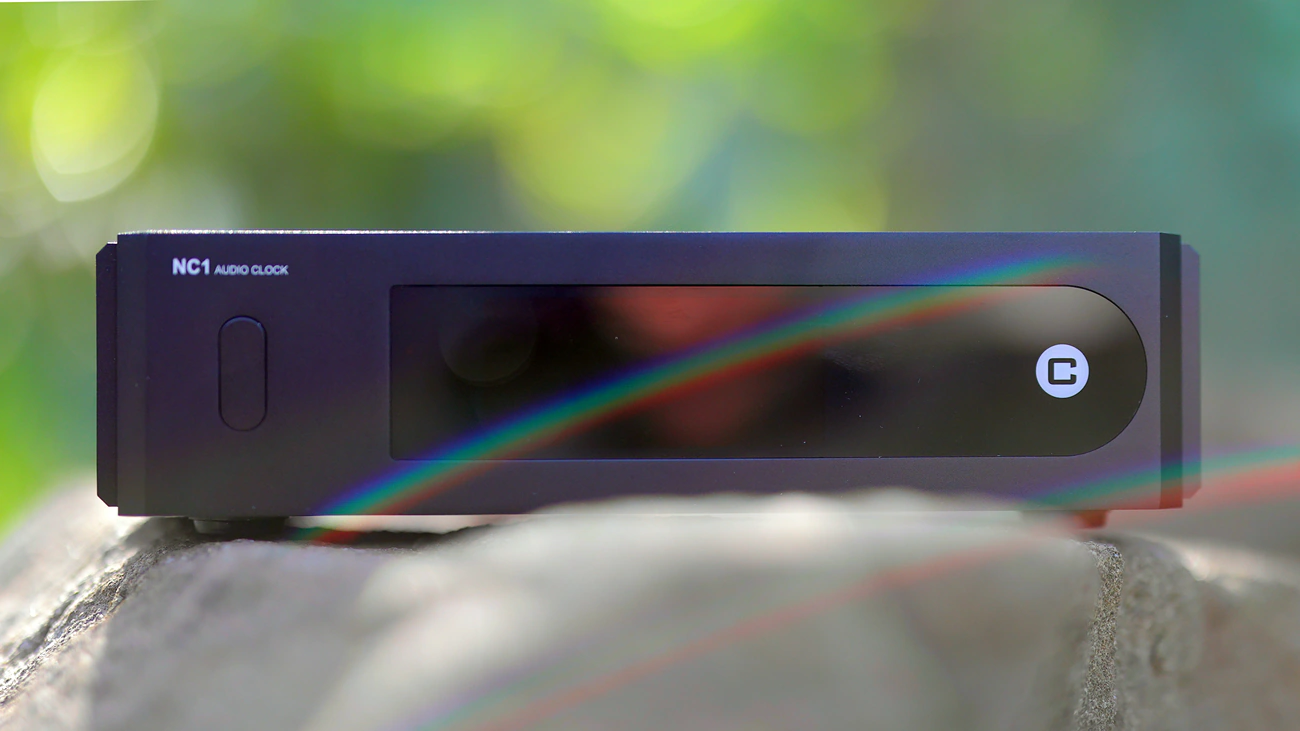
Introduction
Aune Audio designed the NC1 Evo to be a direct competitor to their higher end SC1 Evo, but NC1 Evo comes with both an audio clock, and Linear Power supply, being a two for one kind of device that improves the sound without paying twice or taking both the space for two devices. Aune products can be purchased from Amazon, as well as HIFI shops.

As an Amazon Influencer, I earn from qualifying purchases, and using the purchase links in my reviews helps me maintain this website and Youtube Channel. Audiophile-Heaven has no Ads and our Youtube Channel has no midroll ads, and our work is supported by Affiliate Links and Donations. Huge thanks to Aune for providing the sample for this review, in exchange for my honest opinion.
Product Link
Amazon – https://amzn.to/4tT3ncS
Build Quality – Design
Aune NC1 Evo brings both Precision Timing and Flawless Power Delivery, enhancing sound fidelity. To do this, it is a high-precision OCXO audio clock with an integrated power supply. Using OCXO or Oven Controlled Crystal Oscillator, NC1 Evo keeps the temperature fluctuations within a narrow range, creating a stable and precise clock, with minimum phase noise and jitter, rendering better micro-dynamics and lowering the THD or Total Harmonic Distortion.
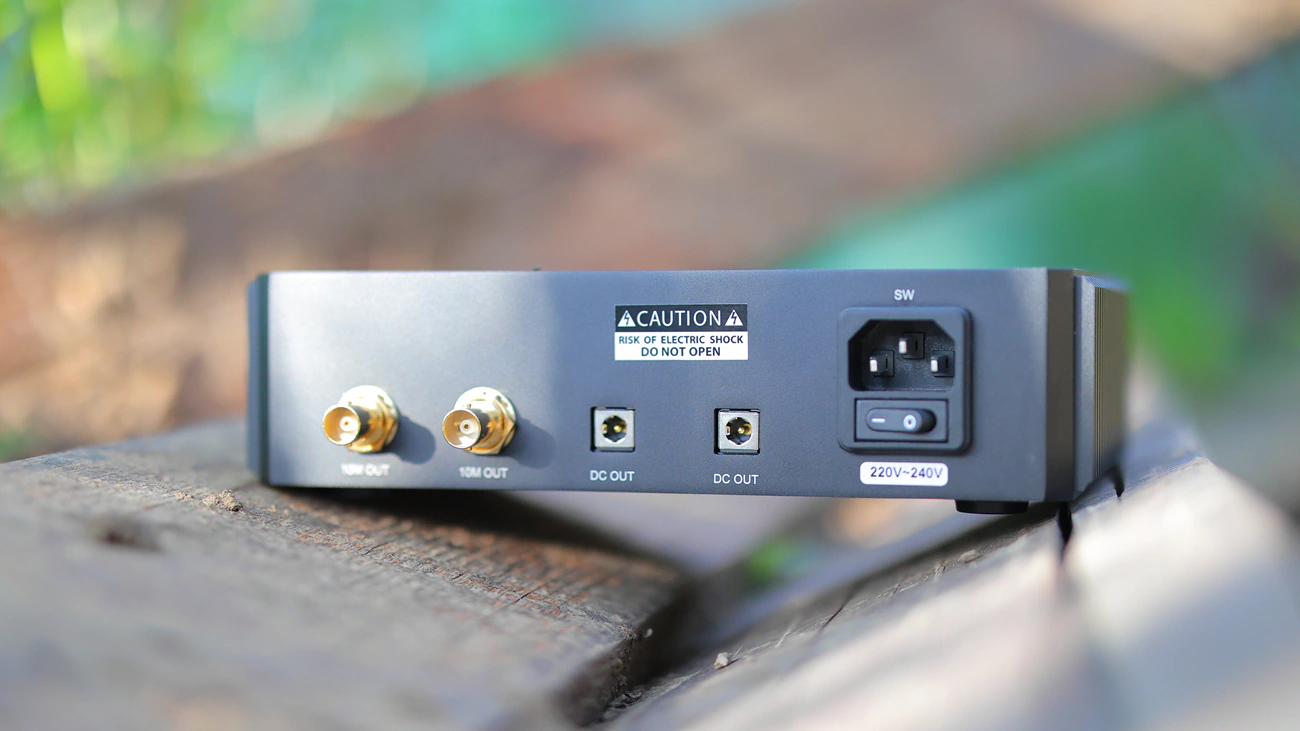
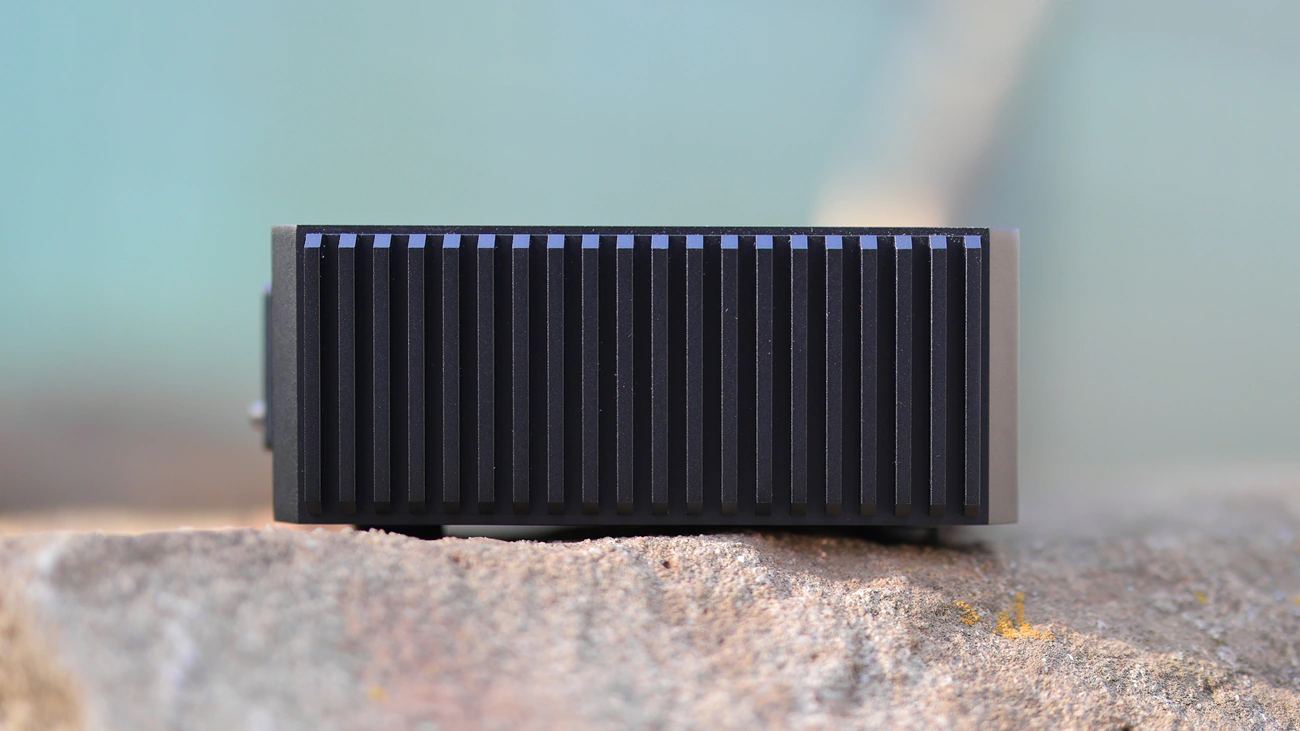
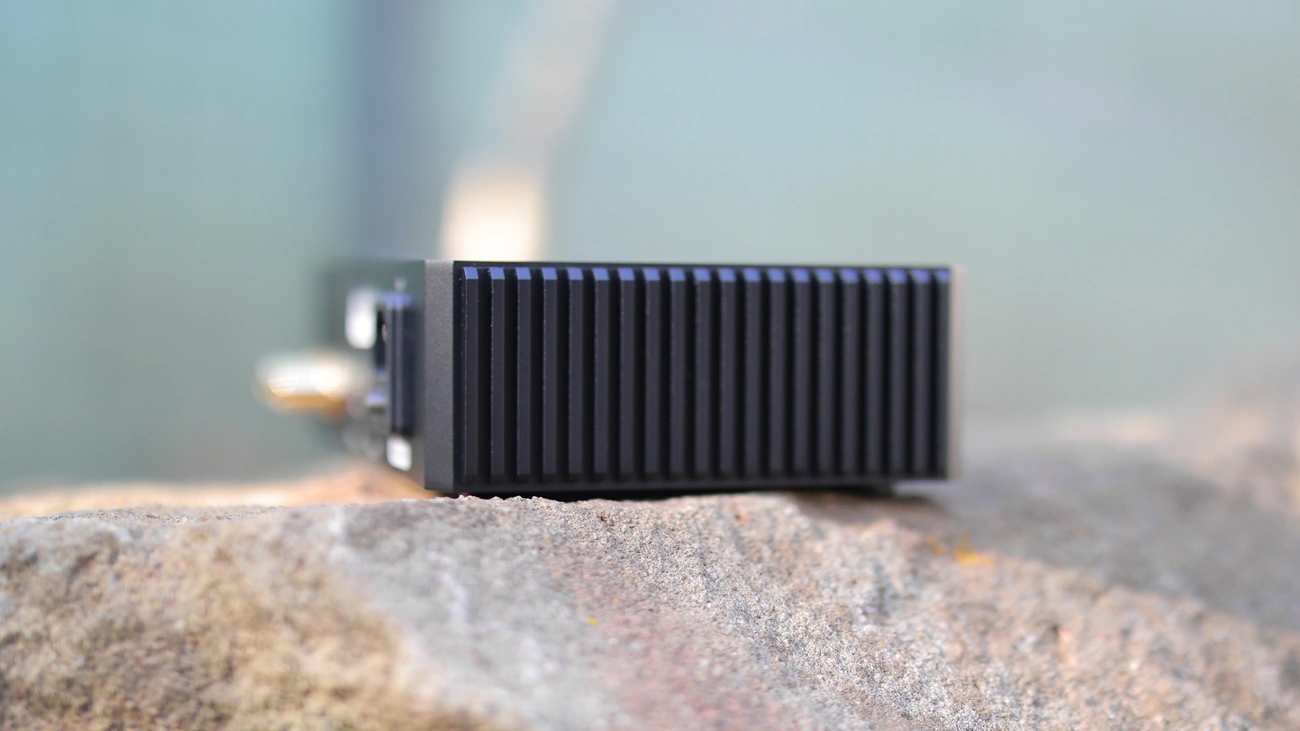
With a chassis made of high-grade aerospace aluminium, combined with a multi-layer isolation, the clock signal of the NC1 Evo remains perfectly clear both indoors and also outdoors, in a concert or in demanding applications. To bond the clock to a good power supply, Aune designed a special low-noise audio transformer that ensures background silence and precise filtering aiming for warmth and richness.
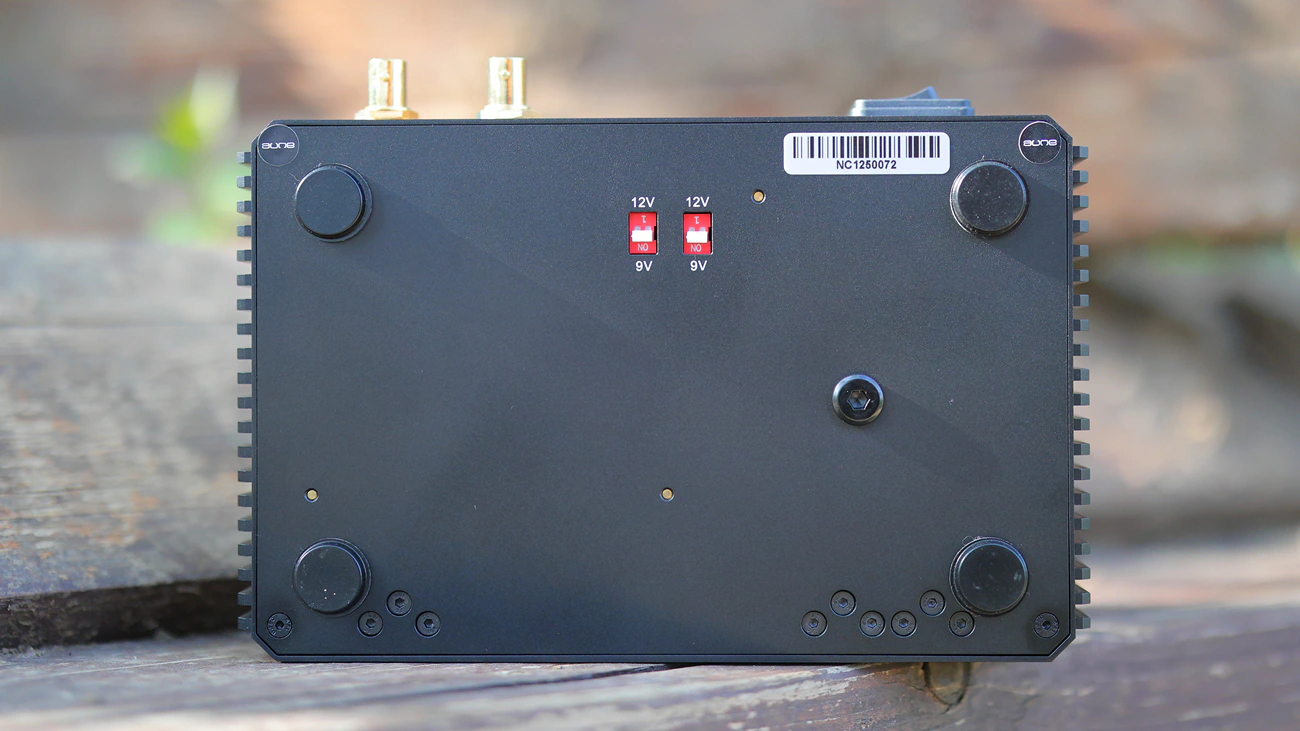
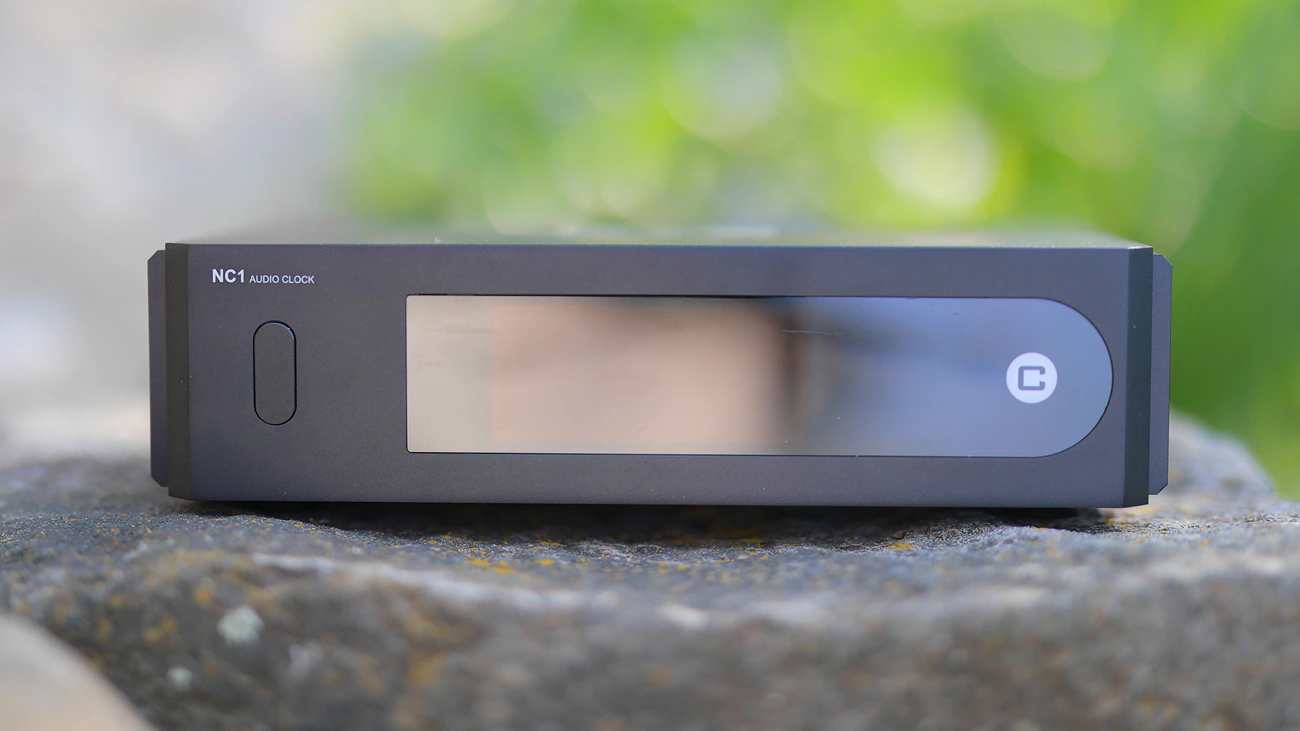
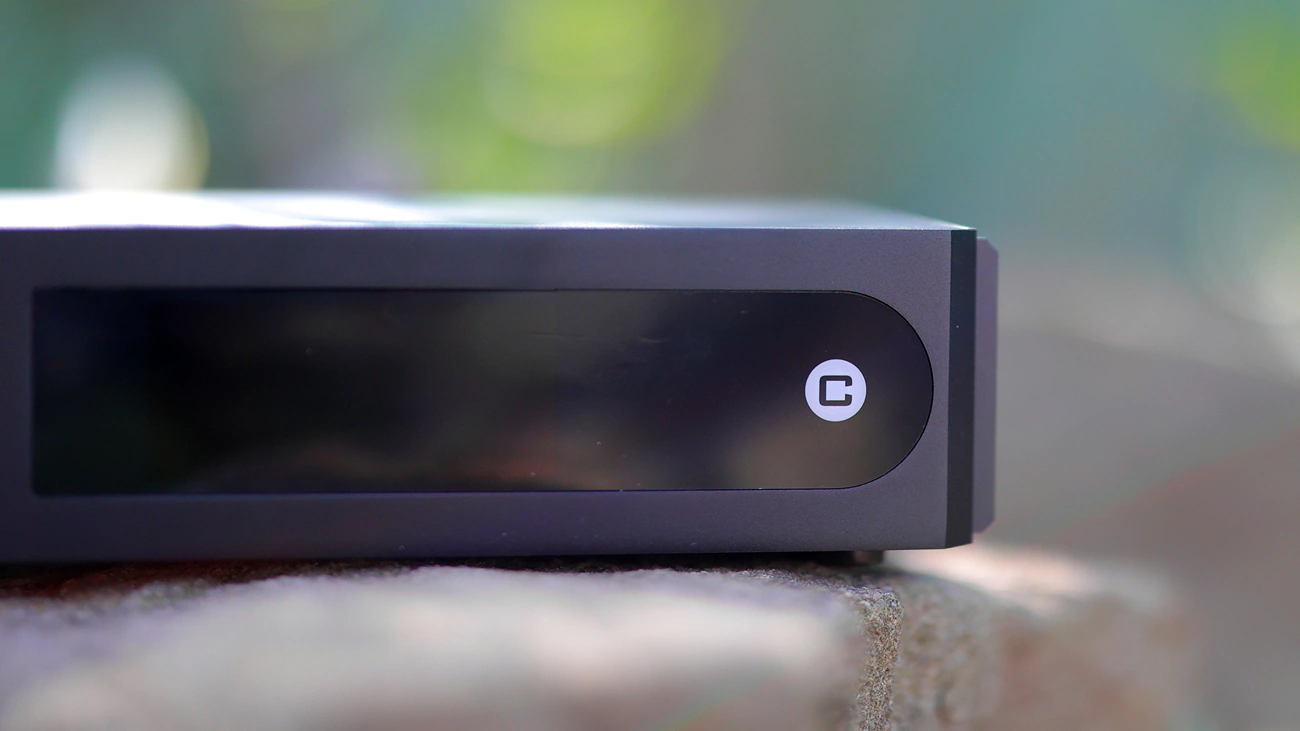
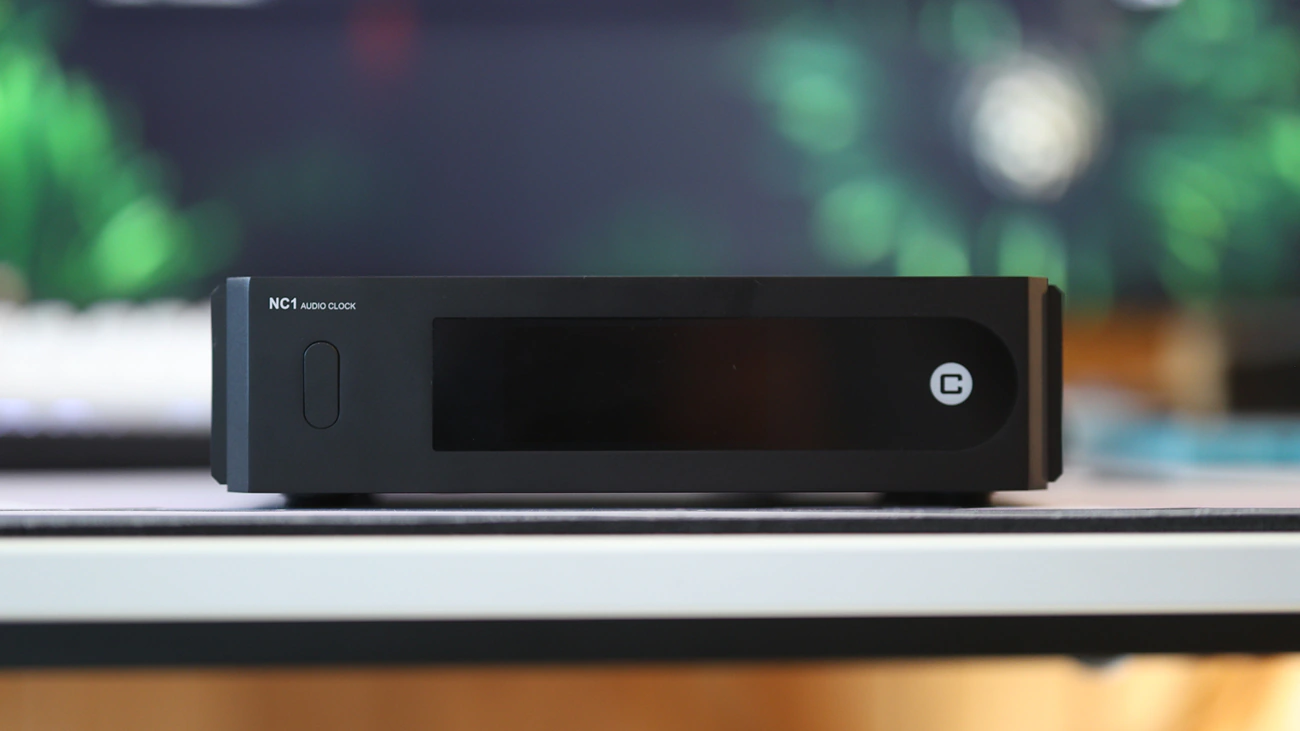
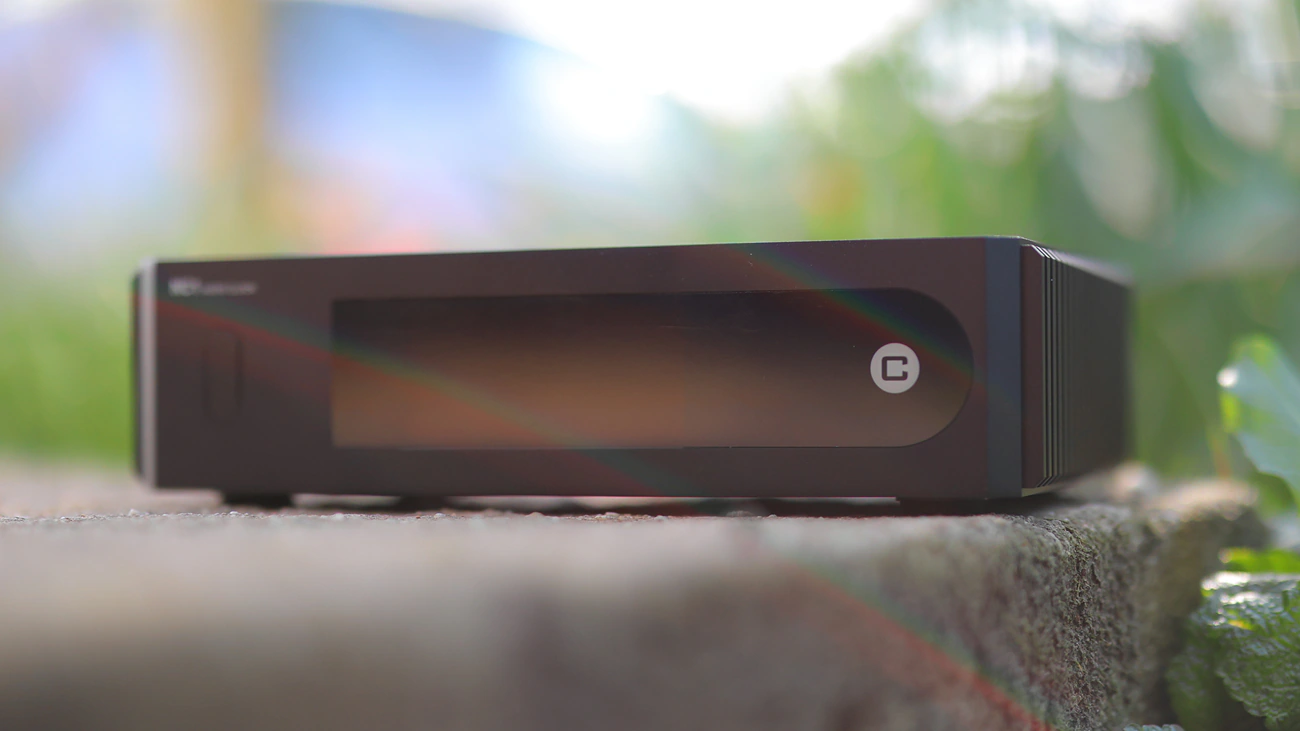
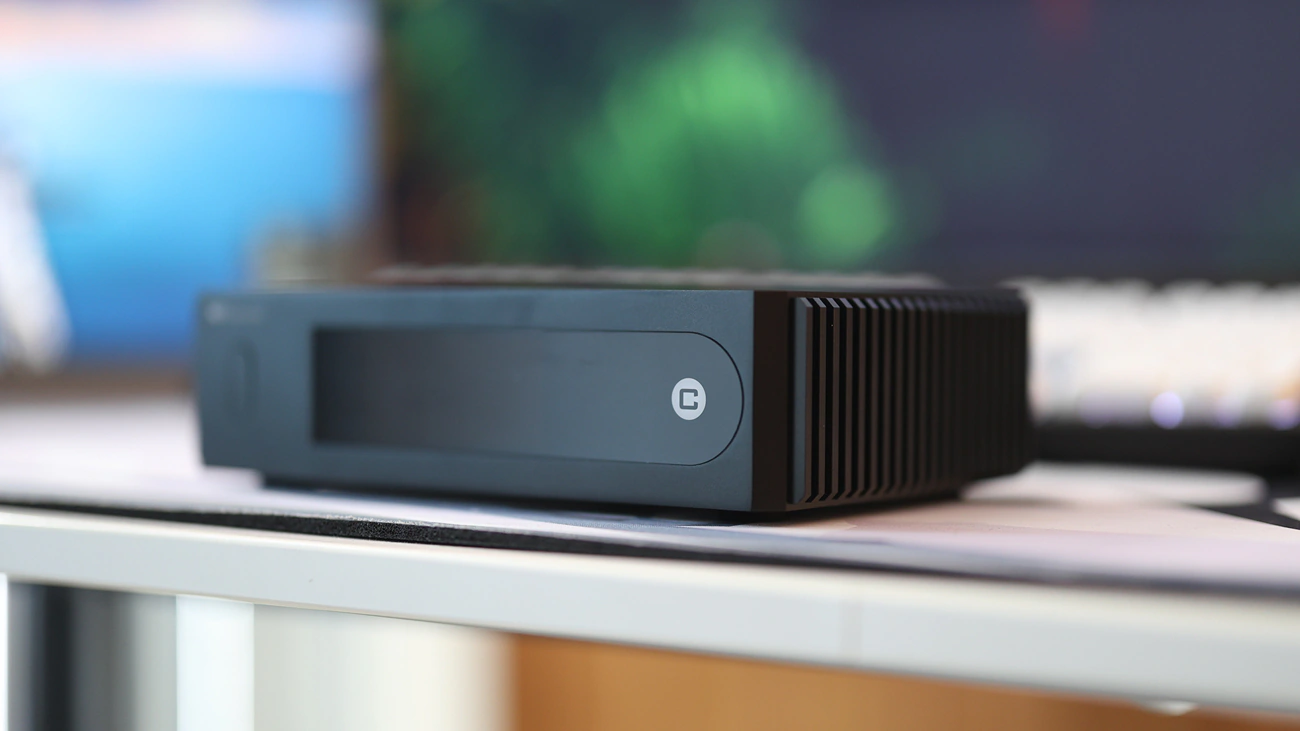
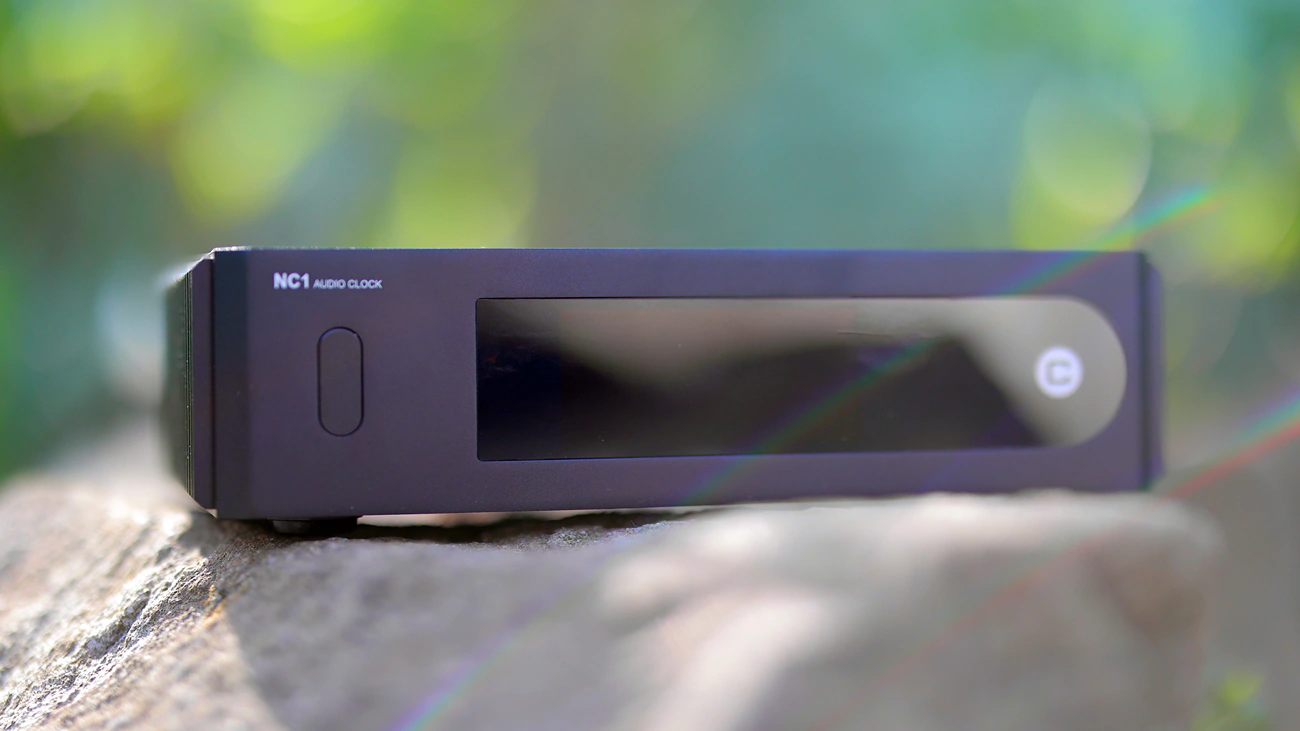
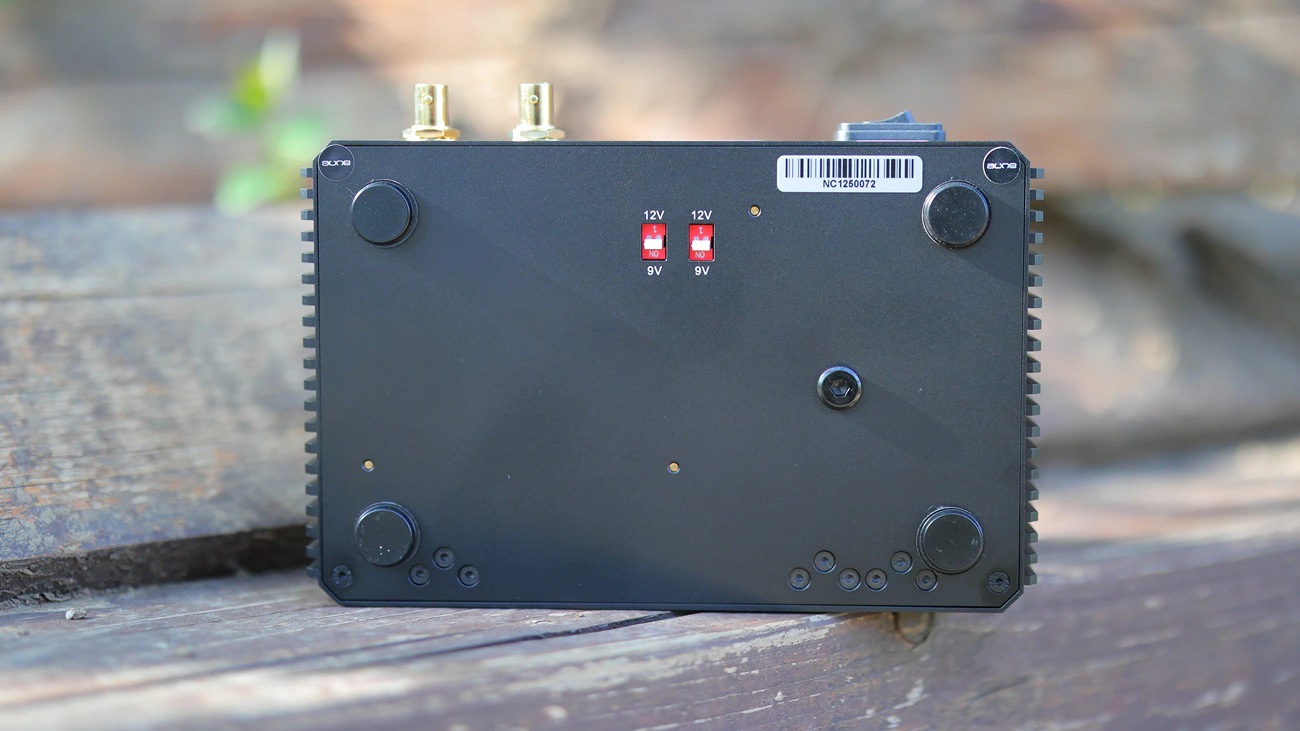
Using an Audio Clock can be confusing at first, but Aune manages to make things simple, NC1 Evo is compatible with all devices, be it aune or from other brands, having two 10M outputs. Both DC outputs are also usable with all brands and you can configure the voltage for each. Aune even makes a special N5 Multimedia Music Player to pair with NC1 in shape and design, and with NC1, you have the AC input power, DC output power and clock signal output at the back. At the front you can find the screen on / off button, screen display and multifunction touch button.
Technically, we’re looking at a Desktop Clock Generator that can output 2 x 10 MHz clocks, with a Clock Output Power of 10 MHz > 7dBm for a 50 OHM impedance. The clock frequency accuracy is < 0.02ppm, and the clock has a warm-up time of 5 minutes until it reaches optimal function. The DC output voltage can be either 9V 2.5A or 12V 2A, and it can operate ideally between 15C and 35C with a BNC, and two DC cables included in the package, having a weight of 3.5 KG.
Subjective Usage
To use the Aune Audio NC1 Evo clock, you just need to connect the right cables to the right outputs and that is about it. It has the two BNC outputs for clock, which you just connect to the clock input of your DAC, and it also has the two DC outputs for either a 12V or 9V output, user selectable, that you connect to the power input of your DAC, AMP, or any other device.
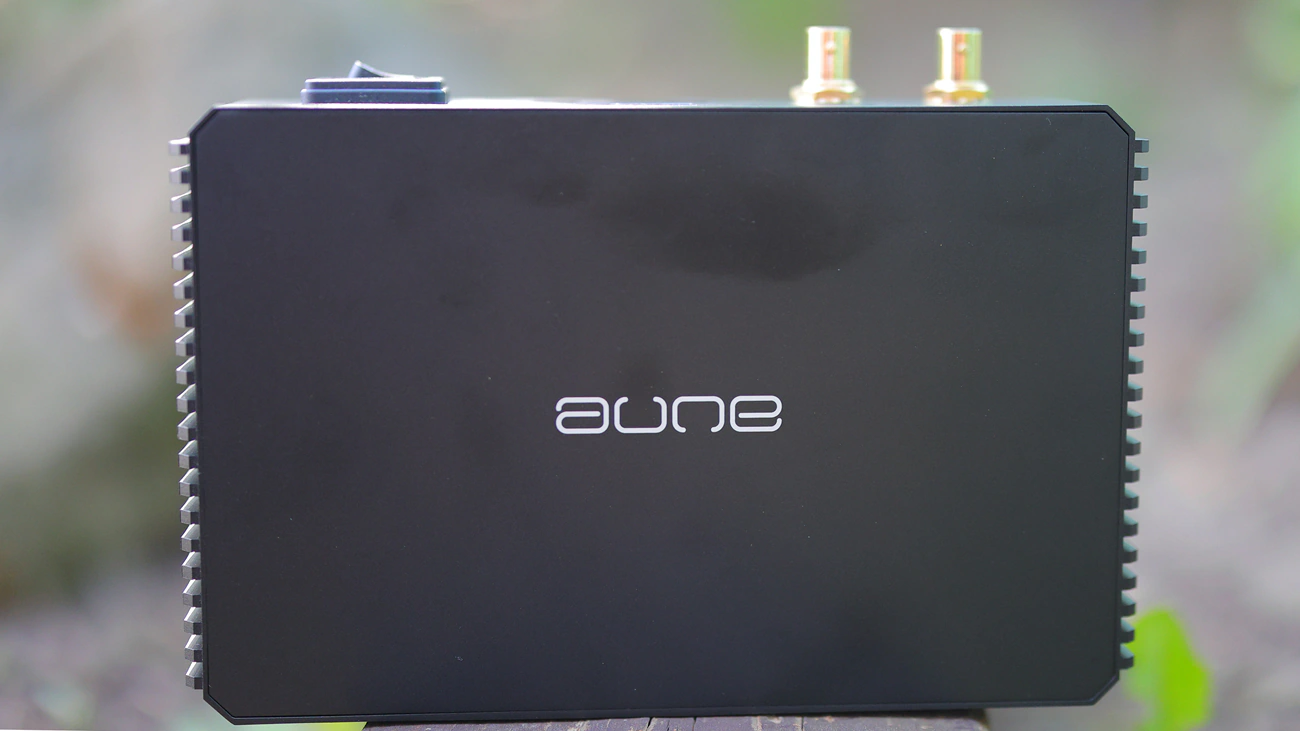
The shape and size makes NC1 Evo stack perfectly with Aune’s N5 Evo Music Player, but it also stacks well with N7, although then you’d need N5 as the DAC, to have a 3-Device stacked together. As NC1 Evo generates almost the least heat, it is best to have it set at the bottom, so it does not warm up the devices on top, and you can set N5 above it and N7 above N5, for the best thermal management of them all.
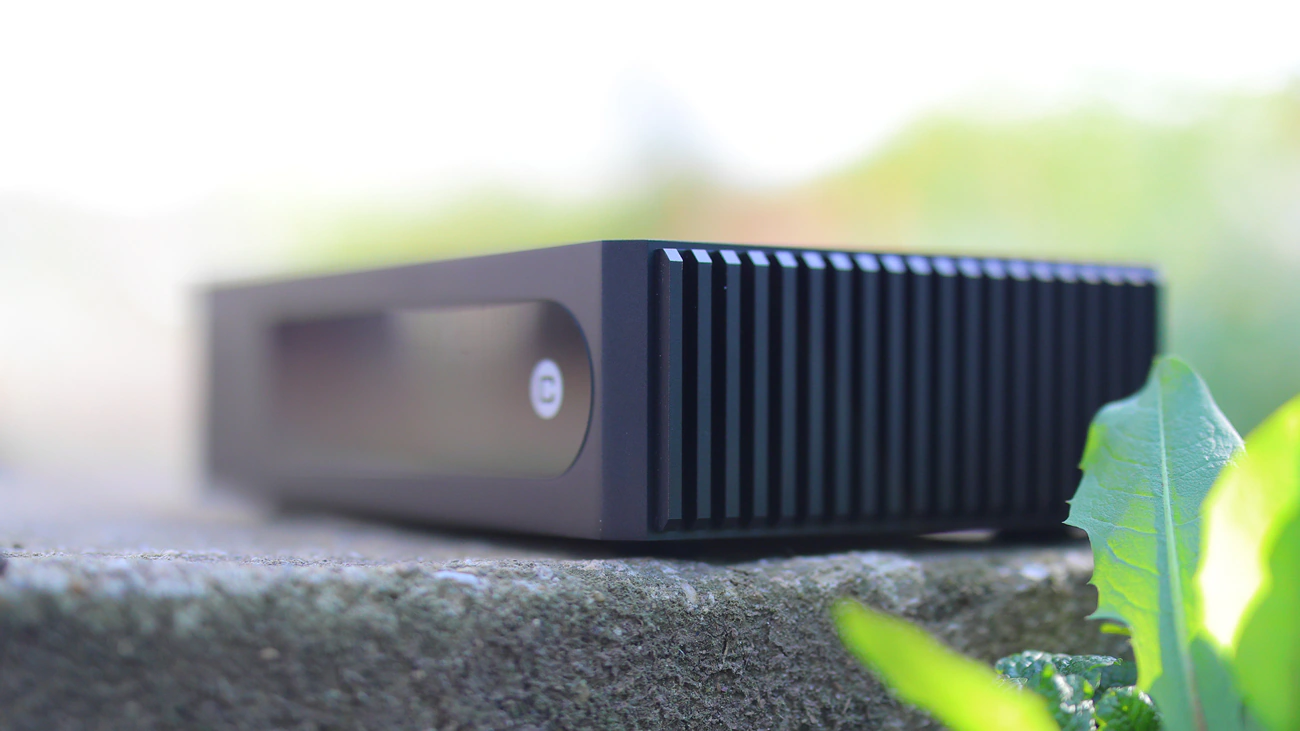
At the font you have a display screen, and a Screen Off or On Button, with a multifunction button. Starting it takes almost 5 minutes for it to warm up and tell you that it has reached working conditions, although I had a couple of friends over for an audition who said that after around 10 minutes it reaches full working signature.
NC1 Evo is fairly heavy at 3.5 kilograms, and it also feels really solid in person, but it does not get very hot. All of this being said, the display can be pushed with a finger inside, and it is not a touch display, so you should be careful when handling it, to not push too heavily on the display and to not break it.
Sound Quality
Pairings – As a linear power supply, I have not used NC1 Evo with Aune’s own N7, as N7 requires 18V DC input and NC1 Evo can only provide 12V, but I did use NC1 Evo with Fosi Audio ZD3, FX-Audio Tube-05, xDuoo DP-10, FiiO K15, Aune SC1 Evo Audio Clock (it has a 9V power input), and Keces Audio Ebravo Streamer.

For the Audio Clock, I have used it with Aune X1s GT, Aune S9C PRO and Mytek Brooklyn DAC+. It is interesting that very few DACs that I reviewed in over 1150 reviews have a digital clock input, as this is a feature usually seen in more premium DACs. I was able to use Aune NC1 Evo as both the clock input and LPS for X1s GT, and Mytek Brooklyn DAC+, but not for S9C PRO as it requires a different voltage.
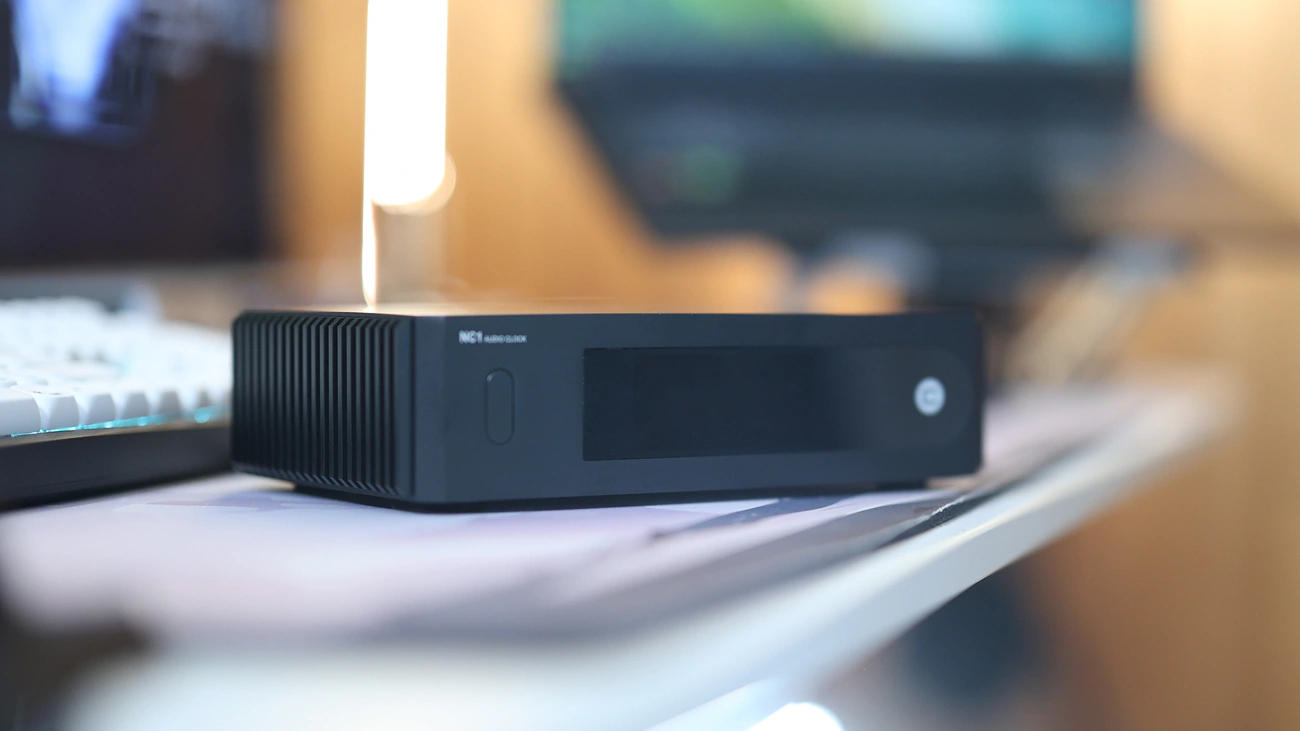
Overall Signature – The effect that Aune NC1 Evo has as a DC LPS is rather drastic, as it can improve the sound considerably for certain setups, especially for FiiO K15 and Keces Audio Ebravo Streamer, compared to using the built-in or cheap switching power supplies at 12V, while the effect is comparable to what Keces P9 can deliver, although P9 has a price tag that is higher, but it can produce a wider range of voltages.
Bass – Improving the Linear Power Supply part of most DACs and especially AMPS will create a tighter bass with a lower distortion and better extensions. AMPs are more susceptible to this effect, and you will notice it more, the more power the setup consumes.
Midrange – In the midrange, you will notice a much better sonic performance for both DACs and AMPs, they are equally sensitive to an improved LPS over their internal power supply, or when replacing a switching power supply with a linear power supply. More importantly, I feel like Ebravo in particular shows better instrument separation and a higher resolution when using NC1 Evo compared to its switching power supply, the effect being similar to when it is being powered by Keces P9. When using the audio clock part of the NC1 Evo, it tends to improve the midrange more audibly, lower distortion and create better definition for each instrument, although they can increase the texture levels slightly, increasing the fatiguing elements in music as well in the process.
Treble – Top end gets more controlled, usually a bit softer for most AMPs and DACs when NC1 is powering them as an LPS, while using it as a clock creates a sharper, brighter and more edgy sound with more aggressiveness. It is an interesting dichotomy, as NC1 as an LPS can tone down while as a clock it tunes up a system. The effect of NC1 on treble as an LPS is more obvious for amplifiers than it is on DACs and Streamers, while the effect it has as a clock is more obvious on Aune’s X1s GT and Brooklyn DAC+ than it is on Aune’s S9C Pro, although it remains more obvious in the treble for S9C PRO.
Dynamics And Textures – Texture levels generally increase slightly when adding NC1 Evo as an external clock, it makes music maybe a bit more grainy, with more texturization. X1S GT in particular becomes richer and more detailed, but using NC1 Evo as an LPS creates a slightly smoother and more relaxed sound, in return damping the textures and relaxing them slightly. Dynamic range is increased by both its clock function and LPS function on all systems.
Clock and LPS for the Same DAC AMP – Using NC1 Evo as both the clock and the LPS for a DAC AMP, will make X1s GT sound more detailed, have a wider and deeper soundstage, a tighter control in the bass and a brighter treble. It makes it feel more detailed especially in the midrange where there is less spread and less scattering. For Brooklyn DAC+ it has a similar effect, but it makes it noticeably less warm in the midrange, while giving it a deeper bass and a deeper soundstage instead of a wider one. I prefer the tonality when implementing NC1 Evo for both, as I generally don’t shy away from a brighter tuning, but it does not make either more relaxed.
Soundstage – Soundstage is the most interesting aspect, because using an external LPS will lower the distortion, which inherently enhances instrument separation and clarity, definition and how crisp and sharp the system feels in general. This being said, Nc1 Evo as a clock also widens the soundstage and has a similar effect, but in actual practice for some systems it can make the sound deeper, while for others wider. It really depends on the implementation of each DAC AMP how improving the power delivery will change the sound.
Audio Clock Performance – As an audio clock, NC1 Evo can improve the perfect resolution and lower the distortion of the X1s GT and Brooklyn DAC+, but it doesn’t seem to have as drastic of an effect with S9C Pro which already sounds brilliant, crisp and detailed. Nc1 Evo most certainly does not introduce a higher THD and does not add distortions, so it can theoretically improve the resolution, making it a top choice. Most internal clocks have a higher internal clock jitter level, and use a standard crystal clock, while NC1 Evo uses an OCXO clock.
Value – Conclusion
Aune gave NC1 Evo a lower price than it assigned to its SC1 Clock, yet as a clock NC1 Evo delivers a fairly similar performance, and it also adds DC power output via its LPS or Linear Power Supply, but SC1 Evo has 4 Clock outputs, which makes it more versatile as a clock, while NC1 Evo is more versatile as a Power Supply / clock. Overall, NC1 Evo has an excellent value, and even when comparing it with a Keces P9, if you’re using both at 9V or 12V, you will not notice a huge difference in the sound and improvement each brings, but a more specialized P9 can achieve a much higher voltage at max, and a lower voltage at minimum, with more precise settings. Basically, for its price, NC1 Evo is not as specialized, but it has a more versatile usage, in a single device. It brings the least of improvements to Aune’s products, as they already have excellent clock and power supplies, so although NC1 Evo matches perfectly in shape with N5 and N7, both actually need it less than products from other companies.
With a rather bold design, but low heat, excellent sound quality and a low price for being both a top audio clock and LPS Linear Power Supply, Aune Nc1 Evo is an excellent choice for a mini system, does not take a lot of space but can produce a clean, noise-free 12V or 9V DC output, as well as 10M BNC clock, all for less than either a dedicated clock or dedicated linear power supply would cost you.
PROs
- Pure linear power supply performance with all the added improvements and two outputs
- Both 12V and 9V outputs for the DC power output
- Two Clock outputs, which can even be overkill for this price range
- Good build quality and low heat production
- Very transparent sonically, and can improve the resolution of certain systems
- Low price and high performance
- Most LPS without clocks and most clocks without LPS would cost just as much if not even more, even when not made by a reputable brand, while Aune’s has both for a better price
Cons
- Aune’s own N5 and N7, which combine perfectly visually, need it the least as they already have good clocks and DC power supplies. It is not even compatible with N7 as it needs DC 18V input while NC1 Evo can provide either 12V or 9V.
Product Link
Amazon – https://amzn.to/4tT3ncS
--- Please remember to stay safe, and always have fun while listening to music!---
- If you have a dime to spare, please donate, and help us! It would make the day brighter for me and my wife-
Full Playlist used for this review
We listened to more songs than those named in this playlist, but those are excellent for identifying a sonic signature. I recommend trying most of the songs from this playlist, especially if you’re searching for new music! The playlists are different for Spotify, Tidal and Youtube, and based on the songs I enjoy and are available on each!
https://www.youtube.com/playlist?list=PL_cjBXGmwSHSdGcwuc_bKbBDGHL4QvYBu
https://open.spotify.com/playlist/5J3oloz8Riy9LxEGenOjQ0?si=979ba4f082414be7
https://tidal.com/browse/playlist/330fd544-8e5b-4839-bd35-676b2edbb3d5
--- Contact Us ---