Final Audio Tonalite TWS Bluetooth IEMs Review – Spring Of Music Freedom
Final Audio Tonalite is a $329 USD pair of Bluetooth TWS In-Ear Monitors with a complex noise cancelling and ambient awareness, personalised timbre and 3D head / ear scanning, as well as a superb package that includes multiple support and eartips. Today we will explore the Final Audio Tonalite and also compare them with other IEMs including Noble FoKus REX5 (449 USD), Final Audio ZE8000 MK2 (399 USD) and HIFIMAN Svanar Wireless (499 USD).

Introduction
The popular designers from Japan, Final Audio, have focused on software this time around to create the world’s first wireless earphones with sound quality that is customizable for every user. This is a more complex task than just making a standard EQ curve that you like, so besides reviewing the sound and the usual, we will study how well it works and how much impact it has on sound. Final Audio products are available for purchase on Amazon, Aliexpress, and HIFI dedicated shops as well as select general electronics shops.

As an Amazon Influencer, I earn from qualifying purchases, and using the purchase links in my reviews helps me maintain this website and Youtube Channel. Audiophile-Heaven has no Ads and our Youtube Channel has no midroll ads, and our work is supported by Affiliate Links and Donations. Huge thanks to Final Audio for providing the sample for this review, in exchange for my honest opinion.
Product Link
Amazon – https://amzn.to/4p6mfo2
Build Quality – Design
Final Audio brags about a couple of features that they managed to build into the Tonalite, including giving them the lowest Distortion THD+N in a wireless earphone to date. Final Audio also uses a large 10mm dynamic F-Core driver along with DTAS technologies to create the sound of the Tonalite. This is paired with Sony’s flagship ANC chip, tuned by Final Audio Japan for the final sound.

Tonalite has a Bluetooth 6.0 chip inside, and they support high-resolution LDAC, sporting up to 9 hours of playback on a single charge, and they have IPX4 water resistance, one of the milder versions seen on TWS IEMs so far. The company tries to apply technologies developed for their flagship A1000 IEMS in a mini shape to achieve the sound of the Tonalite, but the main highlight is the 10mm f-Core driver which has the concept inherited from A10000. DTAS is a digital twin audio simulation, which is based on scanning and modeling by Mr. Kimio Hamasaki, and it basically allows you to scan your own ears, so that what Tonalite produces is no longer confined to your head, and allow it to expand more forward and 3 Dimensional.

Besides the DTAS scan, the Tonalite app allows you to use a standard 10-Band EQ, to adjust noise cancelation strength, and to use low latency, as well as update the firmware of the Tonalite IEMs. On a more technical note, you will have access to LDAC, AAC and SBC, and the microphones include 3 MEMS mics for ANC and one for conversation. The Chipset used is an Airoha AB1585 which is something I have not seen before. The case has a 700mAh battery inside, while each earbud has a 100mAh battery, allowing for up to 9 hours of music playback. The case can charge wirelessly, and has USB Type-C charging as well, it takes 1.5 hours to charge the case and 1.5 hours to charge the earphones.
Subjective Usage
The case of the Tonalite is made of a very high grade plastic, similar to what we see in Canon cameras, having a very similar coating and resistance to wear and tear. This being said, Tonalite is using gold contacts to charge and the IEMs are on the bigger side, so the case is rather tall and thin. You can charge this case via a Type-C port on the back side, and the IEMS also feel really well made, but a bit large.

I am not the biggest fan of the fact that they are using touch controls because I adjust my earphones often, so whenever I am adjusting Tonalite, I press play, pause or next song. Final Tonalite seems to have its own app for Android, which is great if you like apps, but it means having more stuff installed on your phone which I do not like that much. I am not a big fan of the fact that the earphones read my name from the phone and have named themselves, but the app is useful, for example right as I am writing this review final added an ASMR mode to Tonalite. The update process is slow and it takes around 10 minutes to update the Tonalite.

I love that you can easily find how much each earpiece is charged, and that you can use LDAC without signal loss, and Tonalite has better LDAC handling than FiiO UTWS5, having a steel strong signal quality. One thing I dislike is that there’s a notification stuck that tells me how much battery is inside of the Tonalite, as I don’t want to be reminded of that all the time.

Wearing comfort is great as Tonalite feels nice inside of my ears. They have the IEM bore at the middle part of the shell, which balances them nicely for gym and other activities, but there is no attachment to your ears and this means that they are more prone to falling out tham gym oriented earphones. To keep them inside, they have a bit of driver flex, and void, so basically the driver sits there based on the tension it is sitting in relative to your ear and eardrum. Also, you cannot sleep with Tonalite inside of your ears, which would’ve been nice considering the ASMR new option.
Sound Quality
Pairings – As Tonalite is a wireless pair of earphones, they can only use a bluetooth wireless source, so I have paired them with my Samsung S24 Ultra smartphone, as well as Khadas Mind 1 and FiiO Air Link to test the Bluetooth protocol quality. Like with most TWS Earphones, LDAC is disabled by defualt and you have to manually enable it to use it.

Overall Signature – Final Tonalite follows a natural, balanced tonality with excellent resolution and detail, having a natural sound with a natural contrast, wide and airy soundstage. Vocals are tuned equally well for male and female voices, and instrumental range is perfect for both dramatic and happy music, as Tonalite has a high transparency and well, natural tonality. They are great for enjoying both relaxed and active music, although they have a faster driver speed which works better for technical music and details, especially as Tonalite has quite a bit of speed, being on the more dry end of things from a texture perspective.

ANC Quality – tonalite comes with multiple ANc levels and options, including Noise Canceling in both sound quality and Nosie Reduiction, although both affect the sound pretty much the same. ANC levels are different, with ANC Sound quality being almost like no ANC is turned on, just a gentle effect, while Noise Reduction does have a much higher effect on sound. Ambient sound does exactly that, and will affect sound a bit more, sounding as if you were wearing open-back headphones instead of IEMS or Earphones. Something I could not find at all is a way to turn off the ANC completely, as tonalite simply either has the ANC at max or Ambient, but no way to turning off ANC completely, at least from the app. In sound Quality ANC mode, you always hear and feel like a rumble in your ears and neck, while that is all canceled in the Noise Reduction and Ambient sound settings

EQ, ASMR and Other Features – Final Tonalite has multiple features that affect sound quality and sonics, including DTAS, 10-Band EQ, and ASMR Mode. The 10-Band EQ works well, they have enough headroom to make use of it, while ASMR Mode will just disable notification and controls, as well as voice guidance. I love having this, but maybe naming it ASMR mode is not that straightforward since it does not change the sound in any way. An interesting note for me is that to take full advantage of the IEMS, you really really need the app, because you can go into settings and set the Gain level which setting to high improves the sound drastically, and to take full advantage of LDAC, you need to enable it from there also. There is a Low Latency mode, but it damages the sound, being good enough for gaming, but not good enough for more critical listening. You can disable Touch control from the touch control part of settings which is great. I can live with the IEMs having no touch control since for me I have to adjust them slightly and often. Using DTAS is actually really complicated and not a straightforward experience, it seems to be processing your head image which I don’t know if i want. But as your sacrifice reviewer, I did do the entire process with errors almost 10 times. Because my S24’s frontal camera does not take that great photos, I got Image Processing error a couple of times. To get them to work, I had to be in the perfect light, perfect position, perfect AR sticker position. After it all, the sound changed to a bit bassder sound and with a thinner treble. Overall, it may work really well for certain faces and ears, but for mine, the effect was mild. I can prize the Tonalite for their default sound and 10-Band EQ abilities anyways even if the auto mode is a too mild for my taste.

Bass – At the deep end, Tonalite starts the bass with 20 Hz, but the deep end is not emphasized significantly, so they don’t have quite that much over abundance of bass, with most of the low-end being natural-neutral and with most of the bass being centered between 50 Hz and 100 Hz. Tonalite is just generally not a basshead or v-Shaped pair of IEMS, so you can expect to hear punch and kick but not an extreme amount of it necessarily.

Voicing And Midrange – Voicing is natural, with a natural tonality (haha) and they sound just right for both male and female voices. Tonalite tends to not emphasize drama or a high-pitched voicing, rather giving most strength and power to Contralto female voices and Baritone male voices. This makes the Tonalite perfect for rock, metal and pop, but it is not aimed towards emotional and dramatic music, rather a balanced, transparent if a bit studio presentation. In fact, Tonalite feels like it was brought out of a studio, having exactly the kind of studio tuning and sound you’d expect to hear from monitors, flat and uncolored.

Treble – Top end is on the richer, but smoother end of things, sounding extended but not fatiguing. This is achieved through a smart tuning that has quite a bit of 11 kHz – 16 kHz energy without having an 5 kHz – 8 kHz emphasis. In fact, this is also why the upper midrange and lower treble are not emphasized and how tonalite achieves their characteristic transparent and neutral-ish sound. You can expect to never be fatigued by the treble of the Tonalite, but you can also expect to hear it always and for it to be transparent and revealing all the time.
Loudness Saturation Gradient – Tonalite has two gain levels, which is not obvious from the start and the setting to engage high gain, just like the setting for LDAC, are buried deep in the settings part of the app, which you reach by touching the three bars on the upper left corner inside the app. Once you engage those, the sound is immediately more vivid, more engaging, more punchy and more colorful, as well as louder. Basically, Tonalite can and will sound quite loud, over 120 dB with top control, in high gain, but you have to engage it. They also sound better at higher volumes, as they become more contrasty, more detailed, while at medium volumes they sound a bit flat and at quiet volumes, detail is all there but the dynamic range feels compressed as both quiet and loud parts are rendered at similar levels, likely part of the bluetooth compression algorithm also.

Soundstage – Tonalite is midrange centric and focused, so it sounds fairly vocal, which usually means a smaller, more centric soundstage, yet it is fully able to render a big scene, quite a bit of distance between instruments and a natural blend between those instruments. It is quite different from the cutting-edge signatures that Final Audio is best known for, and a more natural, cohesive approach, perfect for a leaner listening experience.
Comparisons
Final Audio Tonalite vs Noble FoKus REX5 (329 USD vs 449 USD) – FoKus REX5 is a really nice pair of flagship IEMs, and like most of the comparisons today, it is considerably more expensive than Tonalite. Right now both companies are represented by Jackrabbit, so there is no conflict of interest, although Noble has a legacy of basshead, impactul tunings the company created so far, compared to Final Audio that has changed the tuning with every single earphone they produced. Both IEMs support LDAC, both have a complex sound personalisation with FoKus Rex5 having the Audiodo EQ, and Final’s having their own. I have used both IEMs as they come from the factory, as my head and ears simply work better at default. Max loudness is a bit higher on Tonalite with high gain, but Rex 5 has a higher resolution, a far more aggressive V-Shaped sound with more kick, more brightness and treble brilliance and much less vocal presence, while tonalite is more vocal, and flatter sounding. You can EQ both a lot, they both have a high headroom, and the choice should be for the shape, design, and color, as well as whether your preference is slightly or considerably towards a V-Shaped sound or a balanced – neutral tuning, as Tonalite is balanced and neutral while Rex5 is strongly V-Shaped and has a highly dramatic sound.

Final Audio Tonalite vs HIFIMAN Svanar Wireless (329 USD vs 499 USD) – Svanar Wireless is one of the best sounding pair of TWS Earphones on the market, and it even has three iterations, the OG, LE and Jr. Since we are comparing Final Tonalite with Svanar Wireless OG, the sound is quite different but so is the fit. Tonalite is made of hi-end plastic and feels larger than Svanar Wireless which have been my gym IEMS for almost a year, and which were made of metal on the outer shell and plastic on the inner part. Battery life is longer on the tonalite, but Svanar Wireless does not need any app to work and it is less sensitive for the touch controls, so it will be less finicky to adjust and use with the touch controls enabled. With high gain, Tonalite can go louder, with more punch and kick, while Svanar Wireless also has LDAC and sounds more detailed. Svanar wireless is ideal for resolution and clarity, while Tonalite si the choice for a flatter, less enthusiastic but more balanced tone.

Final Audio Tonalite vs Final audio Ze8000 mk2 (329 USD vs 399 USD) – Although there are less special EQ options on ZE8000 mk2, they still sound superb, more V-Shaped than Tonalite, with more emotion, a more contrasty and dynamic sound and better impact. This being said, Tonalite is more neutral, has larger shells, stronger ANC and isolation in general, and Tonalite has LDAC support, while Ze8000 mkii only has aptX and SBC. tonalite has a longer battery life too, being a great choice if you’re looking for a better sound and improved EQ abilities for a lower price. Between the two, the choice is more about the shape and design you want and whether you want to try the new EQ that Final Audio has been working on, situation in which you go for Tonalite vs going for a warmer sound, and a more traditional shape, situation in which you go for ZE 8000 mk2.
Value – Conclusion
Tonalite is one of the most expensive TWS Bluetooth earphones I have reviewed, but not the most expensive, and around 300 USD it is not that crazy either, considering the cost of Apple’s bluetooth earphones. Sonically, it is capable, it can achieve high max loudness, and has a pleasing, flat – neutral tuning that is perfect for all music styles. You can think of it like a clean canvas that you can paint either with the special EQ profiles developed by Final or through the 10 Band Parametric EQ. Another interesting aspect is that it is actually the cheapest compared to high-end TWS Earphones, cheaper than even Final Audio’s other TWS the ZE8000, so value is actually very high and it makes a compelling offer.
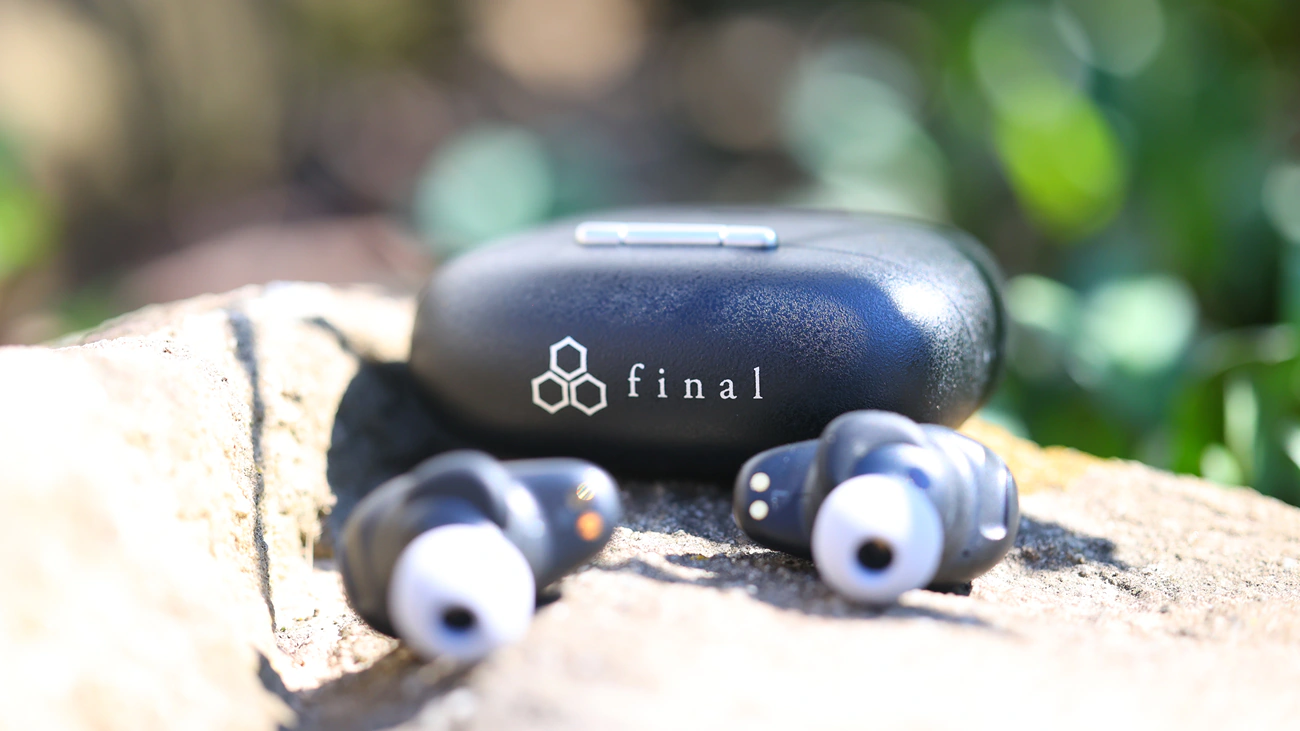
IF you’re looking for a transparent, color-free sound, with excellent max loudness, LDAC support, complex EQ options, and a mild ANC that gives you enough isolation for most scenarios, Final Audio Tonalite is wearing a coat that reminds me of a canon camera, exactly that style of plastic and cover, and it also comes with an excellent sound quality, being a top choice if you want better than the average Bluetooth TWS Earphones.
PROs
- Super high maximum loudness (one of the loudest sounding Bluetooth earphones at max)
- Multiple gain levels
- Special EQ support including both 10-Band and DTAS support
- Well made and will survive usage really well
- Detailed and crisp with a neutral tuning
- Studio and reference sound that allows you to enjoy each song for its specific tuning
- High resolution and clarity
Cons
- You really really need to install the app to take full advantage of it, to disable the touch controls or configure the EQ
Product Link
Amazon – https://amzn.to/4p6mfo2
--- Please remember to stay safe, and always have fun while listening to music!---
- If you have a dime to spare, please donate, and help us! It would make the day brighter for me and my wife-
Full Playlist used for this review
We listened to more songs than those named in this playlist, but those are excellent for identifying a sonic signature. I recommend trying most of the songs from this playlist, especially if you’re searching for new music! The playlists are different for Spotify, Tidal and Youtube, and based on the songs I enjoy and are available on each!
https://www.youtube.com/playlist?list=PL_cjBXGmwSHSdGcwuc_bKbBDGHL4QvYBu
https://open.spotify.com/playlist/5J3oloz8Riy9LxEGenOjQ0?si=979ba4f082414be7
https://tidal.com/browse/playlist/330fd544-8e5b-4839-bd35-676b2edbb3d5
--- Contact Us ---