FiiO M33 Music Player DAP Review – Third Time’s Ultimate Charm
FiiO M33 is a $649 USD portable DAP with an R2R DAC architecture, Android 13 and 8 GB of RAM, with up to 1.1W of balanced output power. Today we will review the M 33 and also compare it with other DAPs including iBasso DX260 MK2 (949 USD), Hiby R6 PRO II (749 USD) and Detonray DTR1+ (1000 USD).
Introduction
FiiO is back on track to be a top player in the DAP world, now with the release of their first portable R2R DAC DAP, namely this M33. It is so much more than that as we will learn today, as M33 comes with a modern Android, lots of RAM, and a mindful price for the type of features it offers. FiiO products are widely available for purchase, from Aliexpress, FiiO Shop, Amazon, and even general electronic shops, but for the best warranty, it is best to check with the authorised dealer list or Amazon.
As an Amazon Influencer, I earn from qualifying purchases, and using the purchase links in my reviews helps me maintain this website and Youtube Channel. Audiophile-Heaven has no Ads and our Youtube Channel has no midroll ads, and our work is supported by Affiliate Links and Donations. Huge thanks to FiiO for providing the sample for this review, in exchange for my honest opinion.
Product Link
Amazon – https://amzn.to/49oZXr7
Aliexpress – https://s.click.aliexpress.com/e/_c4tfjTc5
Build Quality – Design
CPU and Storage – At its core, FiiO M33 uses a powerful and fast Qualcomm 680 CPU, and it is running Android 13, the version best known for its sound quality. Despite the current struggle with RAM, FiiO managed to secure 8 GB of RAM for their M33, along with 128 GB of internal storage, on which you can store both music and Tidal Offline files, or offline files for other streaming services. Another interesting implementation is the FPGA at the core of the M33 R2R, which FiiO names Proprietary DAPS or Digital Audio Purification Systems, as M33 R2R uses the same unified clock source found in M27, which is a rather significant increase in resolution compared to M27. This allows M33 R2R to use a global 10-Band EQ, SRC bypass and an all to DSD option.
DAC – Although M33 R2R looks small, FiiO actually uses their proprietary R2R resistor array alos found in desktop equipment, with a flat natural or warm sound profile, and a fully differential 24 Bit R2R resistor array DAC. This totals four channels, a total of 192 precision thin-film resistors with a 0.1 accuracy and low temperature drift. M33 can be used as a USB DAC from a computer, but it also has USB Audio Output, which allows it to act as a transport.
USB DAC – Since DAPs are a popular way of enjoying music on a computer also, FiiO M33 comes with an XMOS XU316, one of the most popular USB DAC processors, which is known for ultra-low latency, and which offers support for data rates up to 768 kHz / 32 Bit or DSD512.
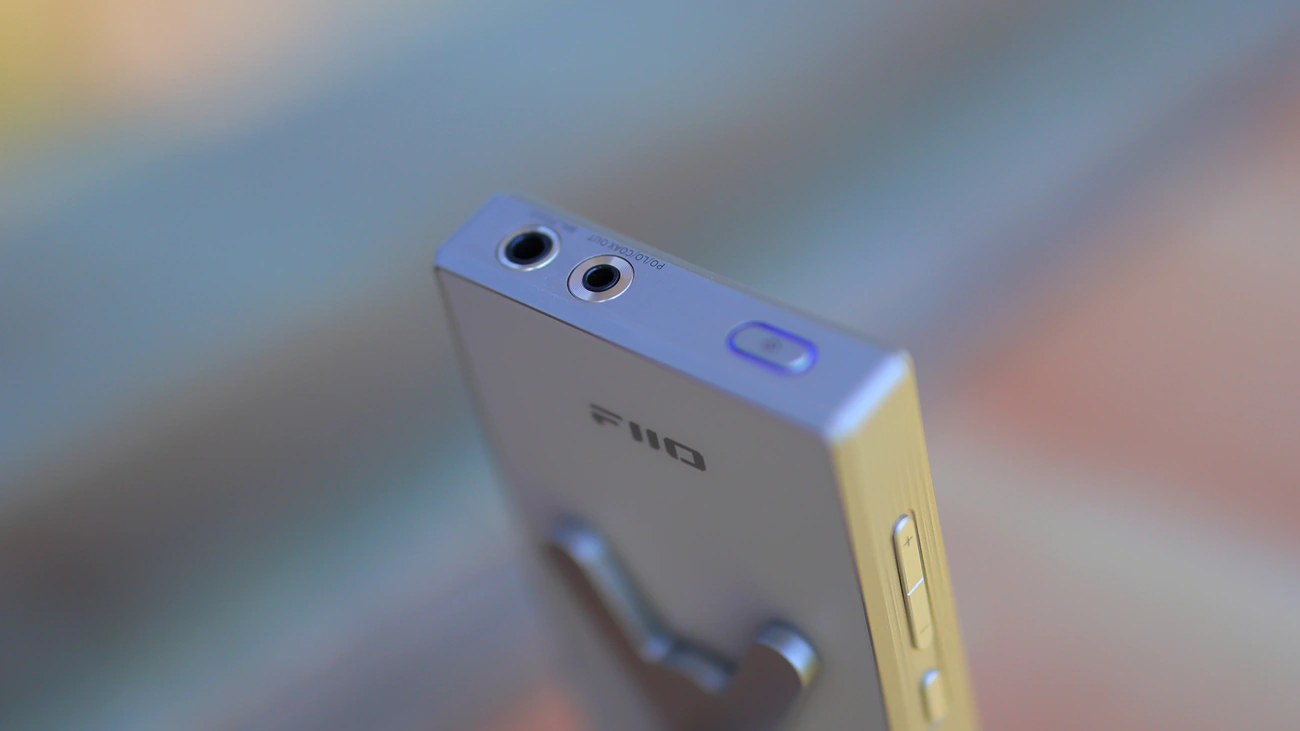
Display and Build – FiiO M33 comes with a large 5.5″ HD display, which has a resolution of 2160×1080, Third Generation Corning Gorilla Glass coating and Oleophobic coating, with a pre-applied tempered glass screen protector. FiiO Also has a superb VU Meter visualisation available for M33, and it is super thin and small, even smaller than M21, as M33 R2R has a lower weight, of ust 258 grams, is thinner and narrower. To still make it practical, FiiO uses a 18:9 Golden Ratio Grip, with a dual beveled edging and an AG Matte Glass Back Panel.
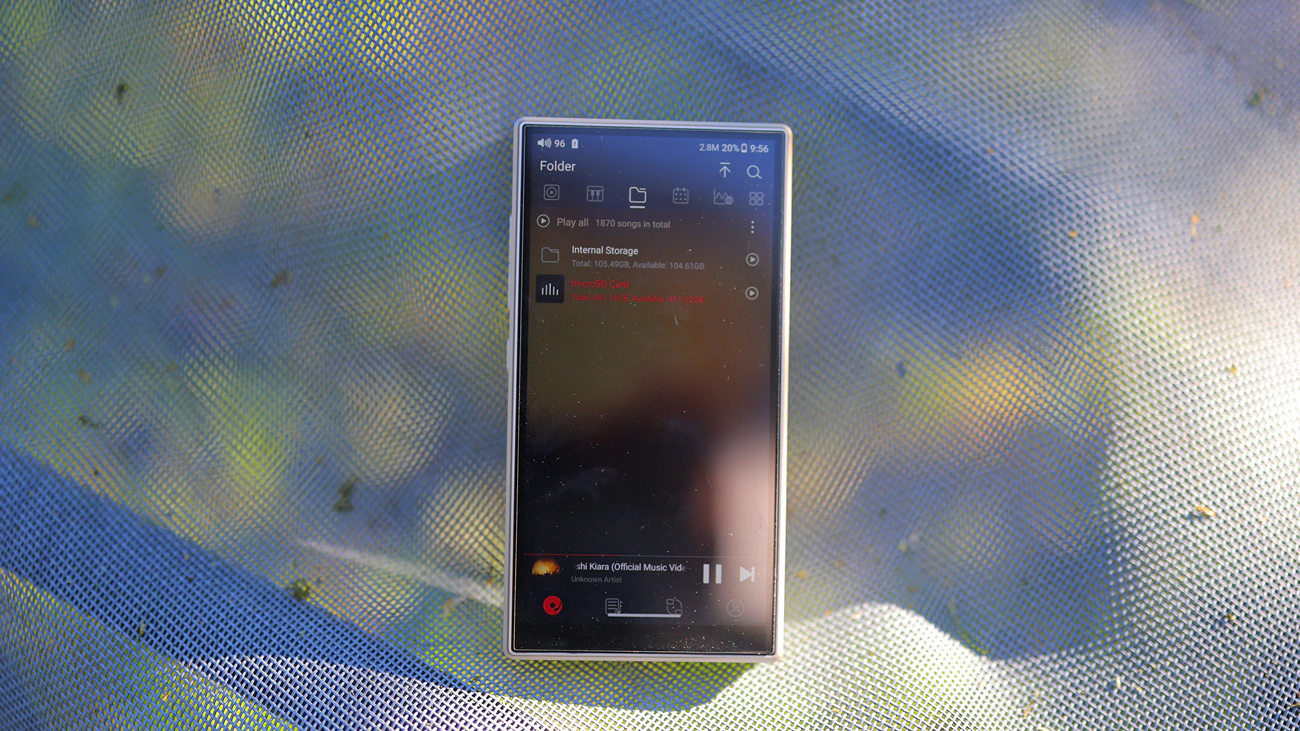
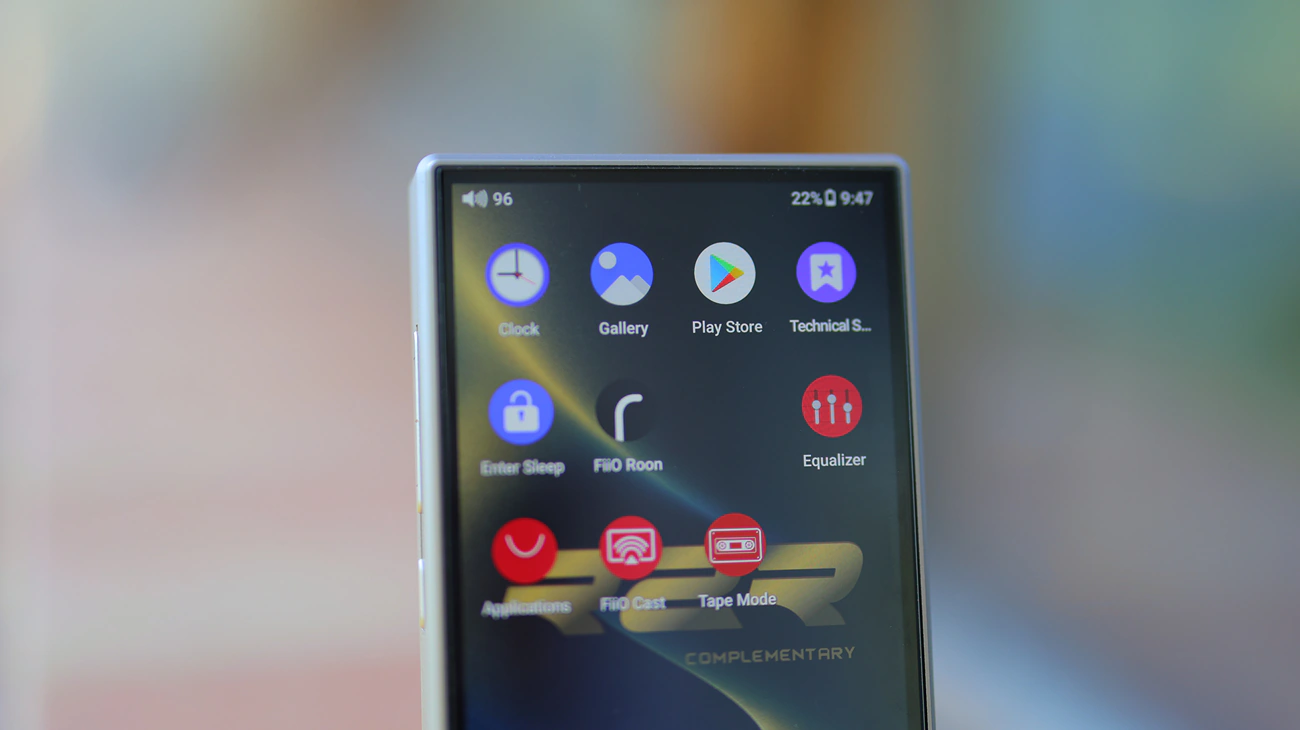
Software – Running Android 13 and FiiO’s Music App, there are a few interesting features that I’ve only seen on M33, including an Auto EQ part, that allows you to EQ headphones and IEMS found in FiiO’s database, to a specific curve or sound profile. FiiO also includes lessons taken from their Air Link dongle and M33 has Two-Way Hi-Res Bluetooth support, with bluetooth transmission codecs including LHDC, LDAC, aptX HD, and SBC, while as a receiver M33 R2R can receive both SBC and LDAC signals.
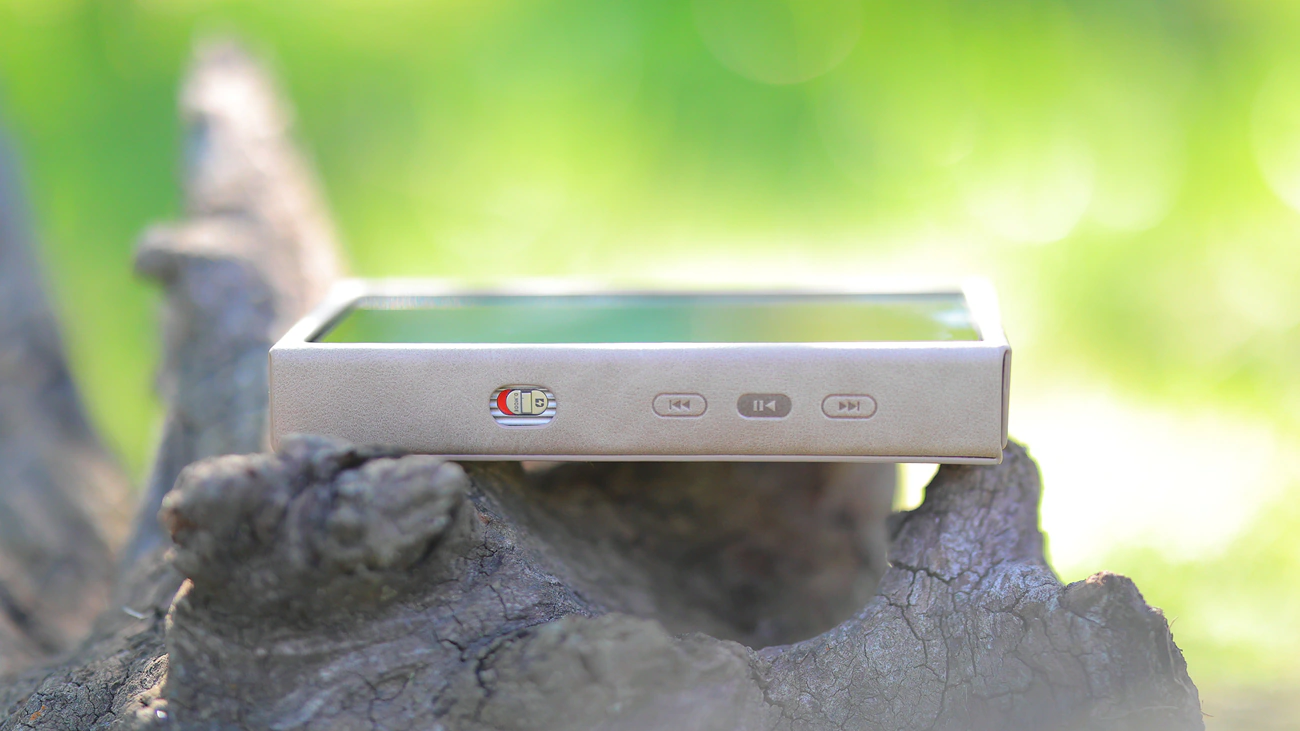
Power output – With complex Volume Control I/v and LPF, M33 R2R uses differential OP-AMPs from TI or Texas Instruments for I’v conversion, the OPA 1637, OPA 1662 for LPF and the NJW1195 for volume control. At the headphone AMP end, we have 4 units of the INA1620 Amplifier which will give M33 R2R up to 1100mW + 1100 mW of driving power. It has been a long time since we’ve seen so many Burr-Brown components, and to keep them under control, FiiO M33 R2R comes with independent power supplies for Audio and the digital parts, with the maximum 1.1W per channel being achievable in super high gain mode, situation in which M33 R2R uses the high-voltage rail, opposed to the low-voltage which is used by default on the other gain levels. If you want to engage the super high gain mode, you will have to connect a fast charger to either of the two USB Type-C ports of M33, so it will enter the Over-Ear headphone mode. FiiO also has a special Desktop mode which will not allow M33 to charge or discharge while it is being used as a USB DAC, so you will lengthen the battery life. The output power per channel on the balanced output varies from 900 mW for high gain to 1100 mW for super high gain for a 32 OHM load, but for SE it is much lower at 470mW per channel for super high gain, and 300mW per channel for High Gain (so when no fast charger is powering it) for a 32 OHM load.
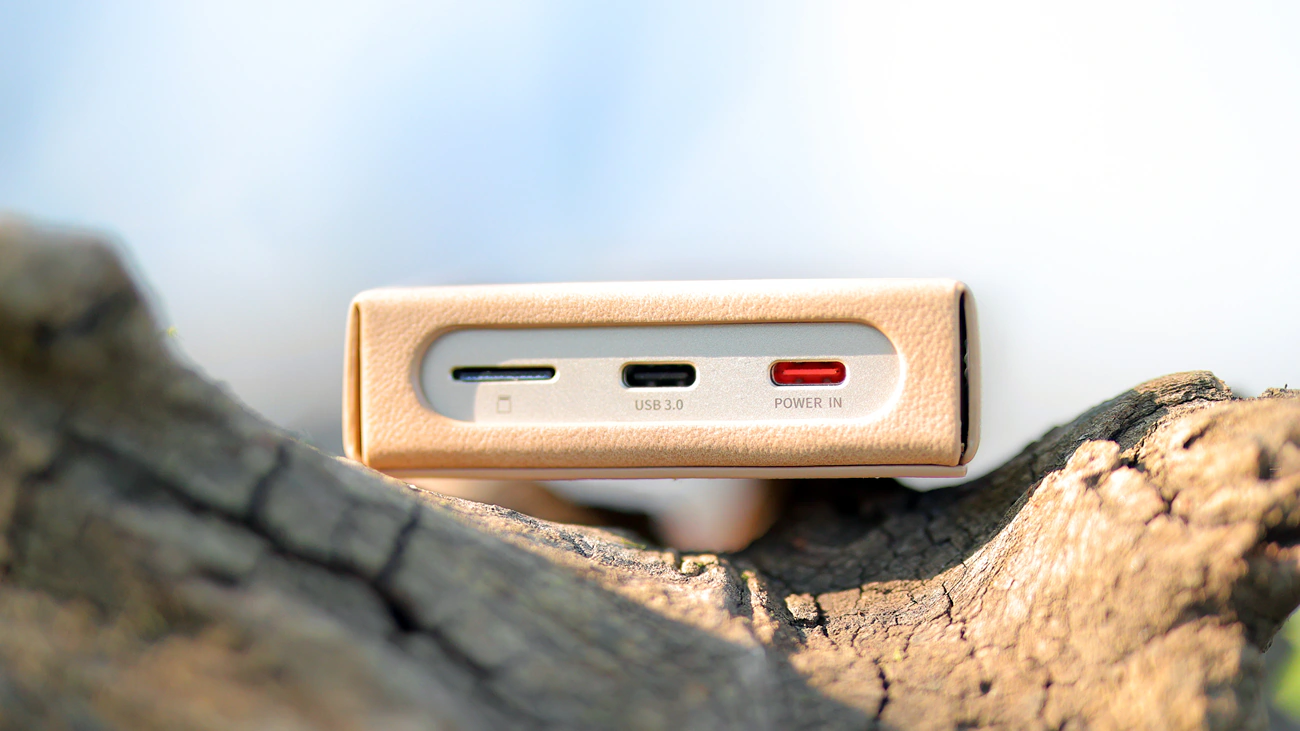
Battery – M33 R2R comes with a 4400mAh battery, 30W of fast charging and it takes 1.5 hours to fully charge from a dead state and offers up to 15.5 hours on the single ended output and up to 13.5 hours of playback on the balanced output. As those were measured with half volume and mostly with the display turend off as well as playing files from the local library, you can expect a more realistic 9-10 hours of playback for the balanced output with some screen on time, some streaming and a louder volume or higher gain levels.
Subjective Usage
FiiO M33 is super versatile, it has a fast operating system, indexing files is fast and reliable. The FiiO Music App is not mature and well integrated with excellent support for all file types, odd fonts as well as advanced features. I like that I can easily find all settings, including gain levels, PO vs LO settings, and basically everything in the Android system or using the fast menu, by sliding my finger down from the top. For anyone who’s used a smartphone before, it will feel right at home.
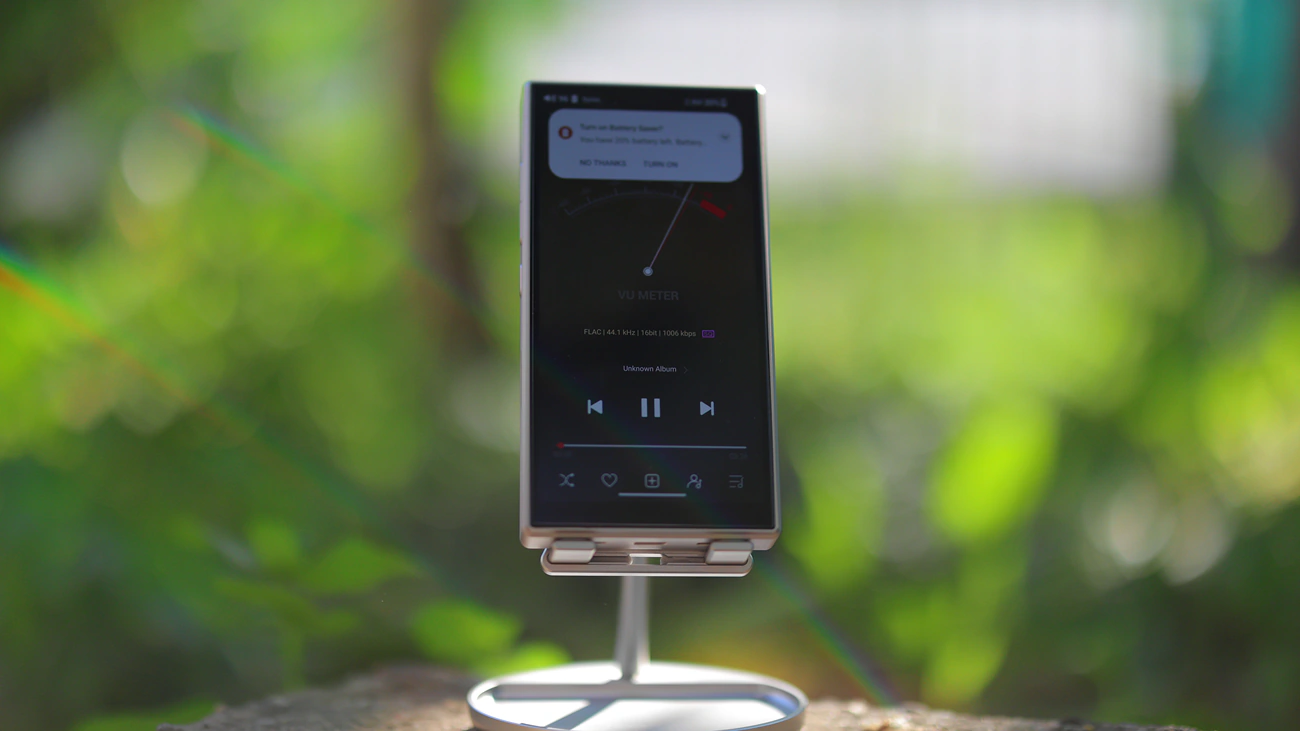
You will also find that the USB DAC function has no audible DAC delay, but FiiO implemented an auto sleep function on it, which has around one second until it turns off, so for example if you try to use a sync test off youtube, you will not hear anything, as M33 R2R turns off right when the clicks happen, at 1 second intervals. This being said, if you leave a song playing, even at a very low level, you can test and see that sync is perfect and M33 has no audible DAC delay.
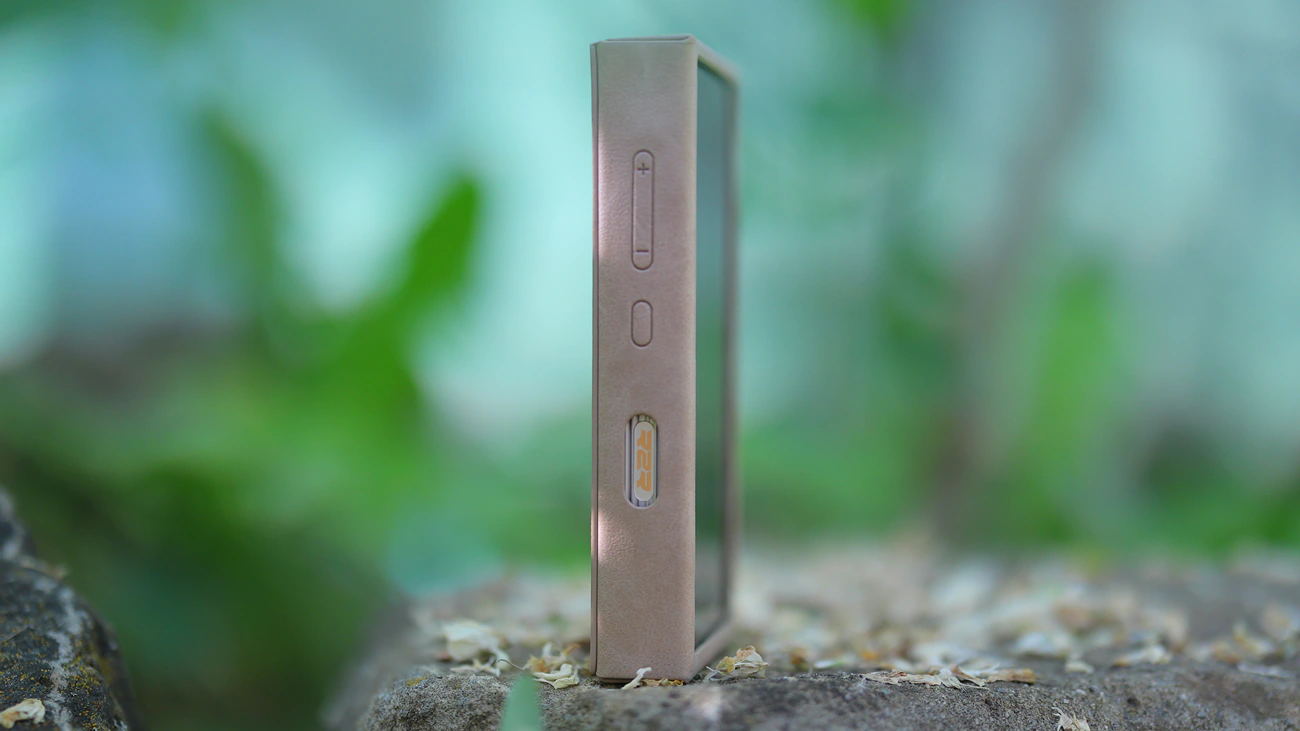
You can install most Android apps on M33 R2R, including Tidal Spotify, and all streaming apps, even Youtube and Youtube Music, and all run really smoothly. Between the huge RAM size and huge internal memory, M33 R2R is darn great for even playing games and running more complex apps, as it has a fast CPU. I find that the display is large enough for browsing music collections and admiring cover art, but it is not large enough for anything else, like watching movies or videos. In general, I find the M33 R2R to be perfect and enough for most tasks I would do with a smartphone or music player.
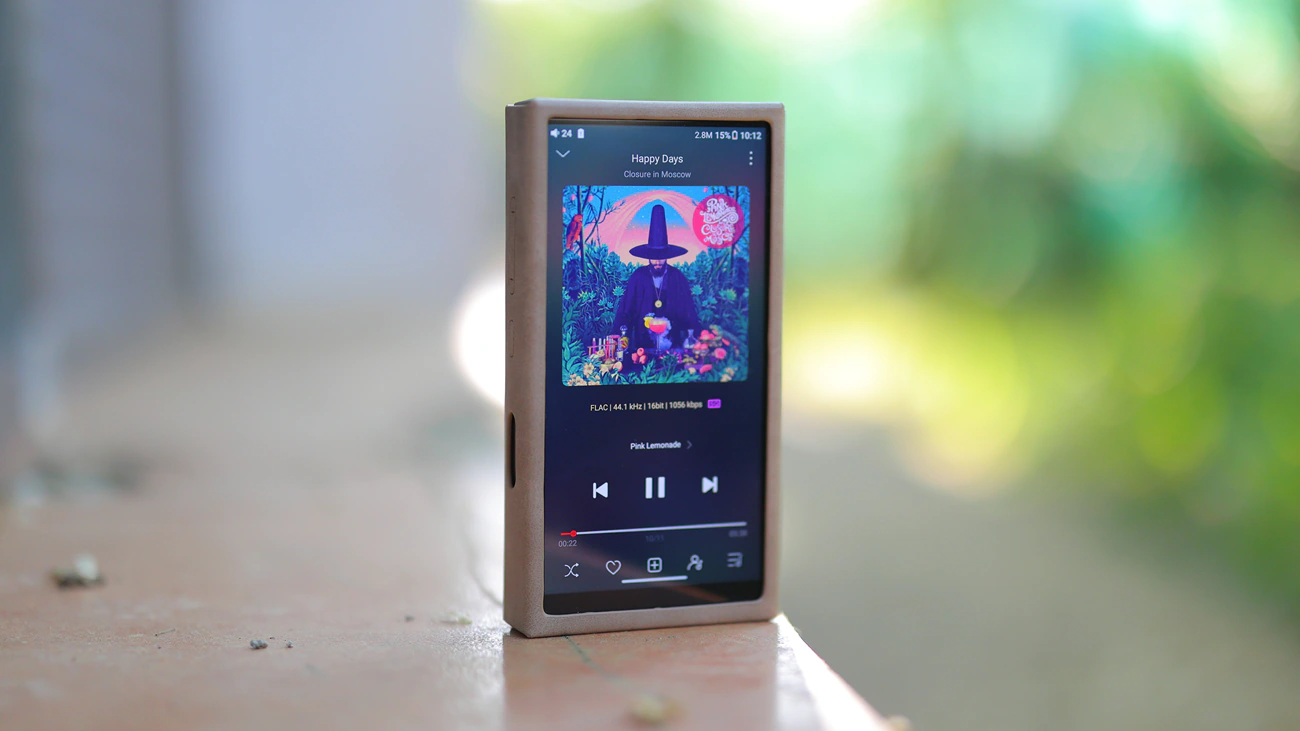
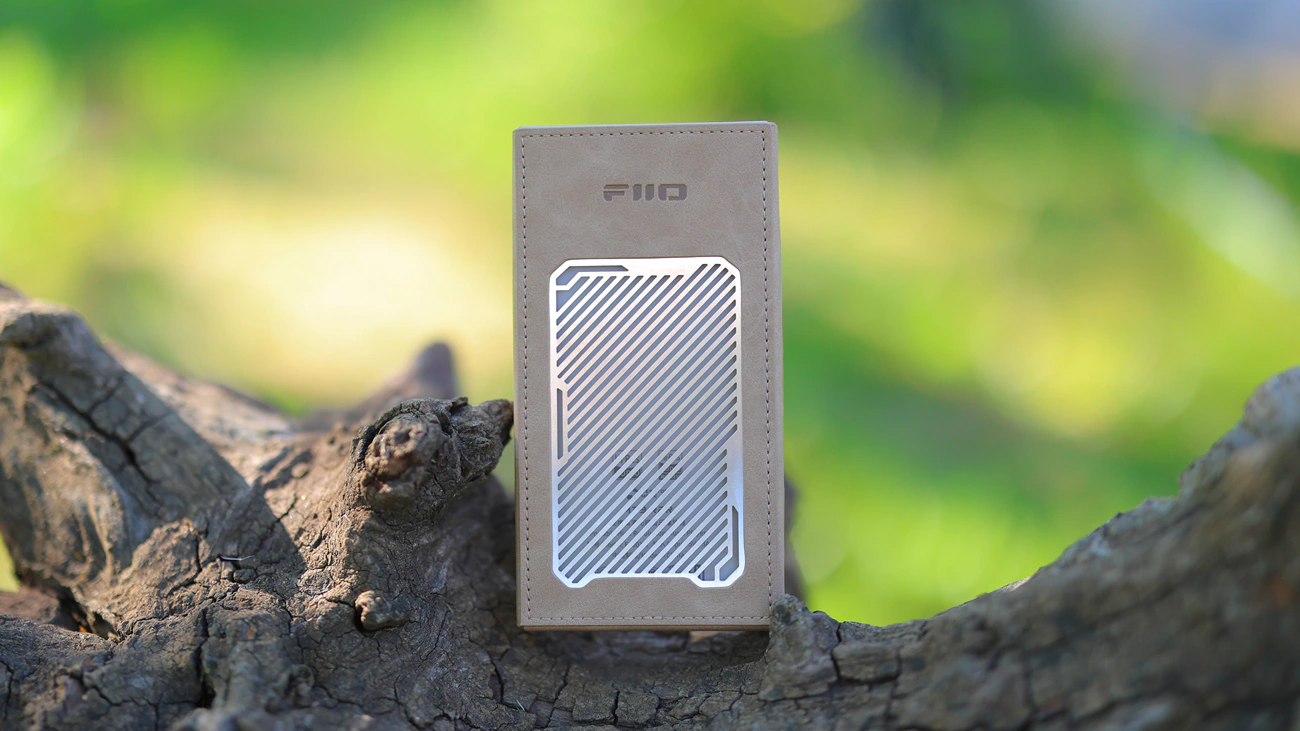
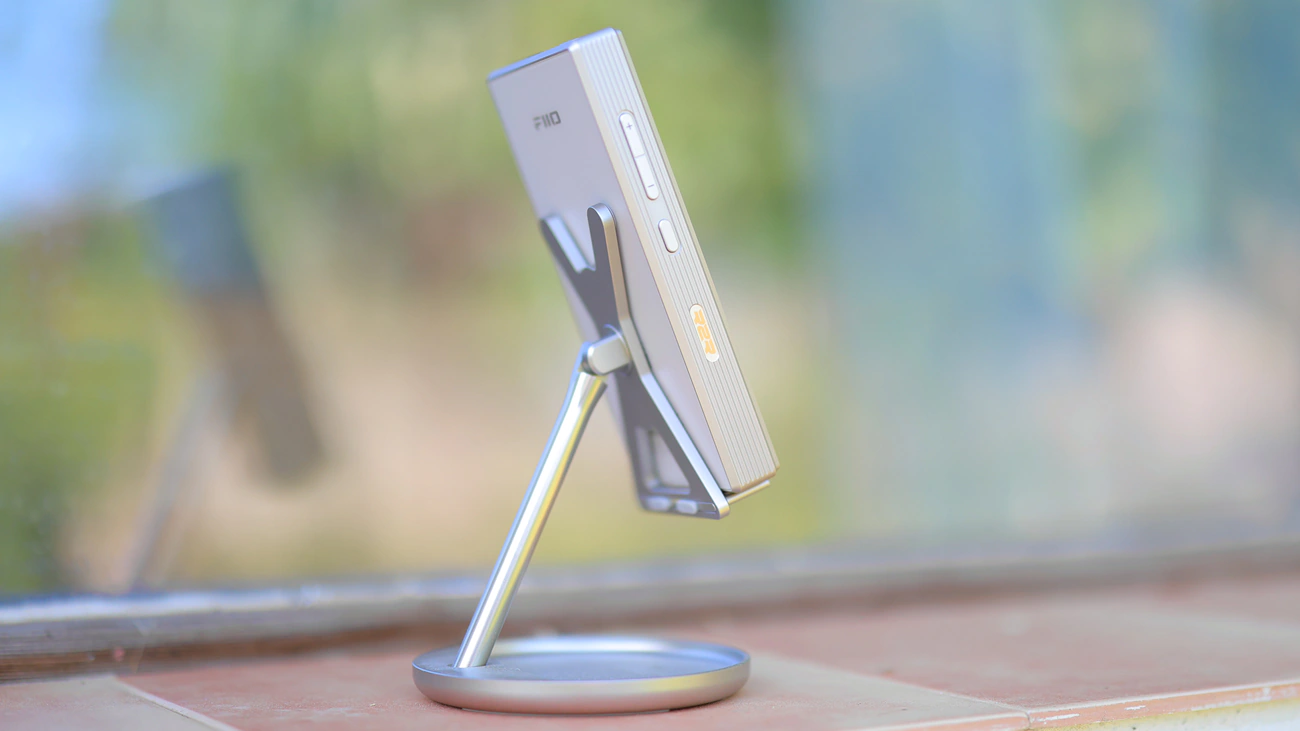
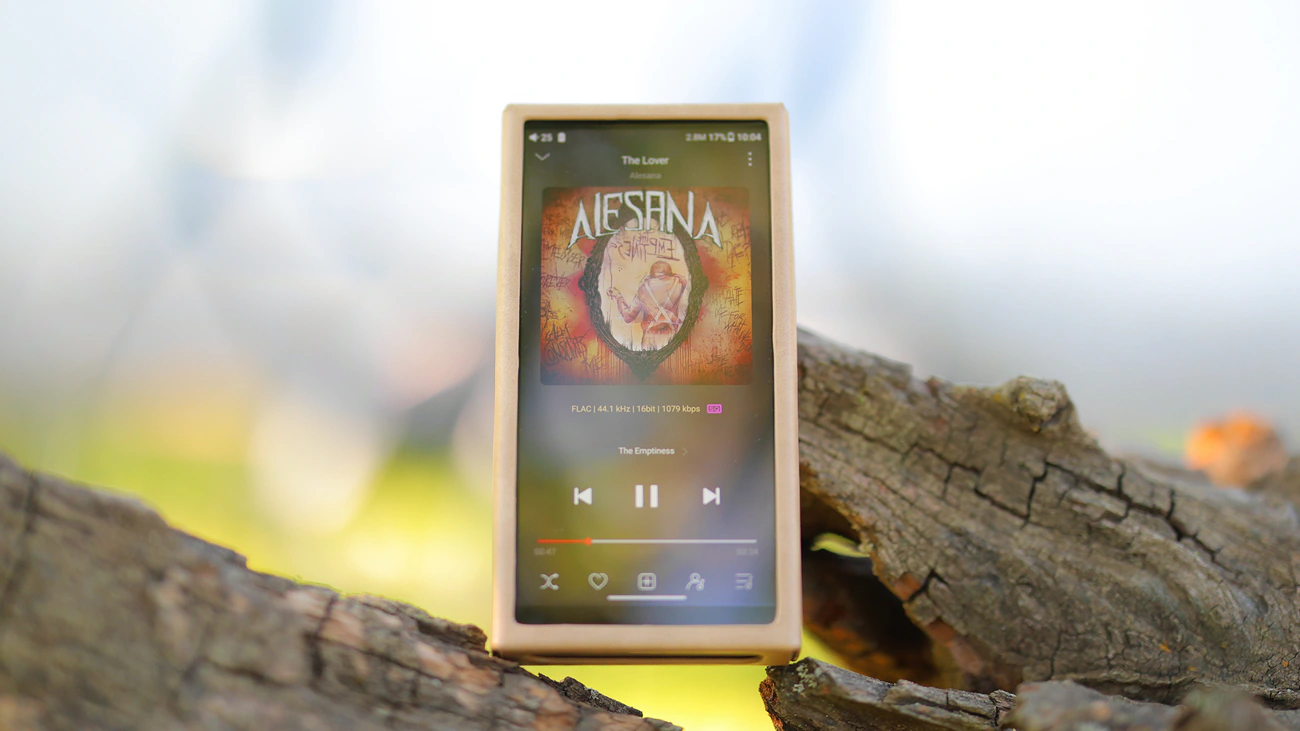
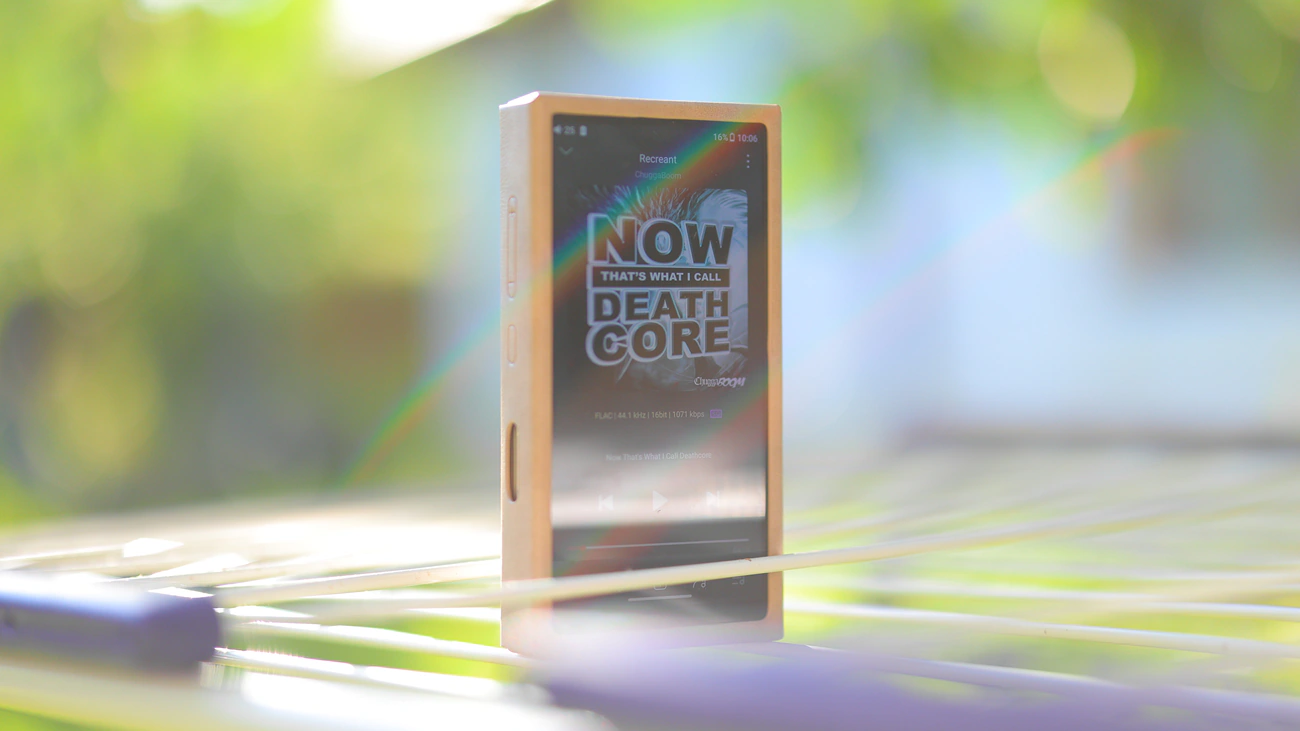
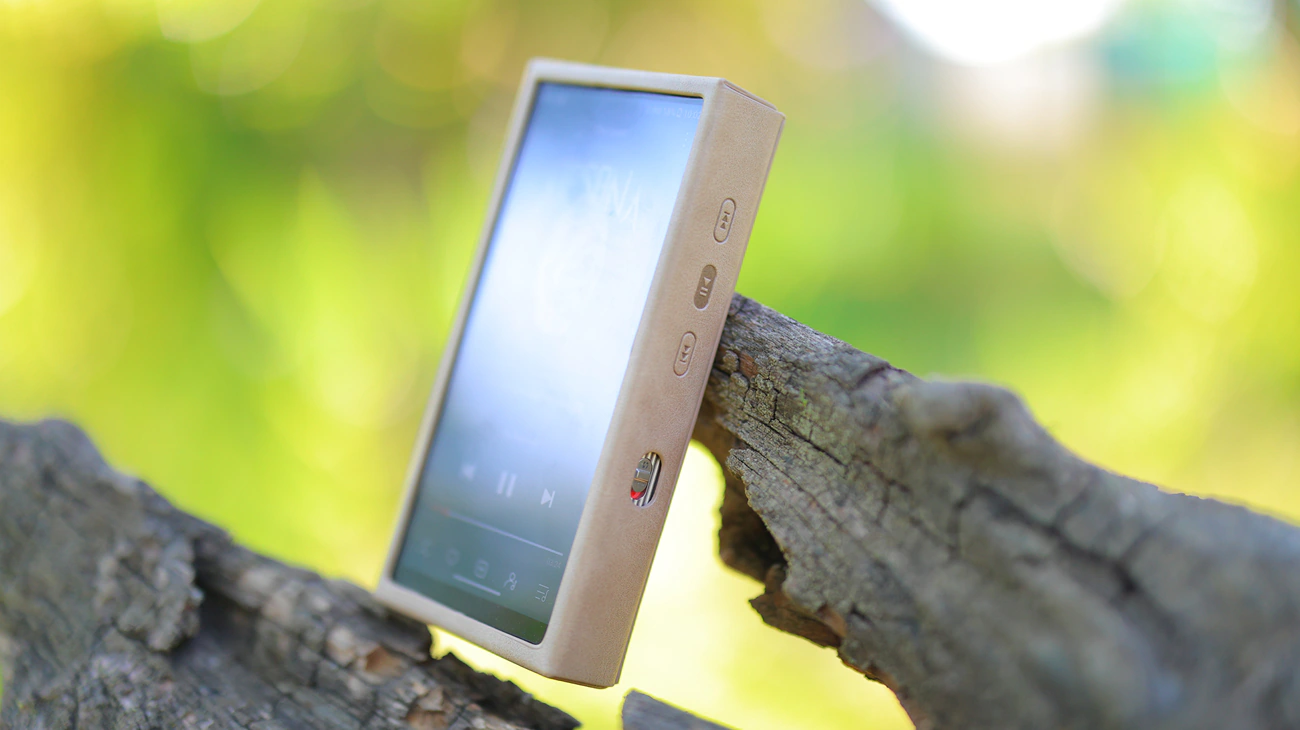
I love the shape and the feeling when it is inside the case. The case it comes with offers M33 top protection, all sides, and it also has that nice back screen that allows for good cooling. It does get quite warm during usage, especially in desktop mode, but the battery charges fast and will easily last me a 8-9 hour walk with music even if I’m blasting music quite loud half the time. I also love that all buttons are accessible with the case on, especially the desktop button which stops it from charging, and I love that the display is bright, colorful and very easy to read even in full sunlight. Overall, it feels superb, a flagship unit through and through.
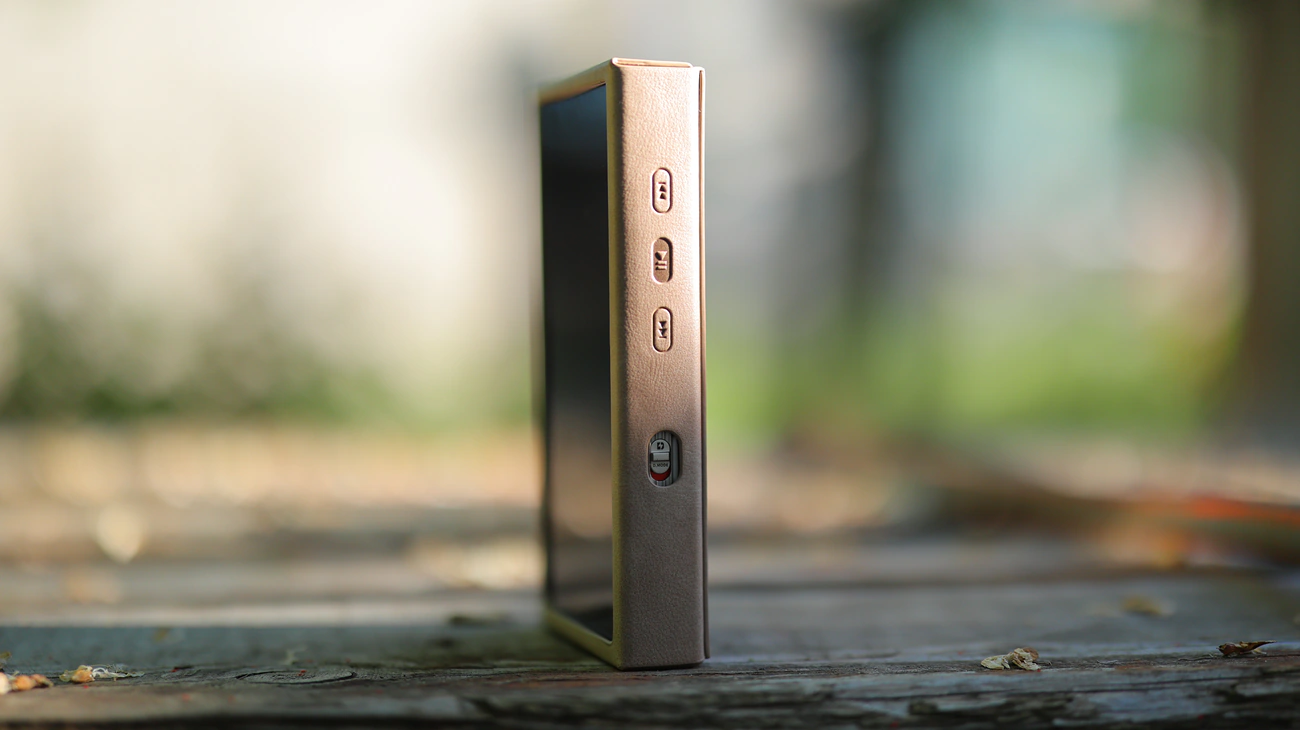
Holding M33 in my hand without the case feels much more premium, but I would generally not use it this way as it makes it far more sensitive to scratches and abrasions, and it also becomes more slippery. The way the display is slightly curved at the edges makes the M33 such a shiny toy, such a pleasing experience to hold in hand and to listen to, it is crazy. I absolutely love it and the experience of using it.
Sound Quality
Pairings – FiiO M33 is one of the most versatile DAPs that the world has seen in this price range, so today I am pairing it with Faith Audio E1000, Grell OAE2, Lily Audio Genesis One, Palma DHS-1, KBEar Cepheus, Crosszone CZ-10 Enhanced, TinHIFI T7, NFAudio NE4, Sivga Peng, Crosszone CZ-8a Enhanced, Soundz Flame, YanYin Canon PRO, Dunu Vulkan 2, Moritz Aura, HarmonicDyne Romantic, Hiby Digital Yume, HIFIMAN Audivina LE, Westone Mach 80,BQEYZ Winter II, Fosi Audio IM4, Aune AC55, iBasso Cookie Ti Jr.
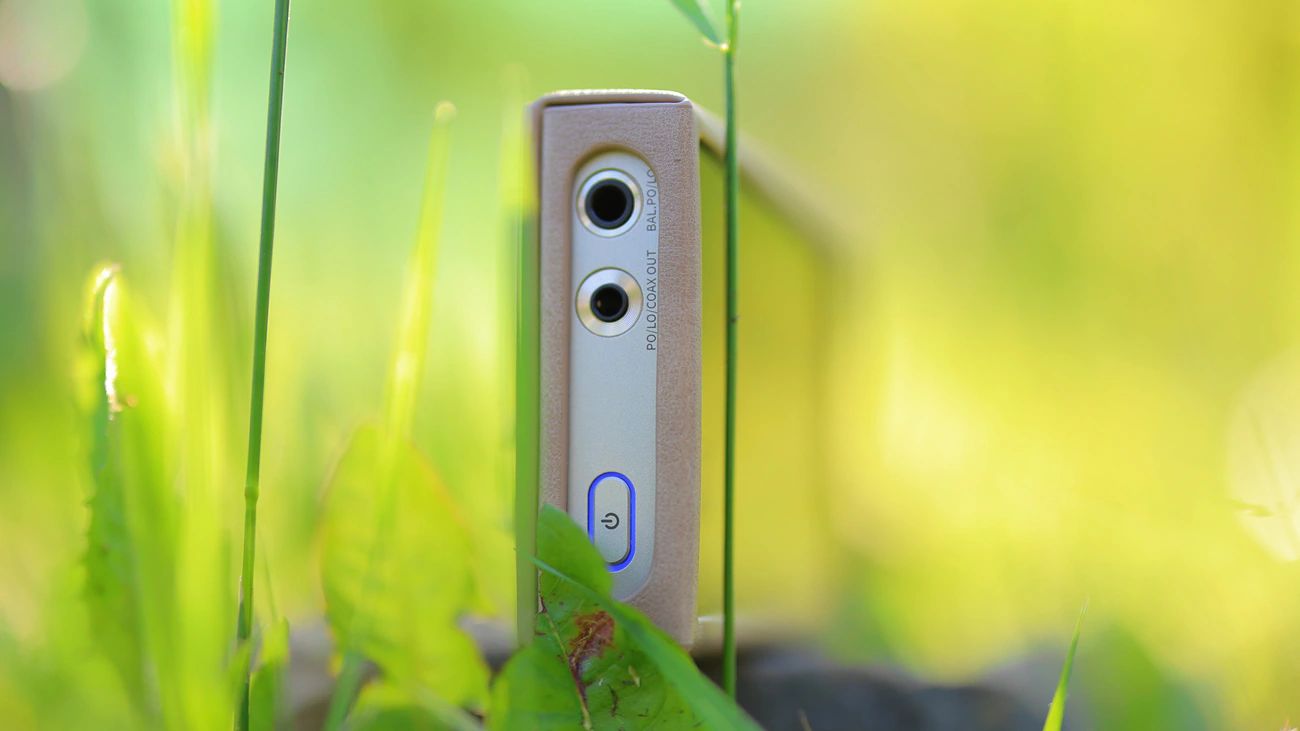
You can expect to be driving anything that you would reasonably take with you on a walk or portably, from HIFIMAN Auvidina LE to Palma DHS-1 to FiiO FT7. M33 R2R has plenty of power for harder to drive headphones, especially over the balanced headphone output, while the single ended one is more limited, best used for IEMS and very easy to drive headphones. It can handle complicated loads like ultra low impedance headphones too, which is nice, because you know it will never run into overdrive / overheating / clipping even if the IEMs or Headphones are not a standard load for it.
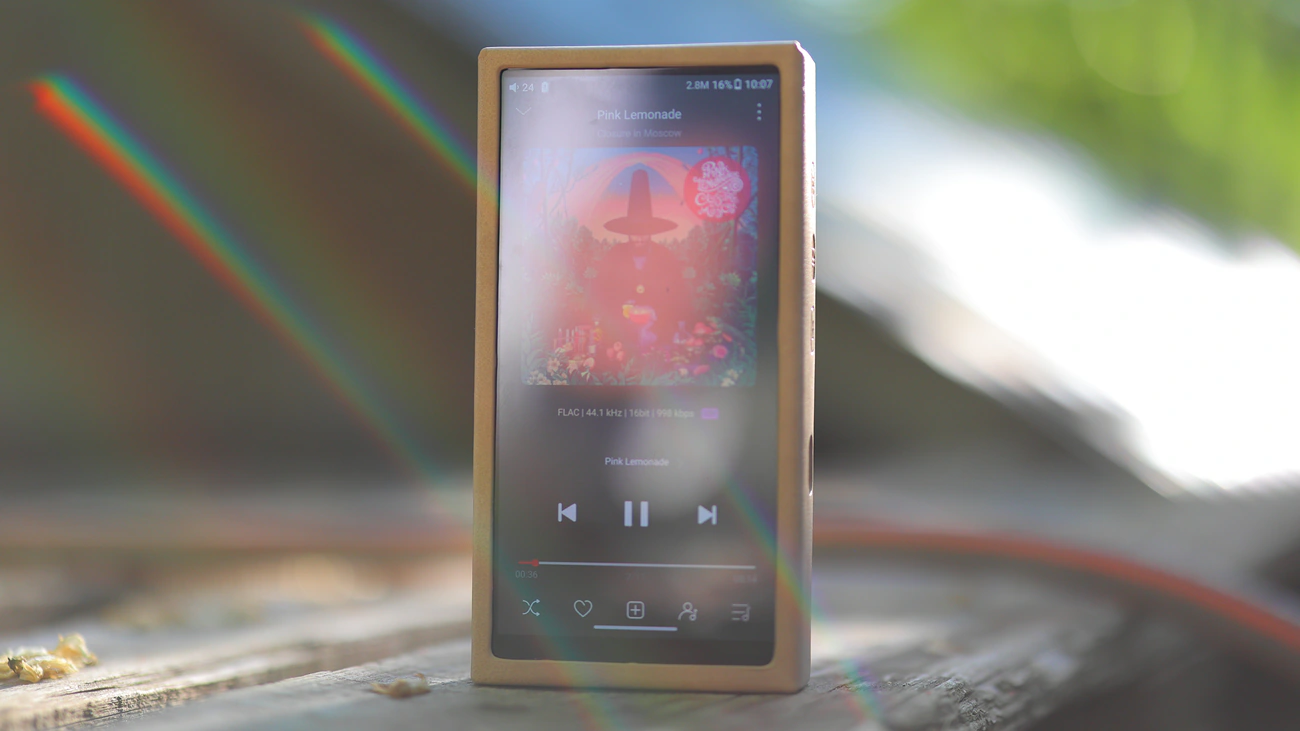
Overall Signature – FiiO M33 has two main signatures, one in the NOS mode and one in the OS mode. This is the same as it is for all R2R DACs, as without any oversampling, you hear the raw output of the DAC, which is a bit softer, gentler, more musical, and with waxy textures compared to the Oversampled mode which more closely resembles a classic Delta Sigma DAC. When in USB DAC mode, the all to DSD and NOS / OS modes are all disabled, and from my understanding and ears, it always sings in NOS mode and PCM if being used as a USB DAC. With M33 in particular, the difference between OS and NOS is less obvious than with other DAPs, so you will not need to stress too much, I favor the OS mode slightly due to its increased resolution and clarity, but both sound excellent. Compared to most DAPs, using Super High Gain actually does not increase the noise floor significantly, but it does increase the sound quality, headroom, dynamic range and control quite a lot, so you can engage it anytime without the fear of reduced fidelity and increased THD. The change is instant when plugging in a power brick with high voltage output, and I vastly prefer the Desktop mode for M33. Most of the review will be written using NOS, so raw DAC output, desktop mode and Super High Gain for both IEMs and full-sized headphones.
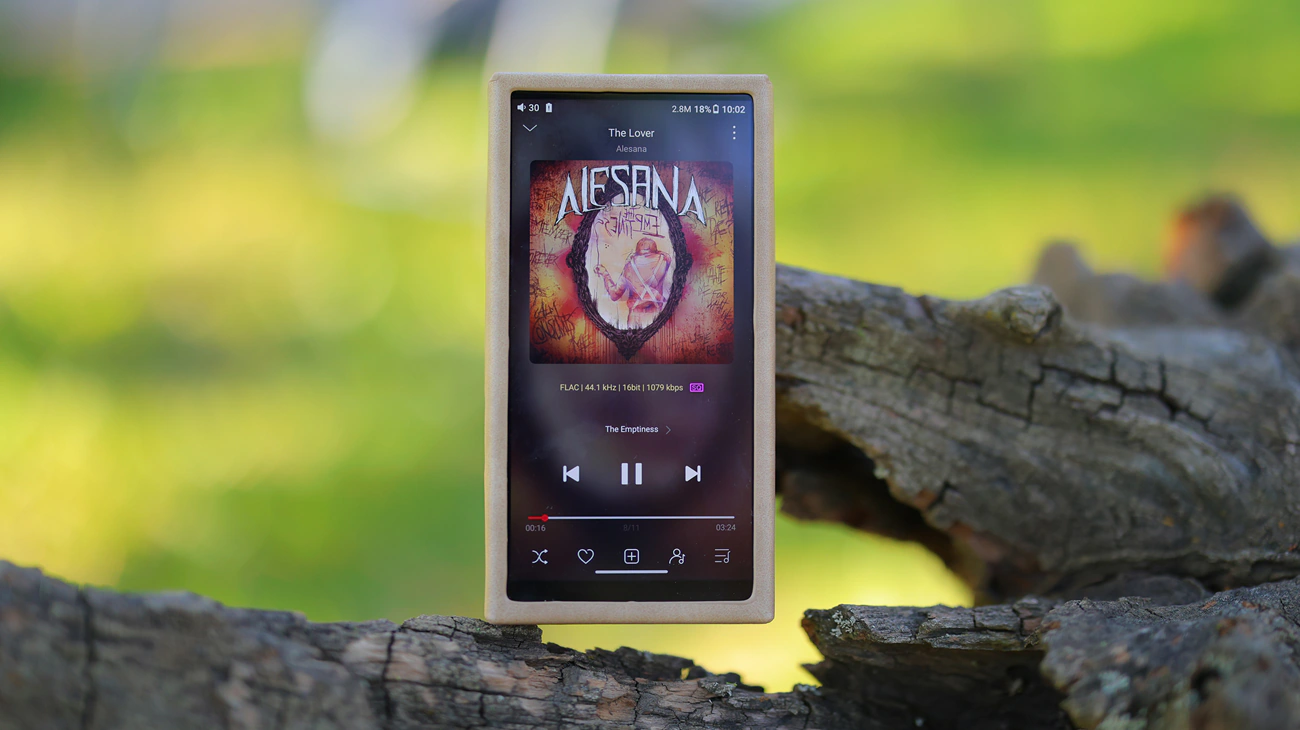
Bass – At the deep-end, M33 starts with 20 Hz and can pack a punch even with moderately hard to drive headphones, having no audible roll-off, so it will handle the likes of Grell OAE2 and HIFIMAN HE1000SE really well. FiiO FT7 is not even very hard to drive, so M33 handles them really well, packing bass down to 20 Hz, with a deep rumble to the sound. Bass is rounded and bouncy with no limit to the quantity when the song calls for it, but exceptional control and depth. It is the type that changes character with each song, so M33 is rather transparent, it does not just add bass, it renders exactly the bass that is available in each song. One of the very few DAPs that can properly pack a punch with most headphones with very low distortion and bass clipping.
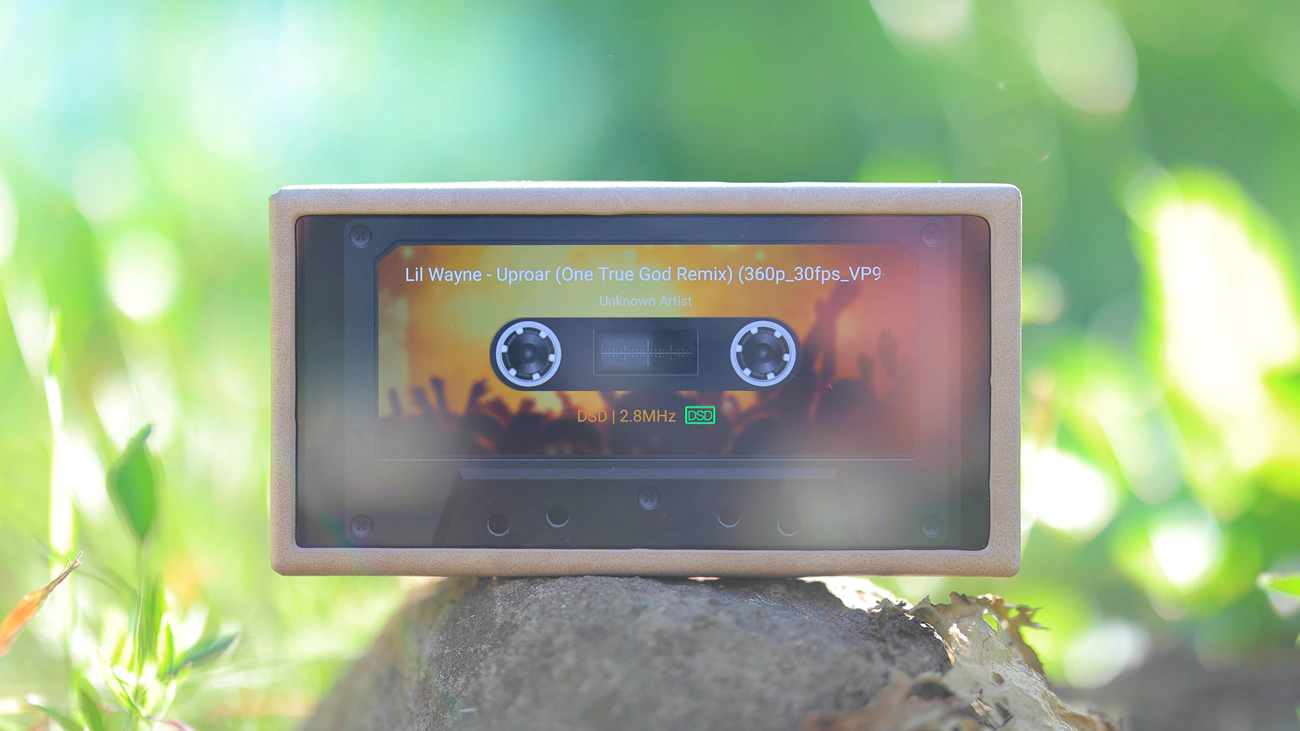
Midrange – Although I loved the low-end, the midrange is where FiiO M33 R2R excels, as it has a really deep soundstage with exceptional instrument separation, creating a really strong layering and instrument separation. It has a slight bias towards male voices and the lower midrange compared to the upper midrange, giving all music a refined, mature and deep presentation that feels serious and leathery / waxy. Especially with the specific texture of the DAC, music has a bouncy, almost tactile feeling to it, especially noticeable with synths but also with guitars, pianos. In OS mode, the bias turns more towards the upper midrange than it is in NOS mode, making NOs sound a bit darker, thicker and heavier, while OS mode sounds thinner, sharper, snappier and brighter.
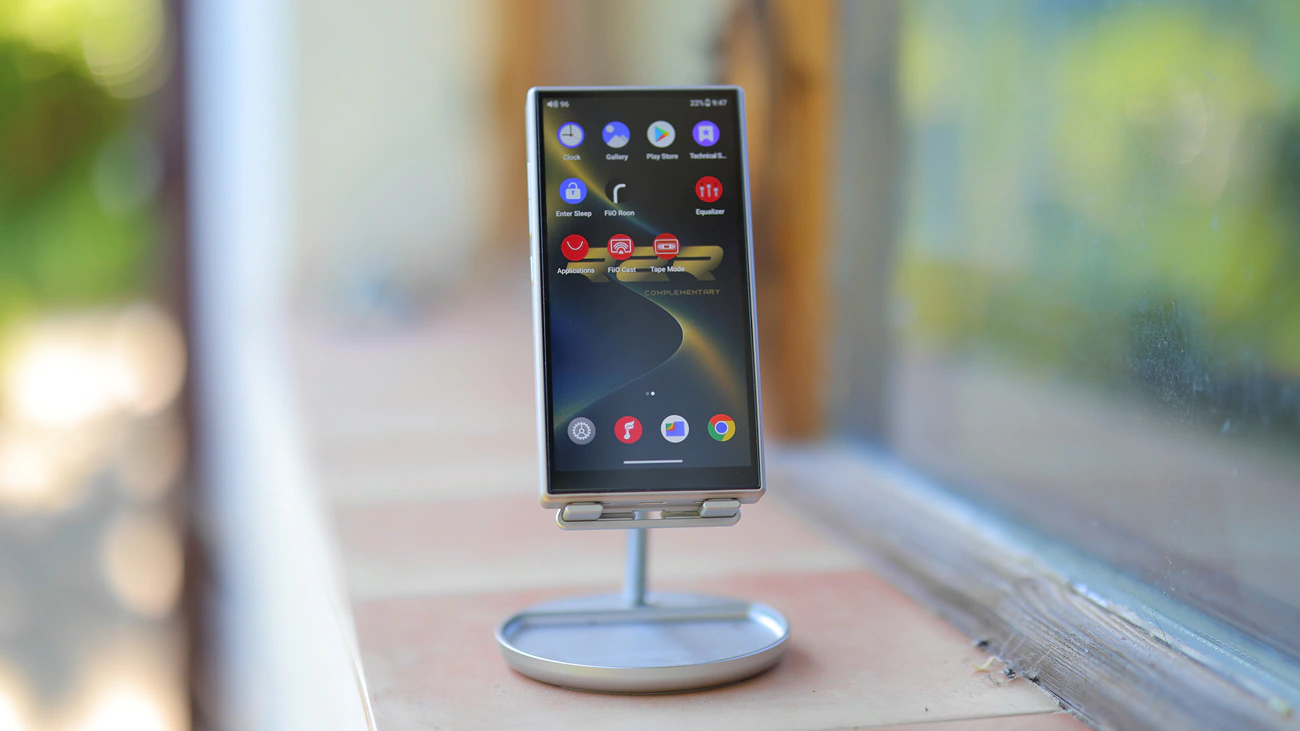
Treble – As with most R2R DACs, the DAC inside of the M33 changes character rapidly when you use it in OS vs NOs mode, with NOS, the pure mode sounding smoother, not silky but waxy, treble has a texture to it, it is not necessarily super smooth, but that texture is rounded and pleasing, while smooth or silky usually suggest a more liquid, melted texture, which you hear and feel less. M33 sounds tactile all across the range, having what I consider to be an easy to hear and easy to understand profile. For rock and metal, I prefer OS mode, which makes the treble more bitey, sharp, and with a punchier tone to it. In NOS mode, the treble is still present, but non-aggressive, allowing me to increase the volume too much. If anything, M33 can come across as a bit mid centric and vocal, although overall it is pretty balanced.
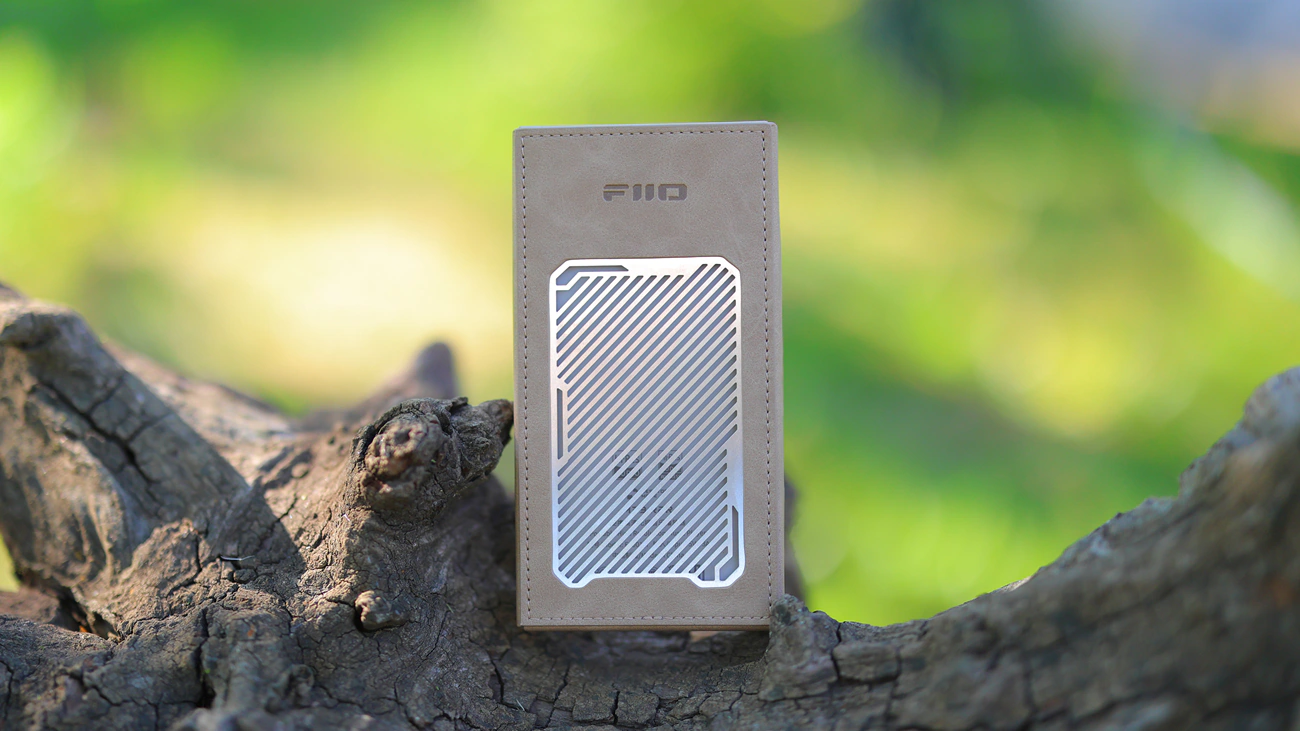
Dynamics And Textures – You will notice that M33 R2R has a different texture profile than any R2R DAc, including FiiO’s own R2R implementations in other DACs. While most R2R DACs on the market are either silky or lack dynamic range, M33 has a rather wide dynamic range and is very engaging but has that texture that I could only consider waxy, you feel the texture in every instrument, it is grain-free, but not necessarily liquid or smooth, it is there and tactile, like holding and feeling room temperature wax on your skin. M33 is perfect for synths, EDM, and rock music, has enough resolution and speed for rock and metal, and with a strong instrument separation, it also has the stage size to make all music interesting, once again different from most R2R DACs that tend to sound intimate and narrow in general.
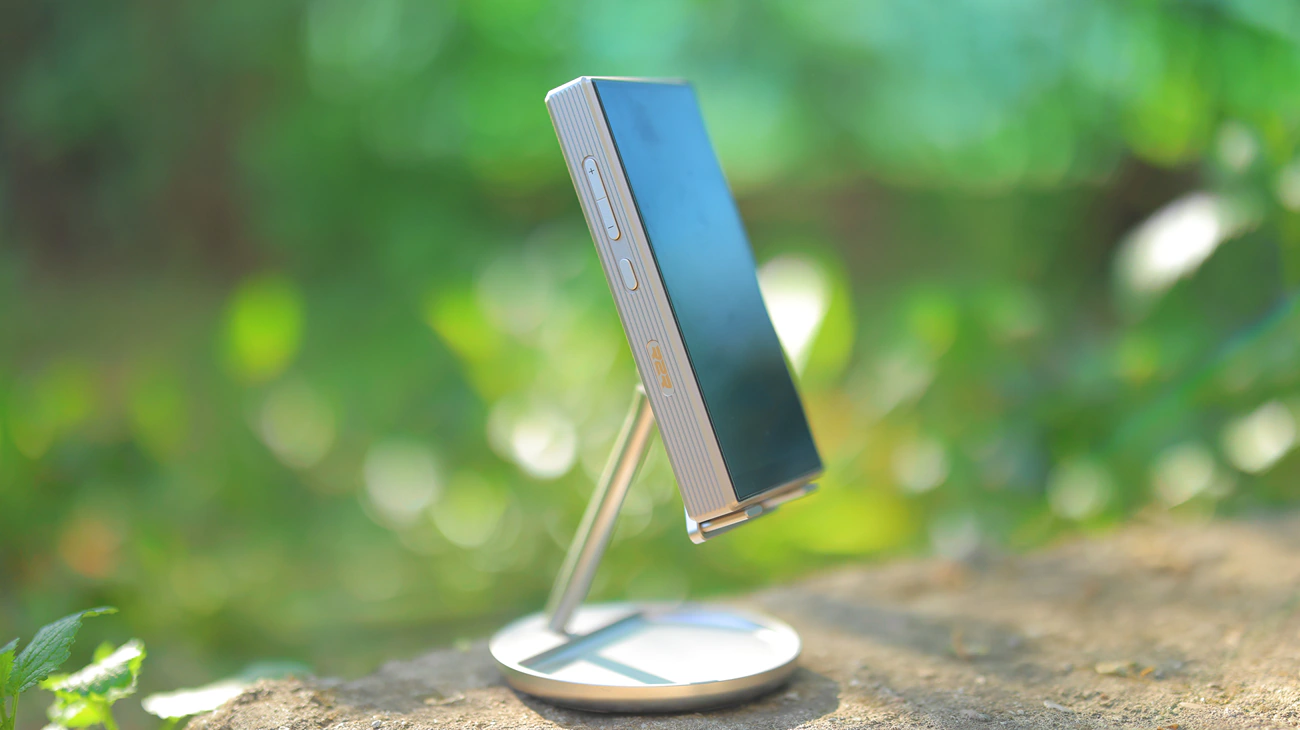
Loudness Saturation Gradient – FiiO M33 has a different saturation gradient and power in every mode, but the biggest difference can be found in super high gain vs other gain levels. Basically, all gain levels have zero audible noise with all IEMs and Headphones, so you don’t have to worry about hearing the noise floor, hissing or any kind of noise regardless how you use it. But in Super High Gain, the dynamic range is far higher, it has a much bigger headroom, better tactility in the bass, more depth, and a wider soundstage. It is basically much better for all music styles and headphones, although it already has more than enough power for IEMS without super high gain. For IEMs, all sound modes are similar with just the highest and lowest volume changing noticeable, and it tends to sound better at higher volumes, allowing you to really push the limits since M33 R2R has the low distortion and more relaxed sonic approach.
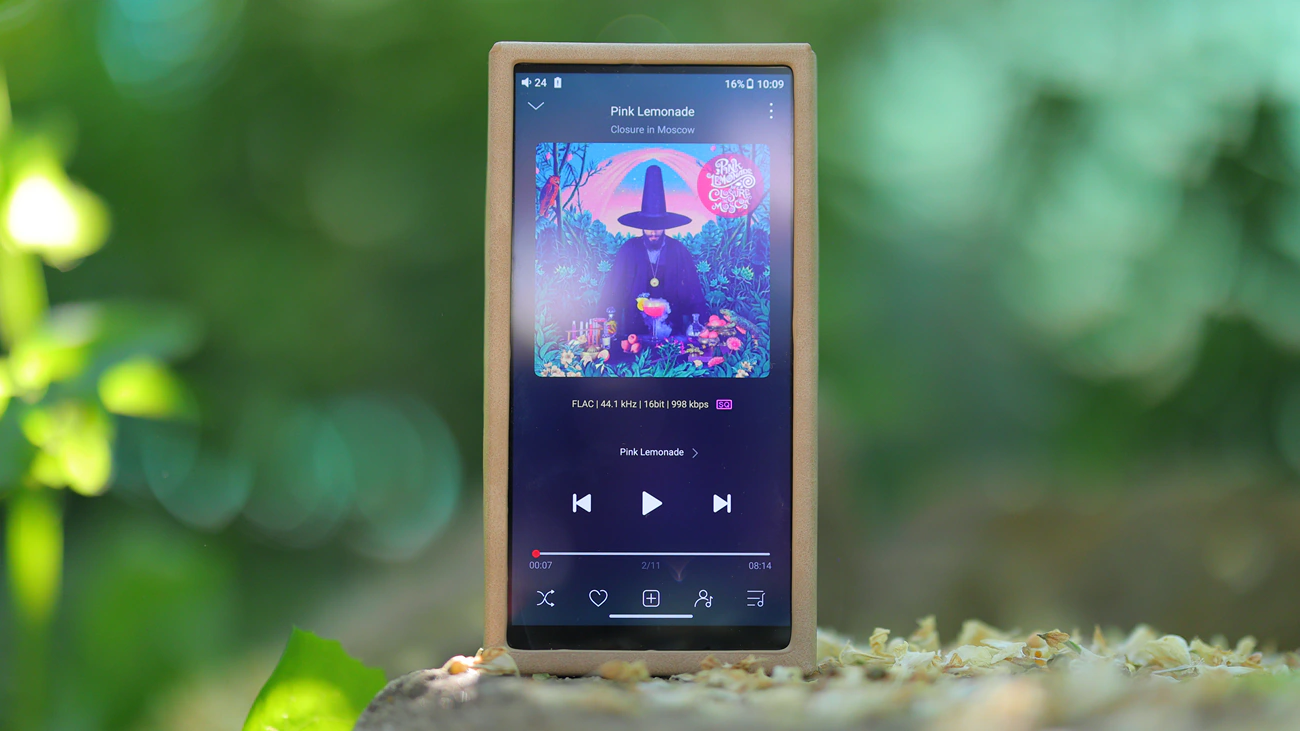
Soundstage – Here FiiO M33 R2R is really different from most DAPs and DACs on the market that use the R2R technology, because most sound quite intimate and narrow, but M33 R2R sounds really wide, holographic even with a strong separation between instruments. The reason why most sound a bit more intimate is that R2R DACs by design have a slightly less separated sound with a more crossfeed between L R channels, while M33 R2R seems to have a stronger separation, better layering and imaging than any R2R DAP or DAC AMP that I heard to date. In OS mode, it has mostly the same soundstage size, which is big, rounded, with the same width and depth. It is pleasing for sure.
Comparisons
FiiO M33 vs Dethonray DTR1+ (649 USD vs 999 USD) – At their baseline, both are DAPs that can play music from a microSD card, but M33 has tons of other features, including support for high resolution cover art, support for Streaming, Tidal, Wifi, Bluetooth, a fast CPU, it can run most apps for Android, it has tons of RAM and ROM, it is basically much more than just a DAP. So then, you might wonder what could make you go for DTR1+ instead of the M33, but the answer is not a single line of text, but rather a complex consideration. With DTR1+ you are likely someone who already has their collection tagged, and neatly arranged inside their PC. You also would pick DTR1+ if you wanted a simple Audiophile experience with a local playlist, local files and a warm, smooth, thick and heavy sound. M33 R2R has a different tuning, a snappier, faster, more dynamic sound, with a more neutral tuning, more waxy textures but also more brilliance in the midrange, with better technical resolution, and far better versatility as a device, making it a good modern, R2R experience with a slightly relaxed but still very detailed signature. The max driving power of M33 R2R is much higher and it has a lower noise floor, but it does not have the same coloration that made the DTR1+ popular.

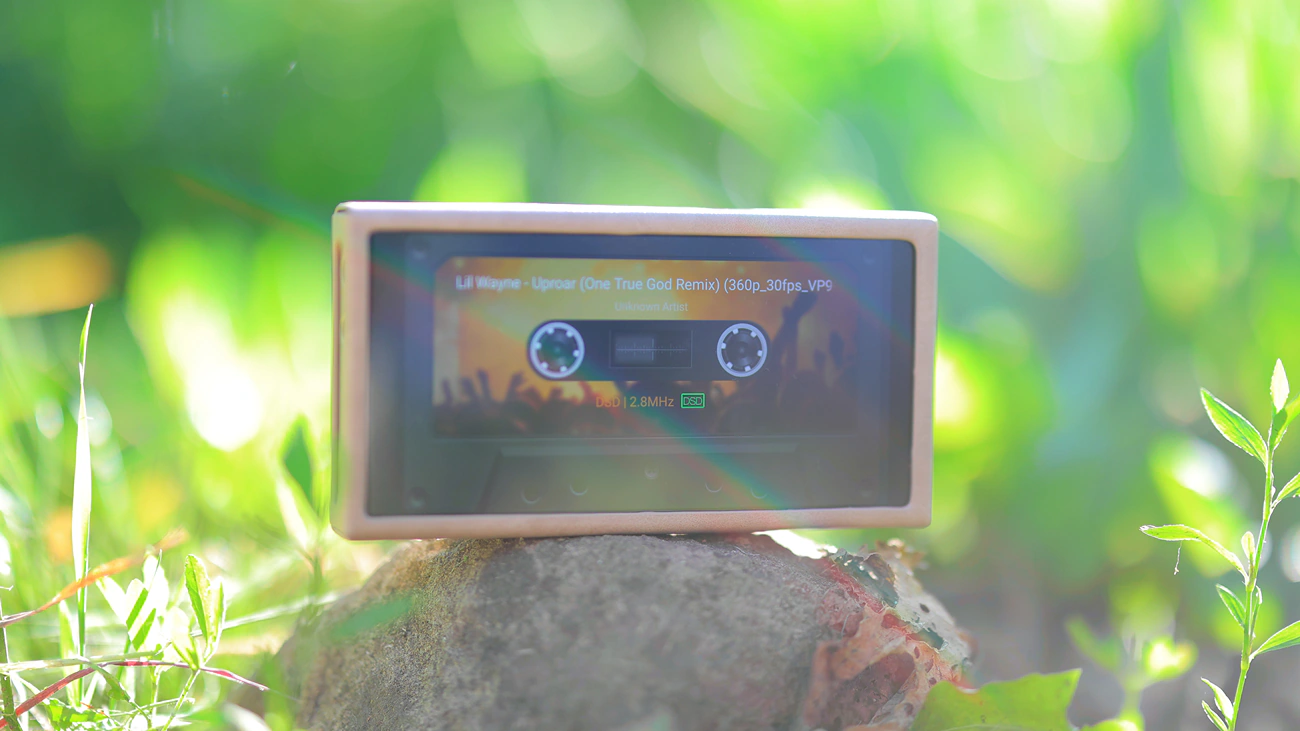
FiiO M33 vs Hiby R6 PRO II (649 USD vs 749 USD) – One of the ways I decide what DAPs to compare in a review is the pricing of each, and here R6 PRO II has a very similar price compared to M33 but it also has a similar Android based, can do streaming, yet the CPU of M33 feels much faster, the OS is written cleaner and everything happens more instantly. R6 PRO II is more themed on the purple deep colour, while M33 goes for the cassette tape player theming. Both support ideally the same level of microSD cards and apps, both have a nice display, but the display of M33 is a bit brighter and more colorful. The USB DAC delay present on R6 PRO II is quite noticeable while there is none on M33. Sonically, M33 has a far higher driving power in general, but especially in Desktop mode, and R6 Pro II sounds more gentle, somewhat shy and bright, compared to M33 which sounds more waxy, deeper and with more pop to its sound. While with M33 you have to choose between OS and NOS, you can choose between Class A and Class AB with R6 PRO II. Regardless of the class, R6 PRO II is made more for portability, has no Desktop Mode, but has a good support for apps and running Android while M33 feels more mature, everything works a bit better, from the USB DAC to how fast and smooth the whole system is.
FiiO M33 vs iBasso DX260 MK2 (649 USD vs 949 USD) – With the build quality and shape / ergonomics being similar, DX260 MKII is a similar DAP compared to M33, but it sits at a higher price point, with a 33% increase in price and with a more premium approach compared to M33. The CPU Of M33 is faster, it has a similar ROM, and a slightly longer battery life when used portable, with a different DAC configuration, as DX260 MKII uses a more standard Delta Sigma approach, CS43198 but in a 8-Way Combo. While DX260 MKII has been a huge upgrade from the original DX260, both sonically and in operation, M33 is actually a bit faster, snappier, and apps works a bit smoother. Sonically, both have a similar maximum driving power, similar low noise with IEMs, but DX260 mkii has a better fine resolution, micro dynamic level and a more standard sound, while M33 sounds quite waxy, quite natural but a bit more gentle, as DX260 mkii has a higher impact, more pump in the bass, more sharpness in the treble and a technically more capable sound. Overall, for Android and operation, M33 will be faster and smoother, for sound they have equal driving power, but M33 sounds more musical and more gentle while DX260 mkii sounds more impactful, less relaxed and more technical.
Value – Conclusion
FiiO Surely implemented all the super nice features they researched when they made the new M33, as it comes with excellent support for music apps, a superb UI, a super powerful headphone output and excellent sound, as well as a nice shape. When you start to count in the two-way LDAC Bluetooth support, that it can be used as a transport and USB DAC, that it has 8 GB of RAM and that it has a fast CPU, it instantly becomes a super high value, just like the super high gain mode that it offers when you’re powering it via a fast charger.
You will have the time of your life using FiiO’s new M33 R2R DAP and listening to it. It has such amazing driving power, high dynamic range, yet a characteristic magic R2R sound that you will be drawn to playing another song, then another, forever. The fact it has such a solid hardware, battery, drive mode, USB DAC, and high RAM / ROM combo with a fast CPU makes it a pleasure to use. To date, it is the fastest to load my microSD card with music, fastest to read songs and to change the song, including huge resolution cover art, making it currently a top pick if you need speed and reliability.
PROs
- One of the highest RAM and ROM combos available in this price range
- Extremely long battery life with huge maximum driving power in Desktop Mode
- Really nice implementation of Desktop mode and super high gain that stops the battery from charging to prolong its life
- Highly dynamic and engaging despite having an R2R core
- Deep bass with really low distortion
- Vocally pleasing, serious, mature and refined
- Smoother, yet not absent treble, waxy texture up top that makes the texture of the treble audible but not grainy
- Wide and deep soundstage
- Rounded display with high brightness and top clarity
- Colorful display and fast OS that make using M33 a true pleasure
- Better than my phone for audio and speed in general, S24 Ultra hangs and feels stuttery where M33 is smooth as butter in operation
- Really low noise at all gain levels and in all modes

Cons
- The maximum performance can be found in super high gain, which means having a type-c power source feeding M33 R2R
- OS / NOS modes and All to DSD are disabled in USB DAC mode
- USB DAC stops after less than one second after signal loss
Product Link
Amazon – https://amzn.to/49oZXr7
Aliexpress – https://s.click.aliexpress.com/e/_c4tfjTc5
--- Please remember to stay safe, and always have fun while listening to music!---
- If you have a dime to spare, please donate, and help us! It would make the day brighter for me and my wife-
Full Playlist used for this review
We listened to more songs than those named in this playlist, but those are excellent for identifying a sonic signature. I recommend trying most of the songs from this playlist, especially if you’re searching for new music! The playlists are different for Spotify, Tidal and Youtube, and based on the songs I enjoy and are available on each!
https://www.youtube.com/playlist?list=PL_cjBXGmwSHSdGcwuc_bKbBDGHL4QvYBu
https://open.spotify.com/playlist/5J3oloz8Riy9LxEGenOjQ0?si=979ba4f082414be7
https://tidal.com/browse/playlist/330fd544-8e5b-4839-bd35-676b2edbb3d5
--- Contact Us ---